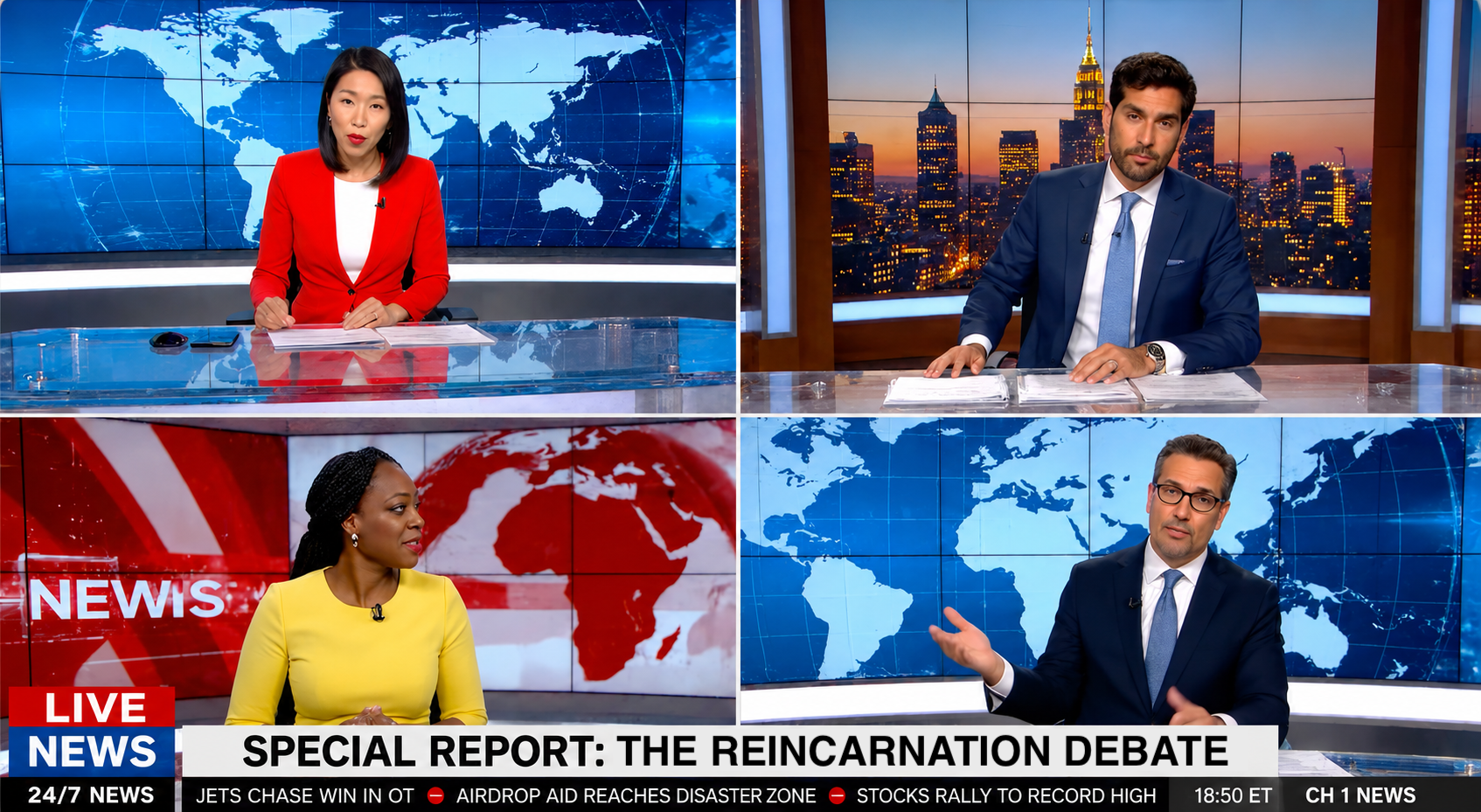
Across the world, families are reporting something they cannot explain.
A growing number of children are beginning to develop memories of lives they never lived. They describe distant places they’ve never visited. They speak words in languages they’ve never learned. They recognize people they’ve never met. And in some cases, they remember events long forgotten by history.
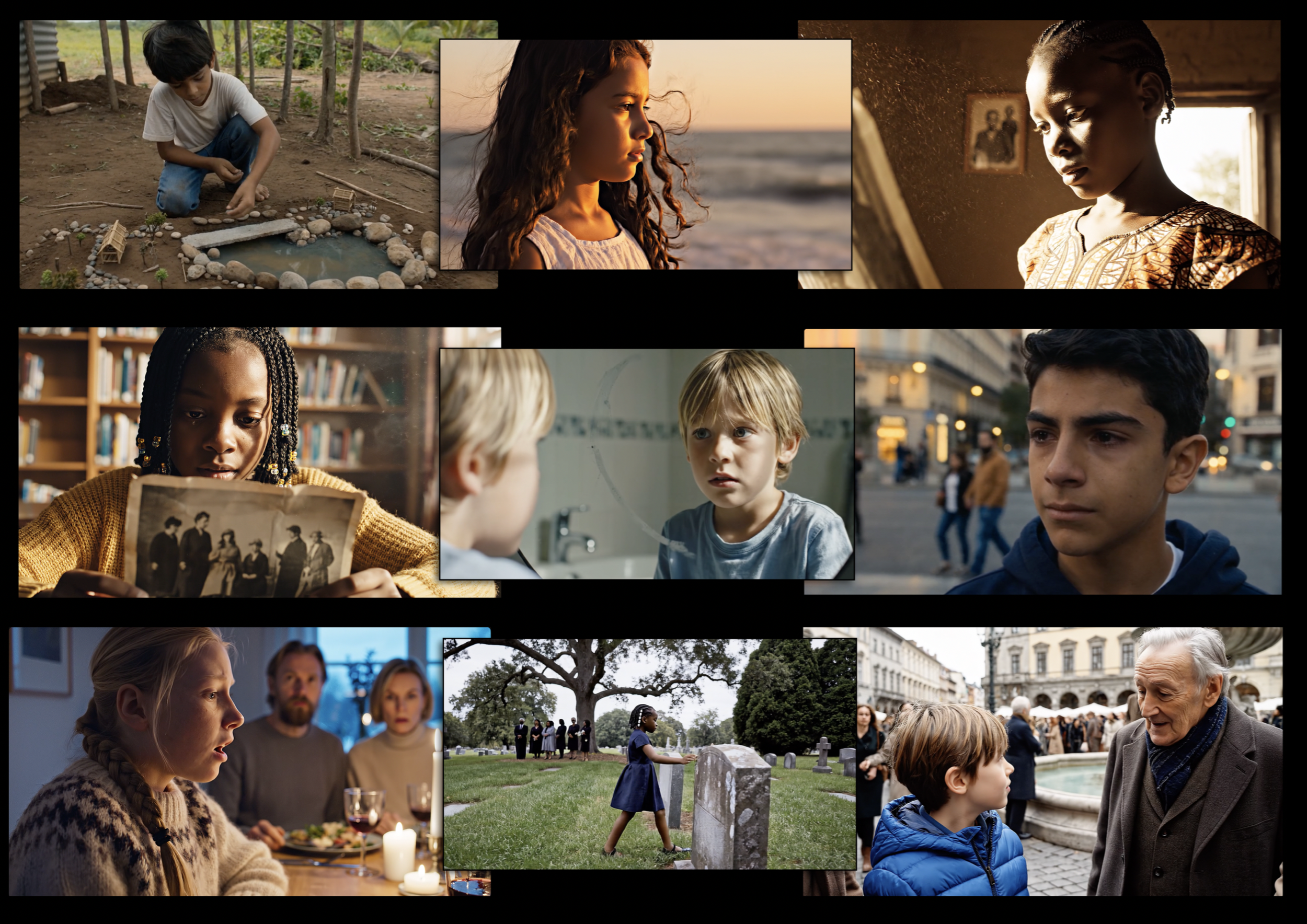
As families search for answers, what begins as a collection of impossible stories slowly evolves into a question that challenges everything we think we know about memory, consciousness, and the nature of human existence.
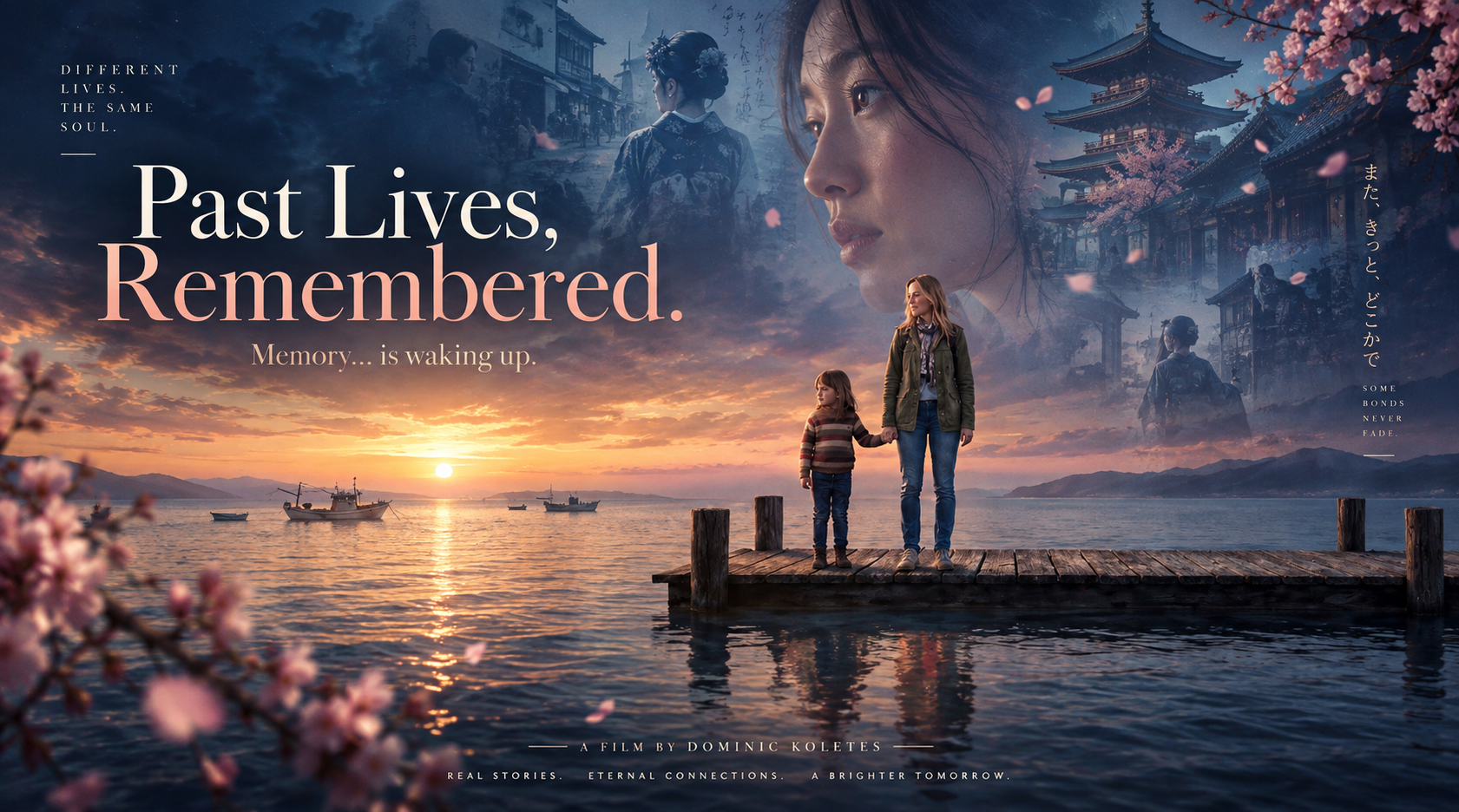
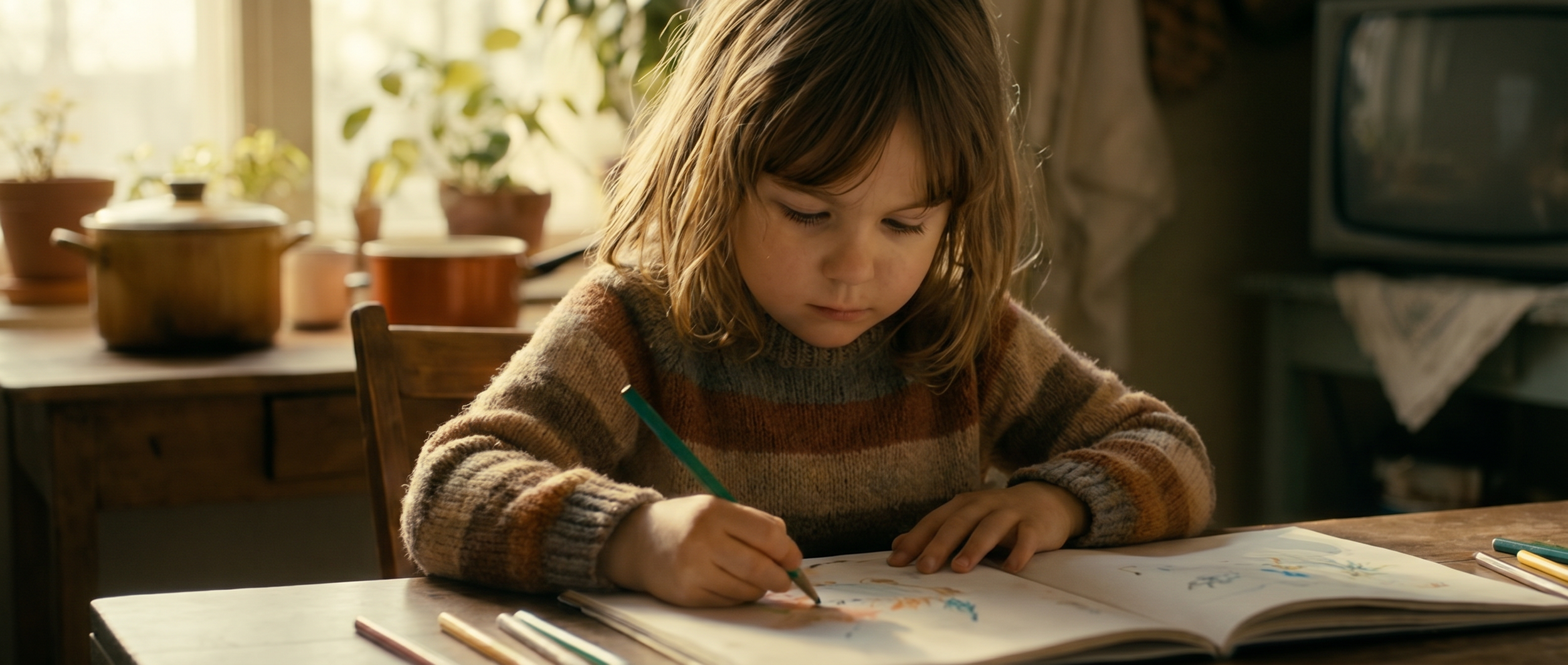
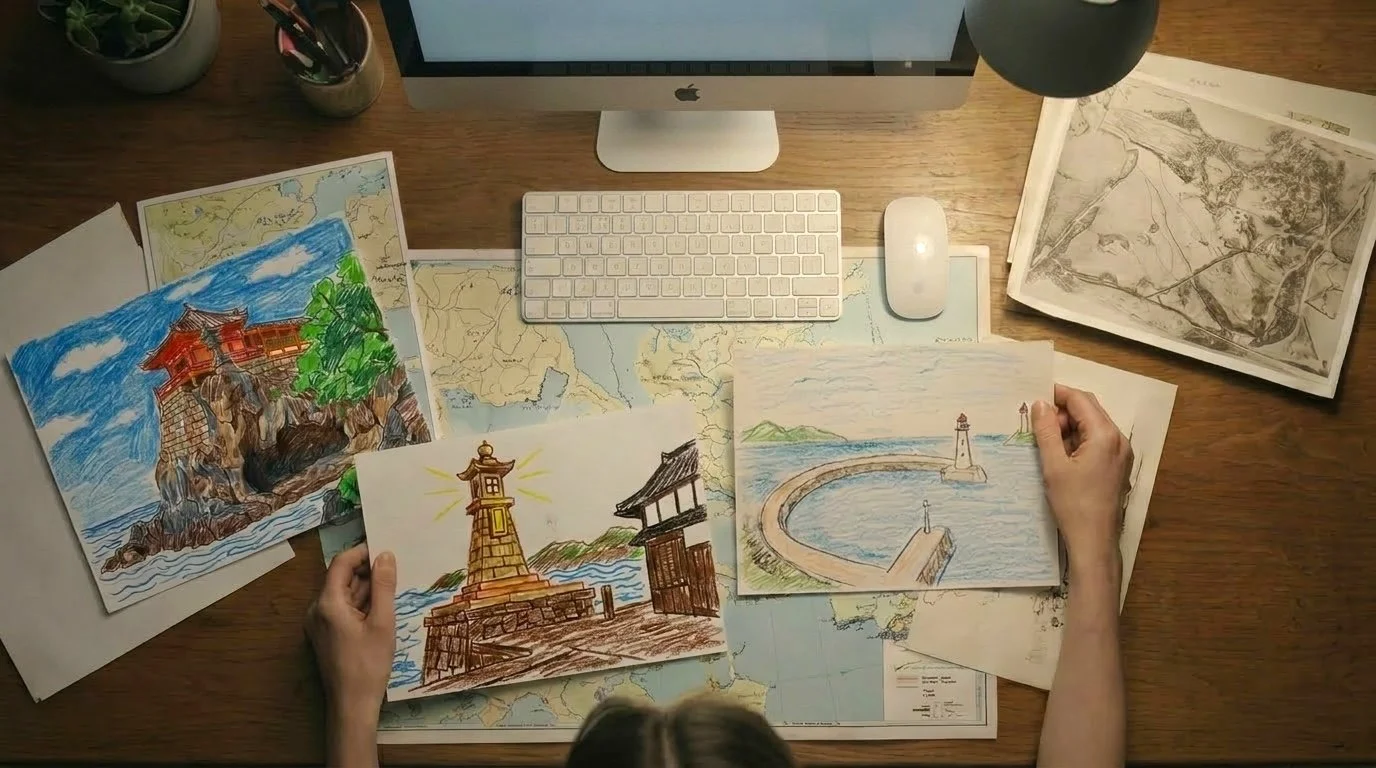
When five-year-old Lila starts drawing a small coastal village she has never seen, her mother assumes it’s simply the imagination of a gifted child. But as the drawings continue, a disturbing pattern begins to emerge.
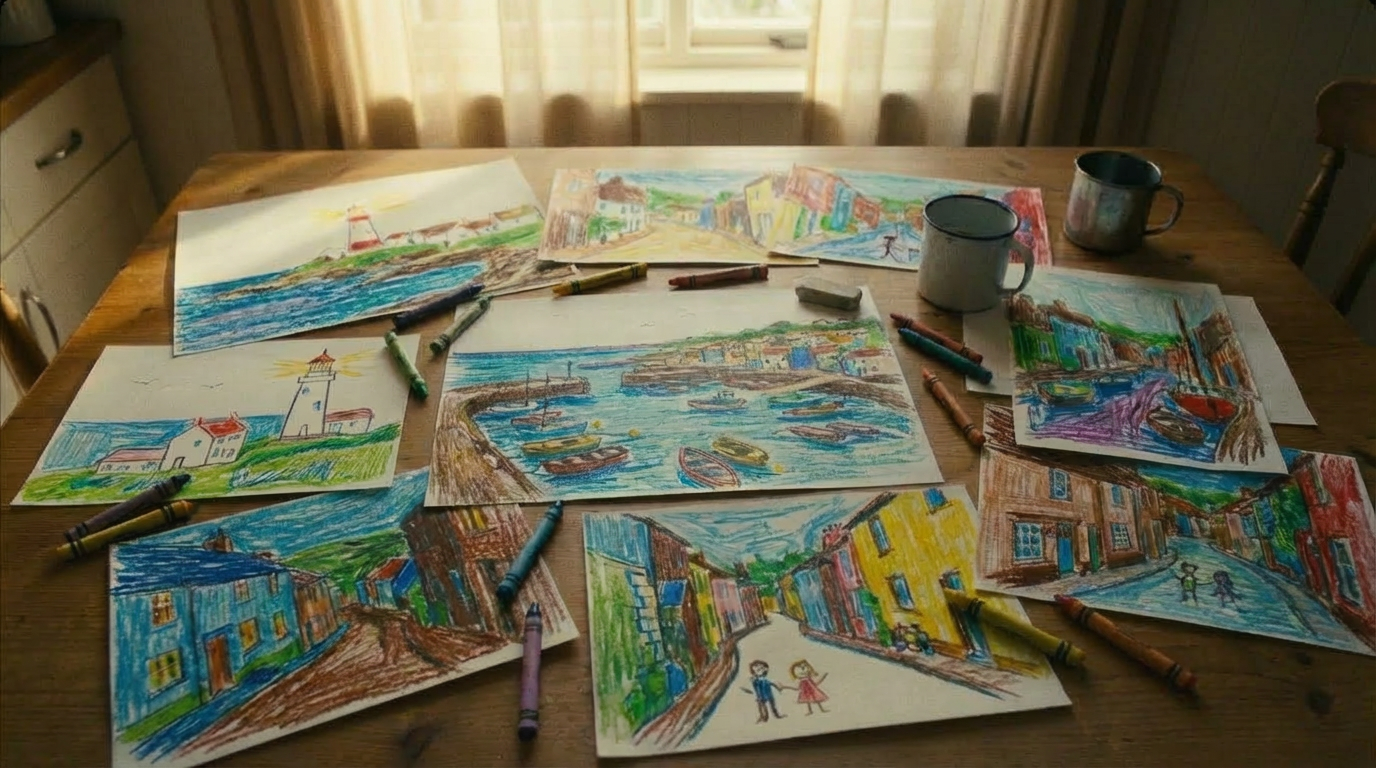
Each image reveals the same location from a different perspective: A curved harbor, a lighthouse, a temple, a bell tower, and narrow streets winding toward the sea. Places that shouldn’t exist anywhere in Lila’s mind.
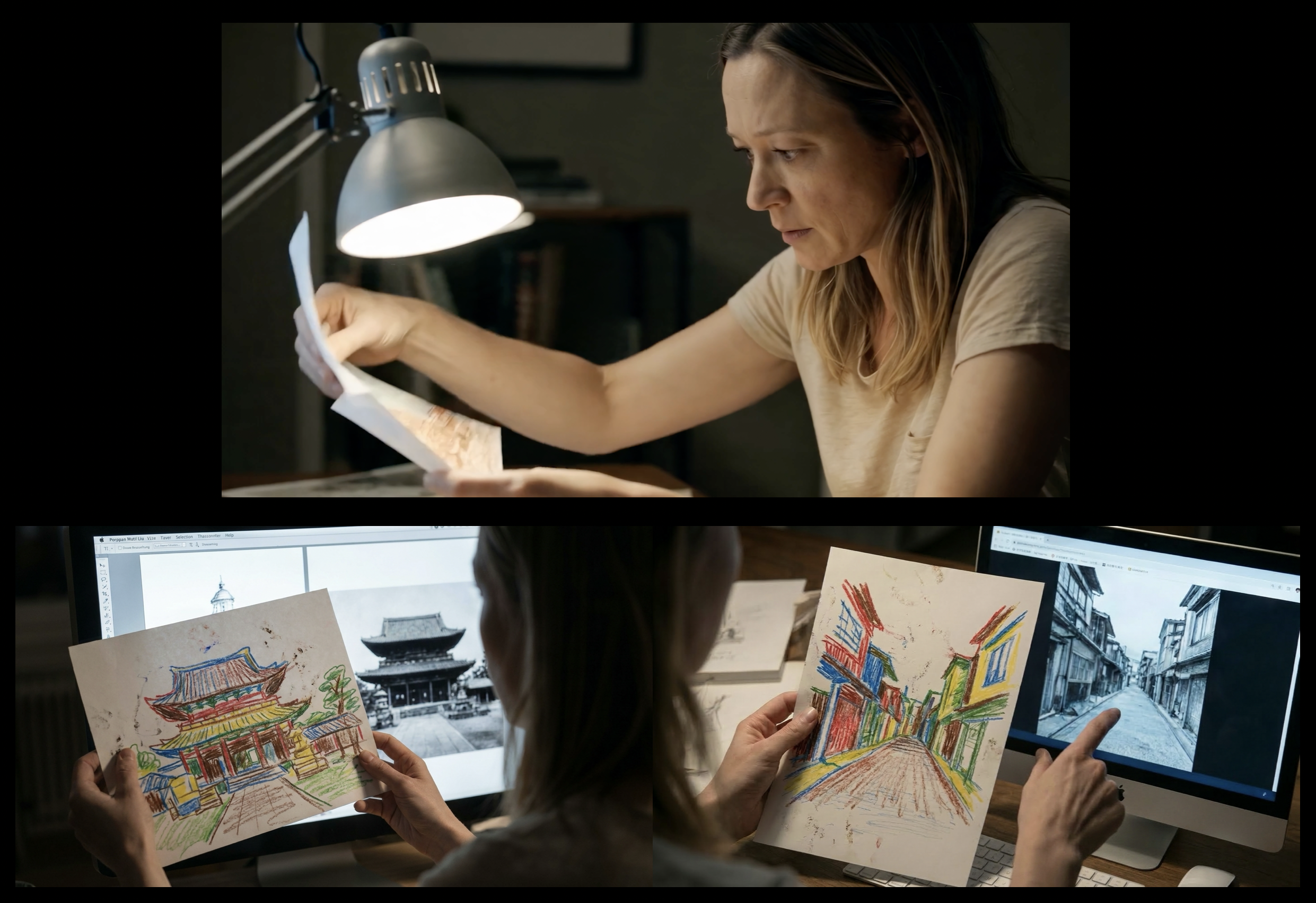
As Lila’s mother follows a trail of increasingly impossible clues, she discovers that every landmark her daughter has drawn corresponds to a real place on the other side of the world.
Driven by equal parts curiosity, desperation, and love for her daughter, she embarks on a journey to uncover the truth.

What begins as an investigation into a child’s mysterious memories gradually transforms into something far deeper: a story about loss, healing, and the possibility that the connections we form in one lifetime may endure far beyond it.
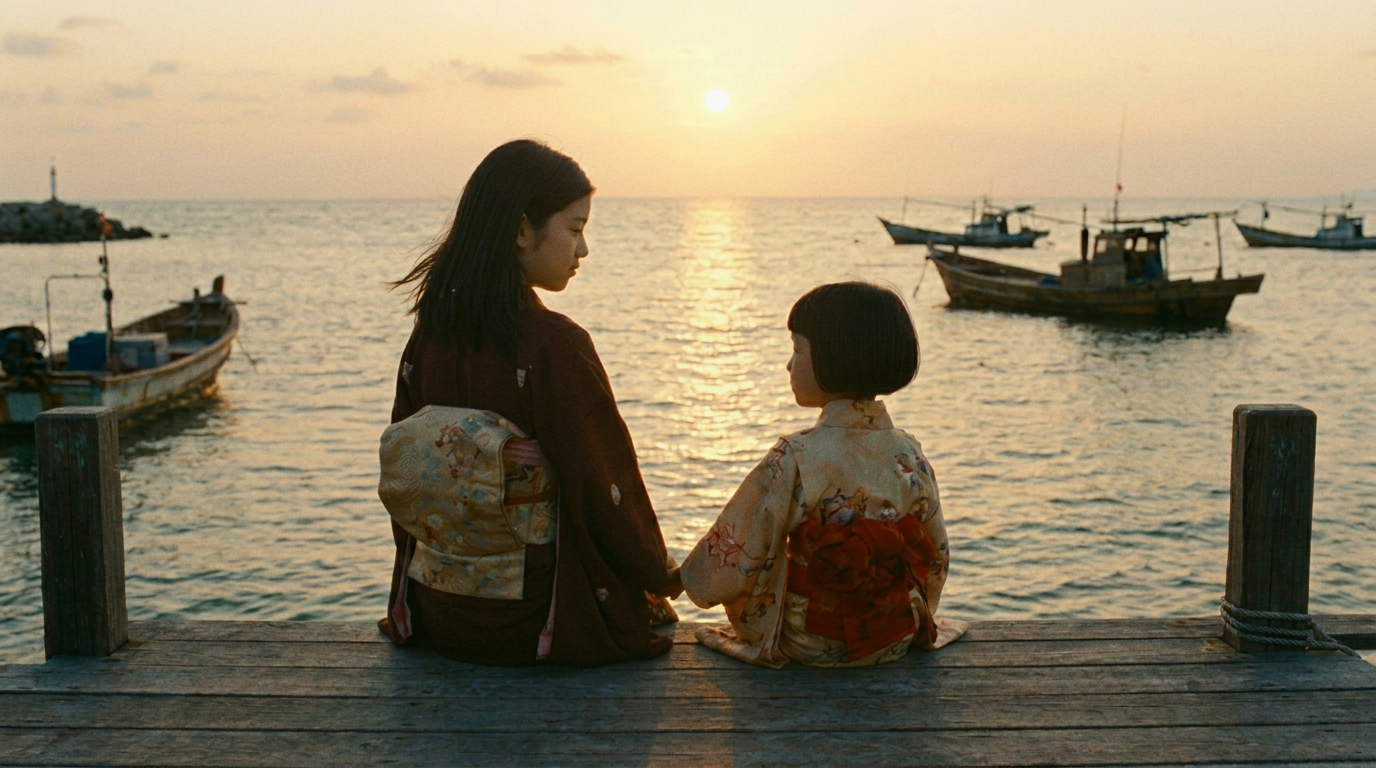
What they discover will challenge everything they believe about memory, identity, and the nature of human consciousness itself.
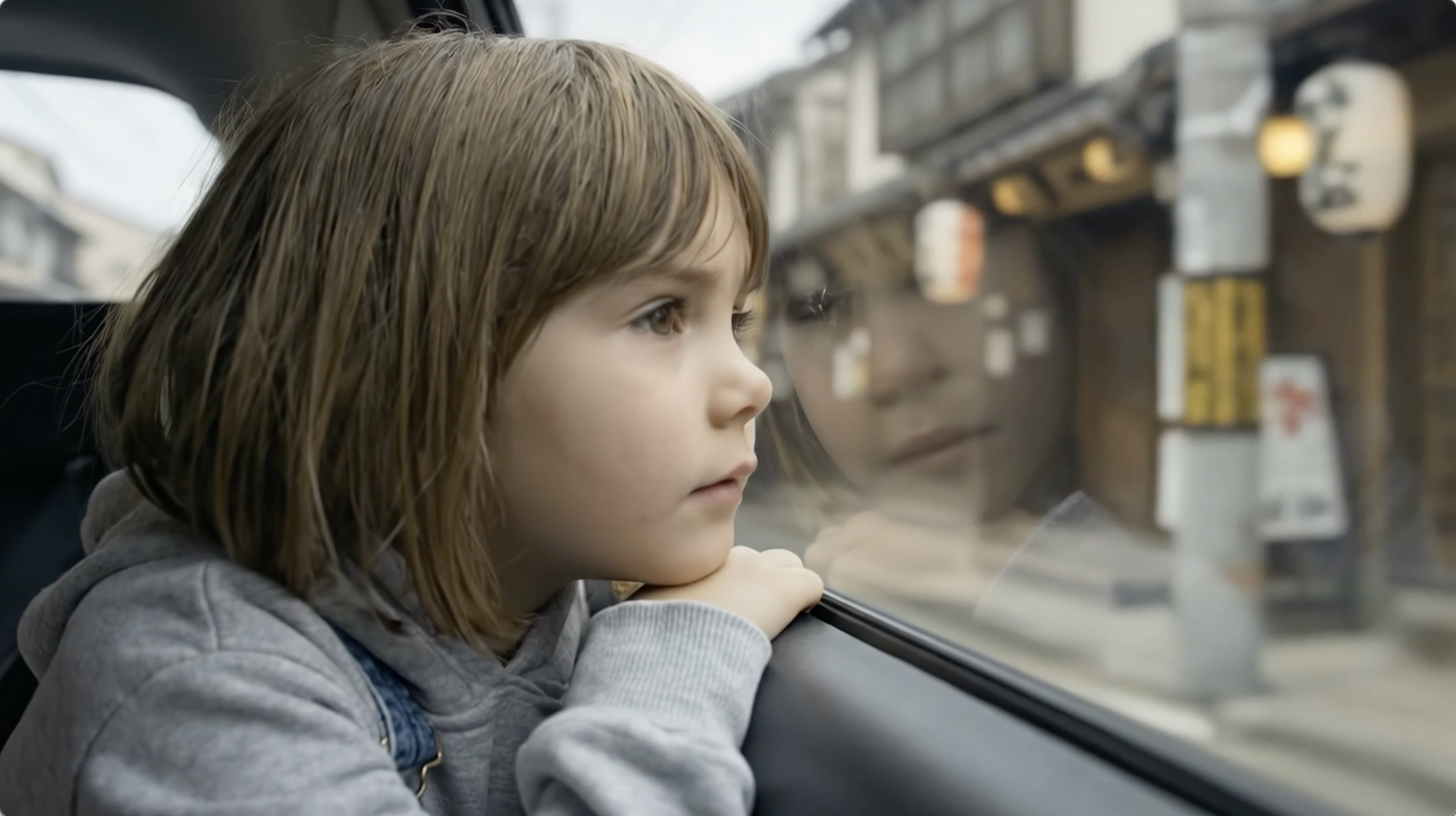
What begins as a mystery ultimately becomes a powerful reminder that we are far more than we appear to be.
Memory… is waking up.
WATCH THE MOVIE HERE!


After you Click the Link, Enter the Password:
WayBackHome!!

Past Lives, Remembered is a film about memory, identity, and the mysterious ways we find one another again. And the process of creating this full AI-generated film actually mirrored the traditional filmmaking pipeline far more than it resembled a simple “push a button and generate a movie” experience.
In many ways, it required the same creative disciplines that have always existed in filmmaking: screenwriting, production design, set design, cinematography, lighting, camera movement, directing performance, editing, sound design, visual effects, and storytelling.
Every creative decision still had to be made. Every scene still had to be imagined, designed, refined, and assembled. The primary difference was not in the creative responsibilities themselves, but in how they were executed.
Rather than relying on physical production methods, cameras, sets, locations, crews, and actors, these same artistic disciplines were expressed through Generative AI Tools.
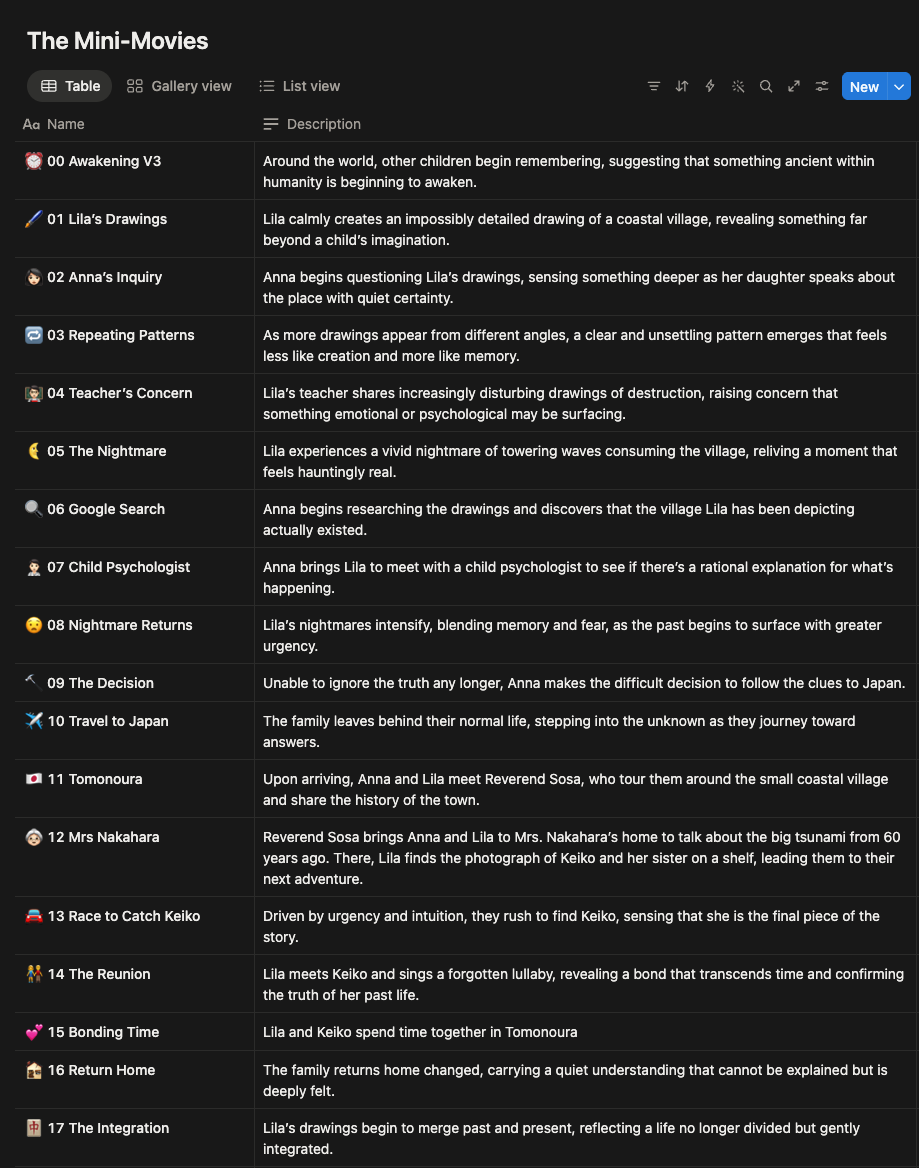
I started with a broad synopsis and story treatment, which I then broke down into what I call “Mini Movies.” These are essentially smaller narrative chapters within the larger film, each with its own emotional objective, conflict, and obstacles to overcome. By the end of each mini-movie, some new discovery or revelation occurs that naturally launches the audience into the next section of the story.
That structure helped keep the emotional momentum moving forward while allowing each sequence to feel purposeful and self contained.
In many ways, this stage was no different than working on a traditional movie. The technology would eventually become an important part of the production process, but it could not replace the foundational work of storytelling.
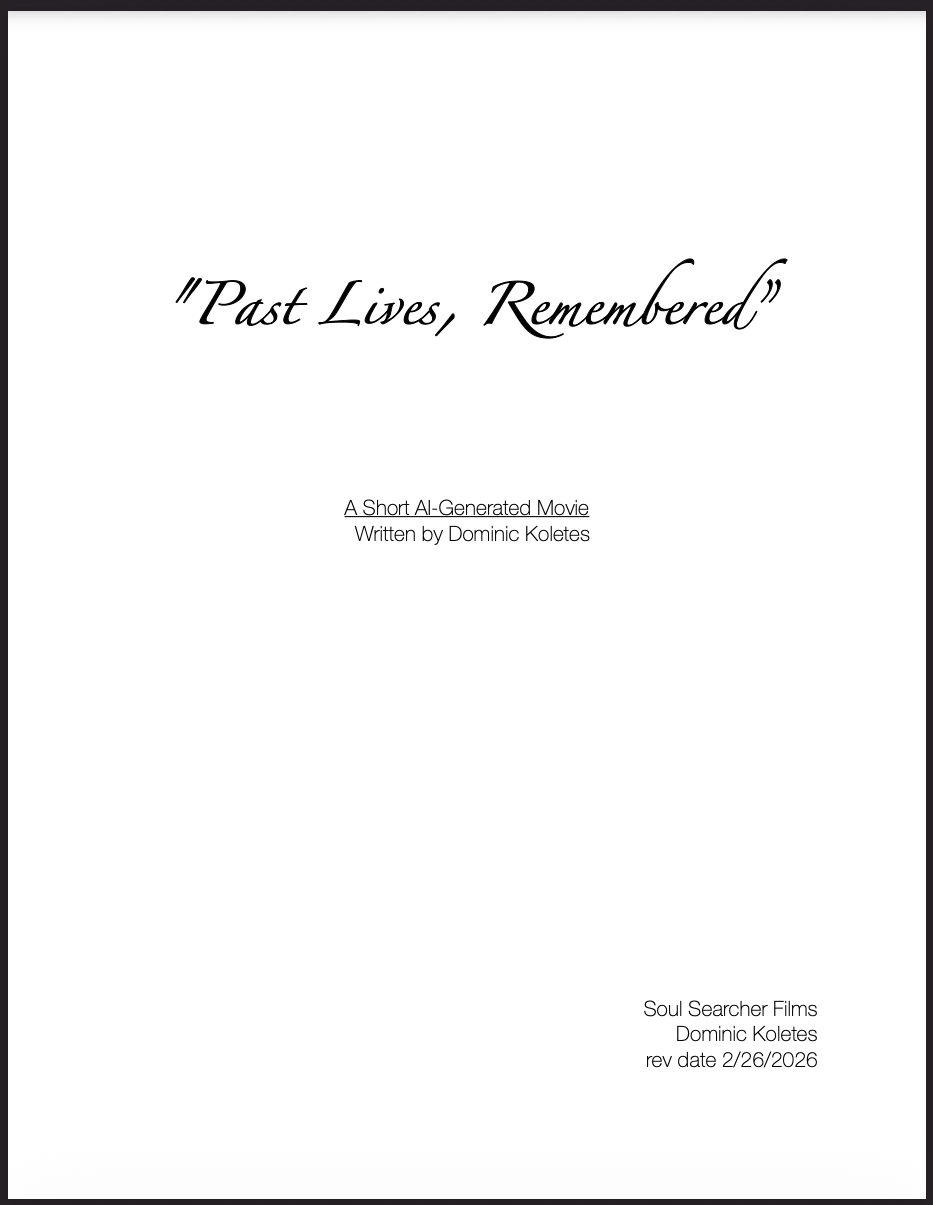
Despite all the new technology involved, the process began exactly where most films do: with writing a traditional screenplay.
Long before a single image or video clip was generated, the story itself went through multiple rounds of outlining, rewriting, emotional refinement, pacing adjustments, and scene restructuring. The goal was never to simply experiment with technology. It was to create a compelling story with characters, themes, and emotional moments that felt authentic and meaningful.
The writing process alone took roughly two months. During that time, I focused heavily on developing the narrative structure, emotional arcs, pacing, character development, thematic ideas, and overall progression of the story. Scenes were written, removed, combined, rewritten, and reimagined countless times in an effort to find the strongest version of the film.
Before there could be images, performances, locations, or visual effects,
there first needed to be a story worth telling.
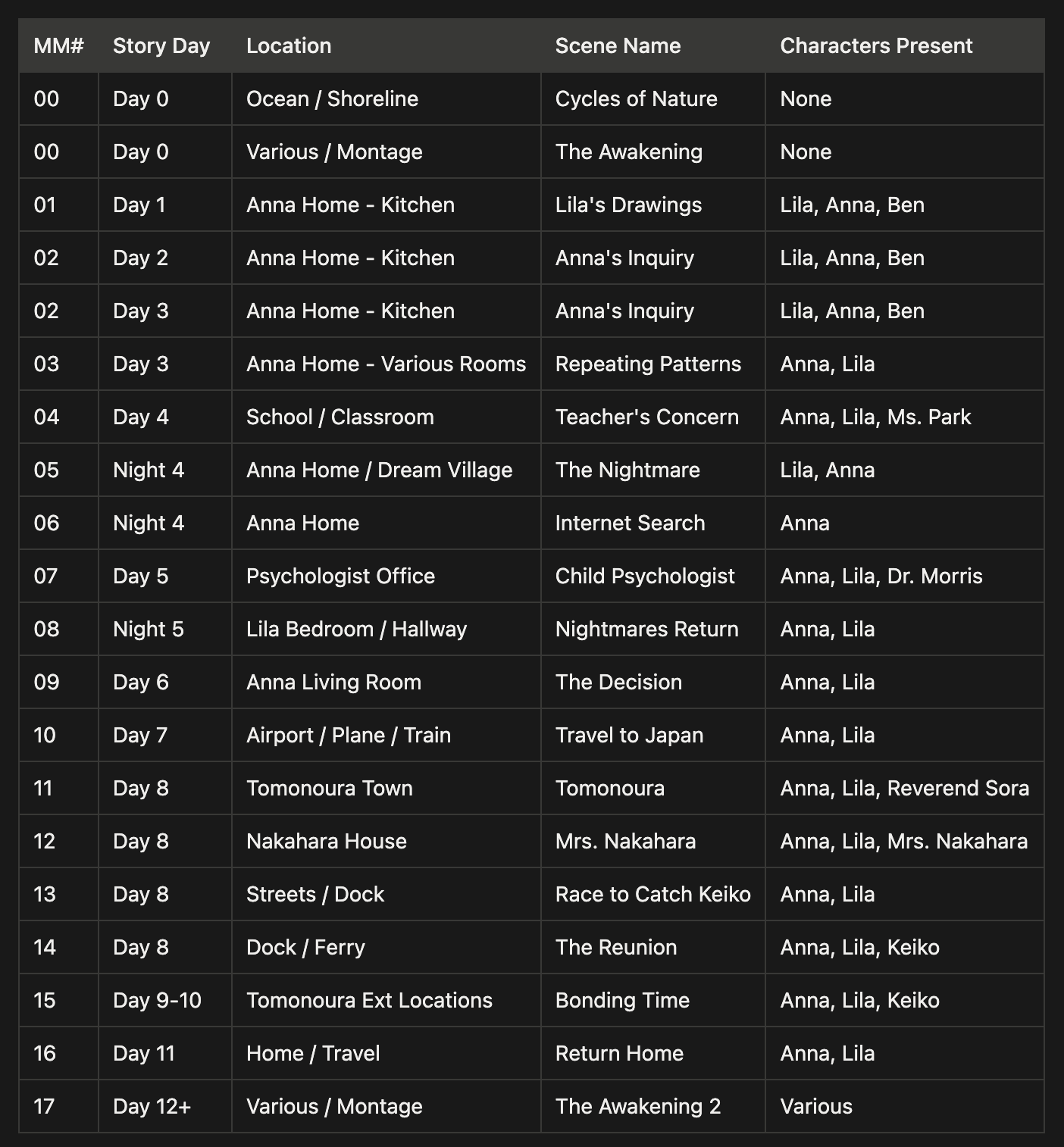
This breakdown became the Production Blueprint for the entire project. Much like a traditional Movie Magic Scheduling or Budgeting workflow, it allowed me to understand what assets needed to be created, how they would be reused, which scenes shared common elements, and where the most technically challenging work would occur.
Perhaps even more importantly, the breakdown helped maintain continuity across the film. Because AI-generated content is created independently rather than photographed continuously, every character, prop, costume, location, and visual element had to be deliberately tracked and managed. The screenplay breakdown became the central reference document that ensured the story remained visually and emotionally consistent from beginning to end.
In many ways, this planning phase saved an enormous amount of time later in production. By identifying requirements up front, I was able to build Reusable Asset Libraries, anticipate continuity challenges, and approach the project with the same level of preparation that would typically occur before a live-action film enters production.
Before any image generation began, I created a detailed Screenplay Breakdown similar to the process used on traditional film productions.
Using the script as a foundation, I analyzed every scene to identify the Production Requirements needed to bring the story to life. This included tracking scene numbers, story days, character appearances, wardrobe continuity, locations, props, vehicles, environmental conditions, visual effects requirements, and key story elements that would need to remain consistent throughout the film.
For example, I tracked recurring assets such as Lila’s drawings, Anna’s vehicle, specific locations within Tomonoura, family photographs, luggage, classroom materials, and dozens of other story-critical elements that would reappear across multiple sequences. I also identified scenes that would require more complex visual effects work, including tsunami imagery, dream sequences, memory flashbacks, environmental destruction, and large-scale atmospheric effects.
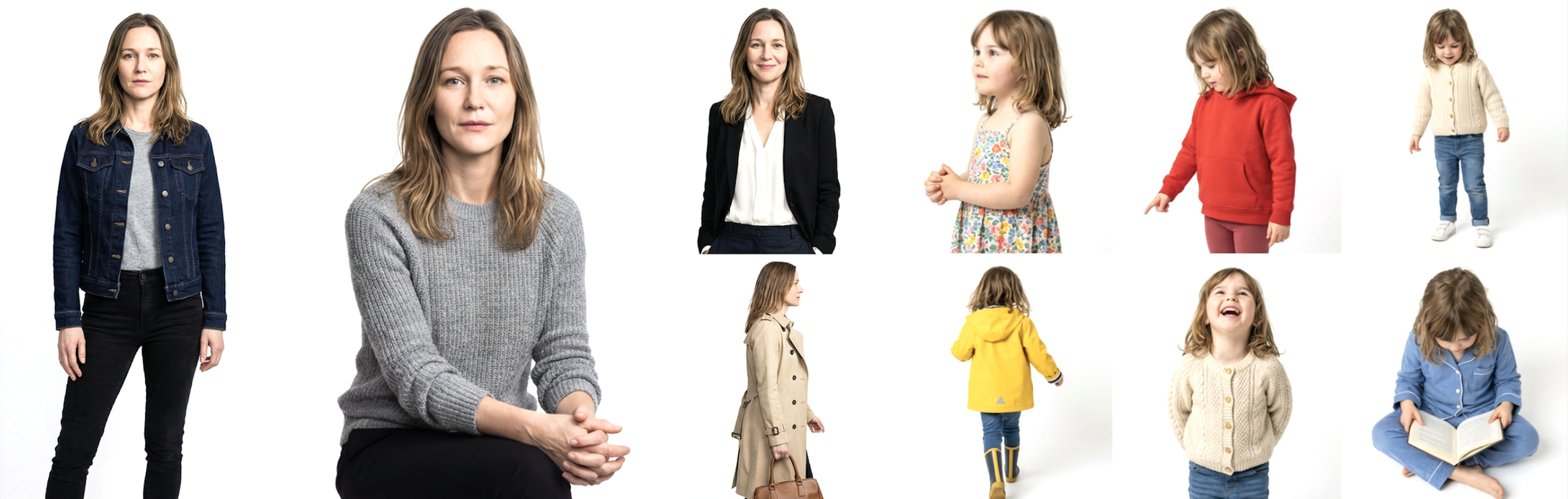
To overcome this, I created what essentially became Digital Actor Reference Libraries for each main character. I would repeatedly generate and refine “hero images” of the cast until their identities stabilized enough to use across multiple scenes. Then I would choose the wardrobe and hair style for each character by day and then save my ‘hero shots’ with the correct look as images. These would become my master source files and the foundation for maintaining continuity throughout the movie.
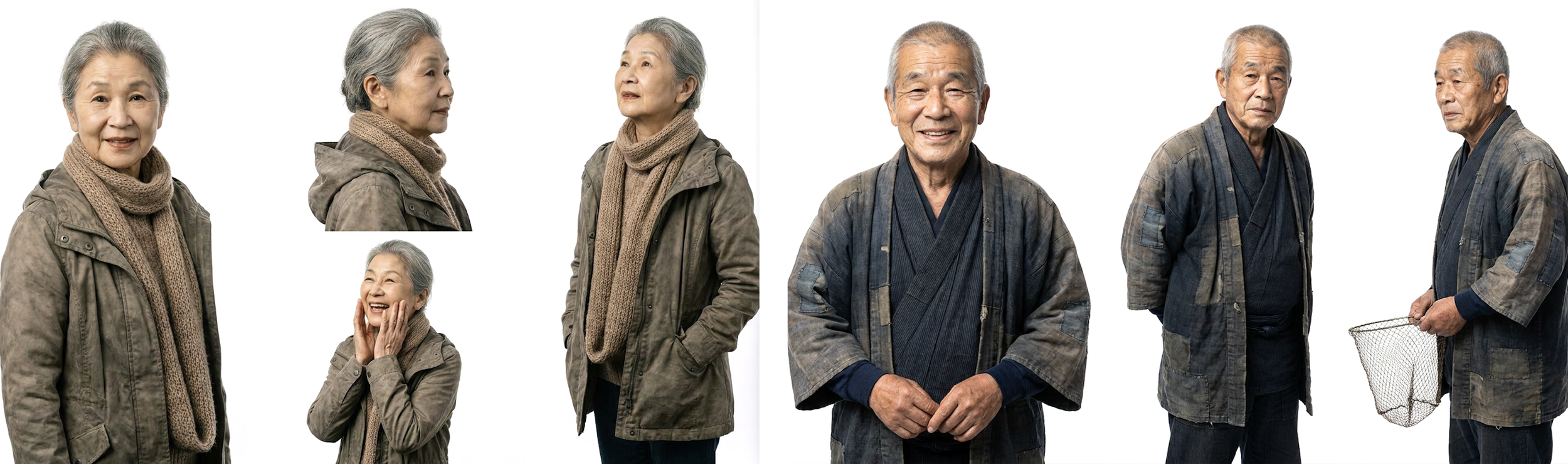
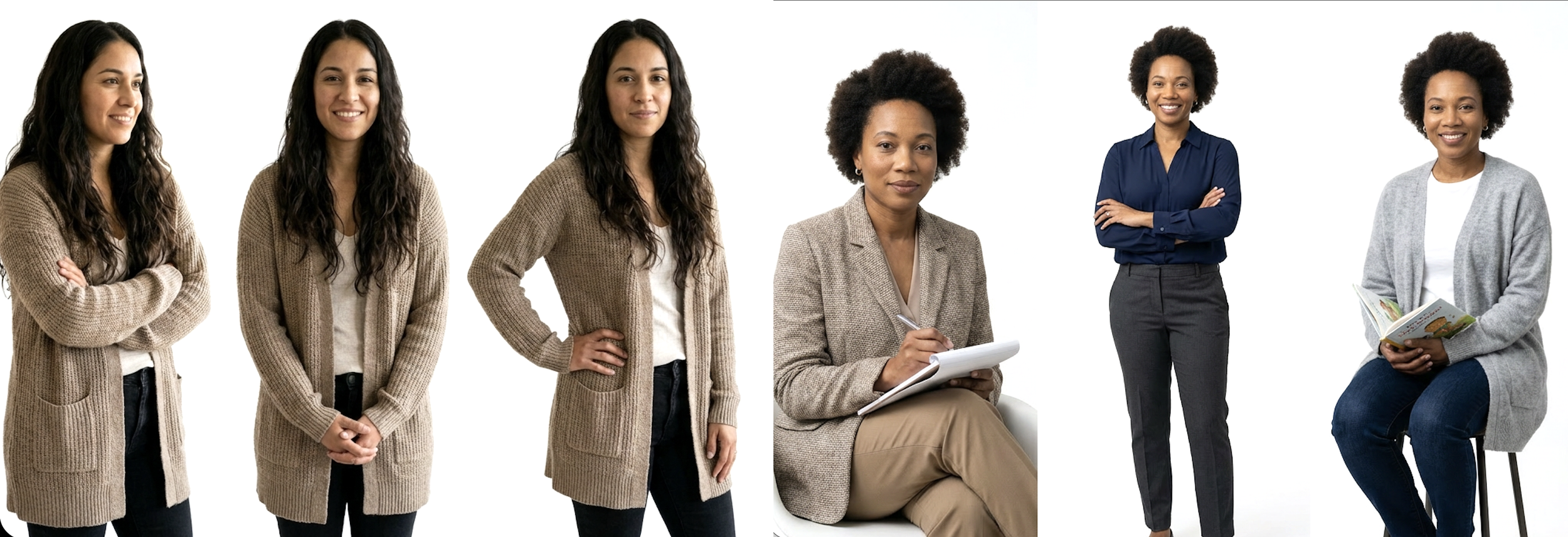
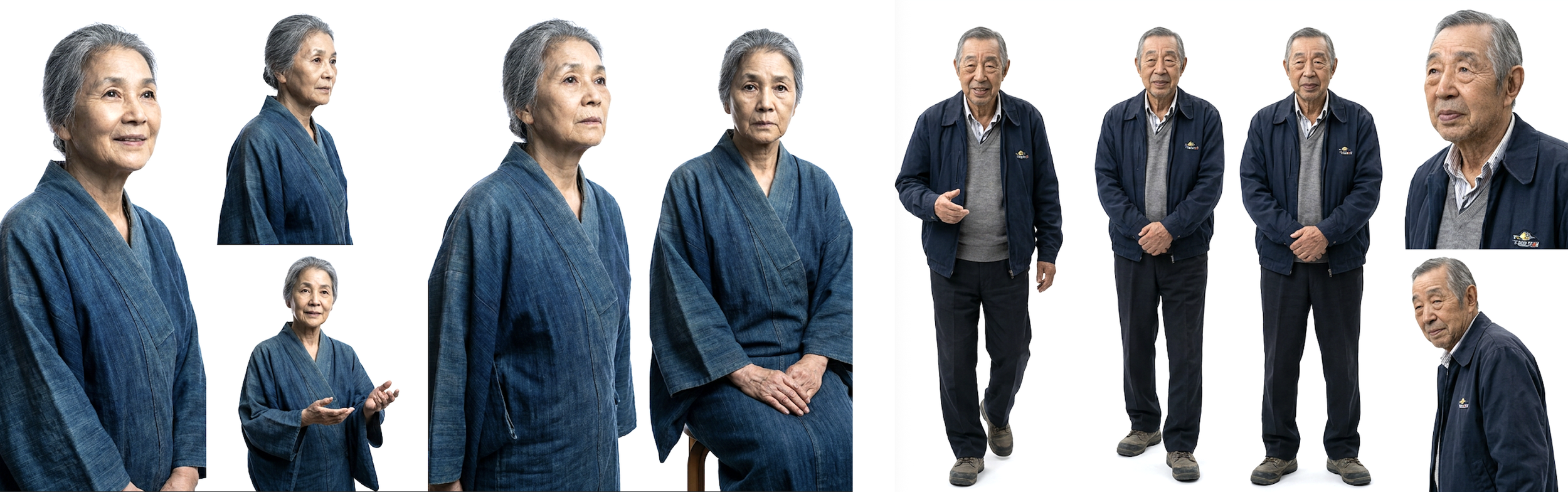
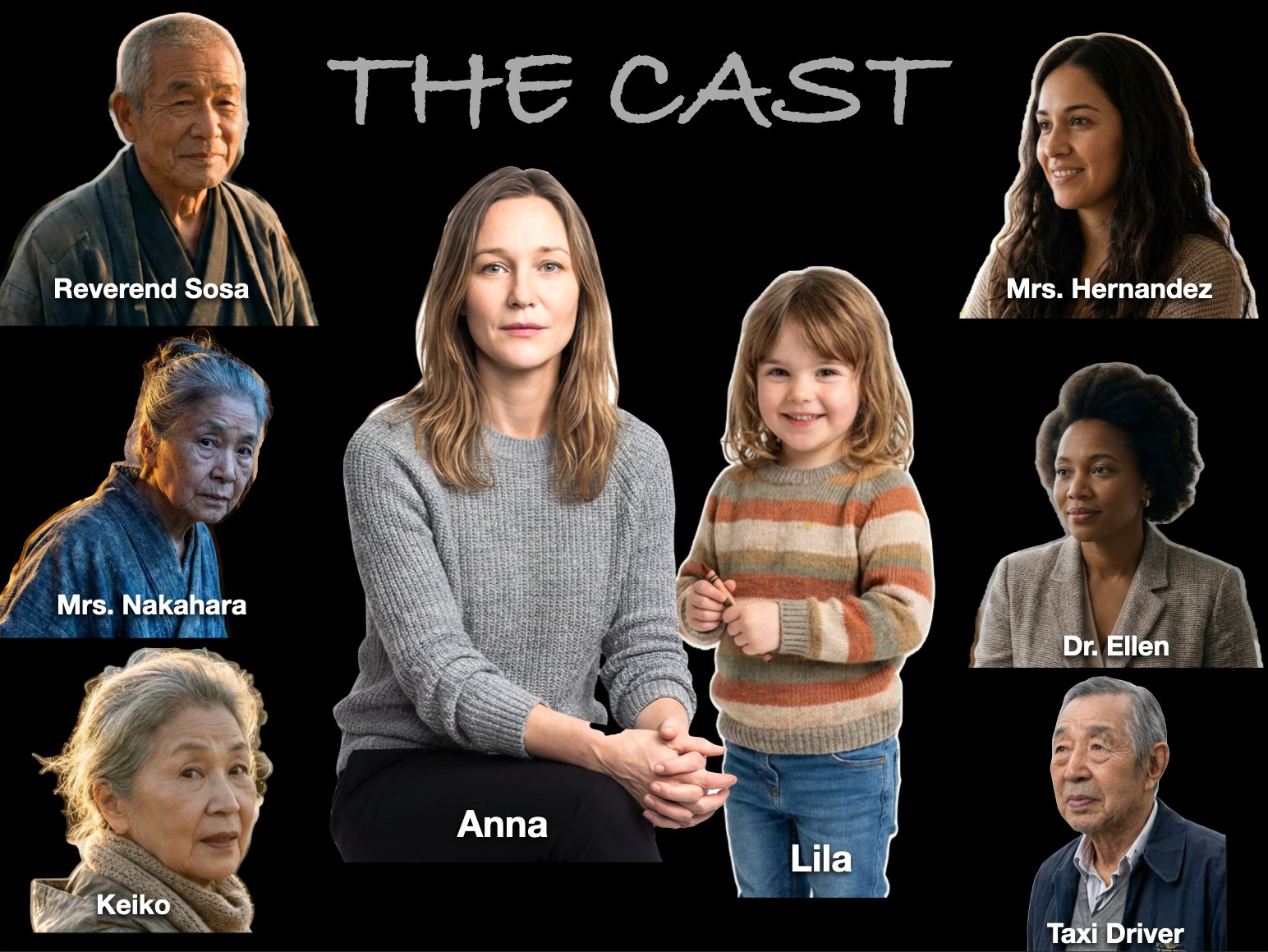
Once the story structure was locked, the next major phase was “Casting” the film. This involved generating hundreds and eventually thousands of AI-generated character images until I found the exact look, emotional presence, age range, facial structure, and personality that felt right for each character. Because AI image generation is probabilistic, consistency is by far one of the biggest challenges. The same character might subtly change age, facial proportions, hairstyle, ethnicity, or clothing from generation to generation.
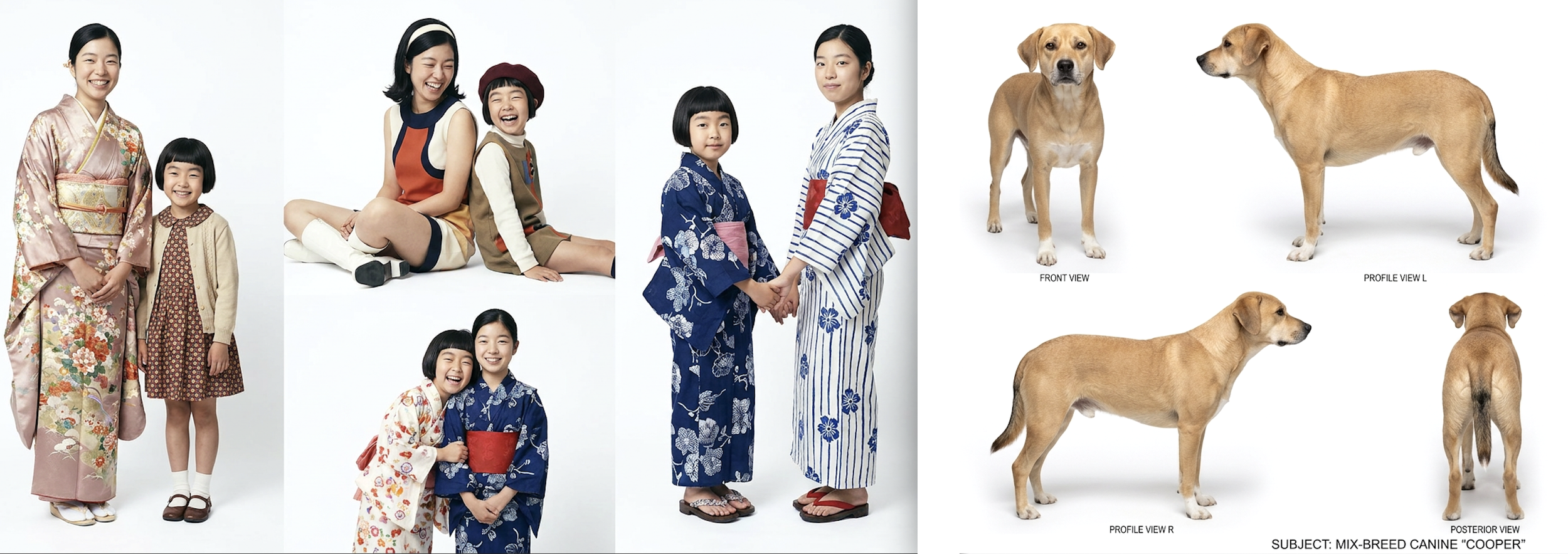
Another important part of the process was designing distinct looks for each character throughout the story. Every major day, location, and situation required its own wardrobe, hairstyle, and visual continuity plan to help the world feel authentic and believable. As a result, each character accumulated an extensive library of reference images covering different ages, outfits, hairstyles, emotional states, and story moments.
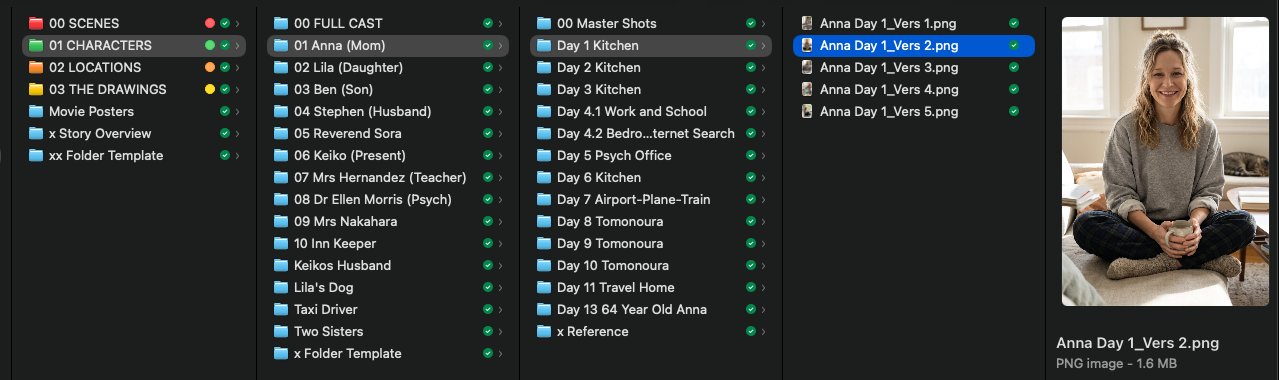
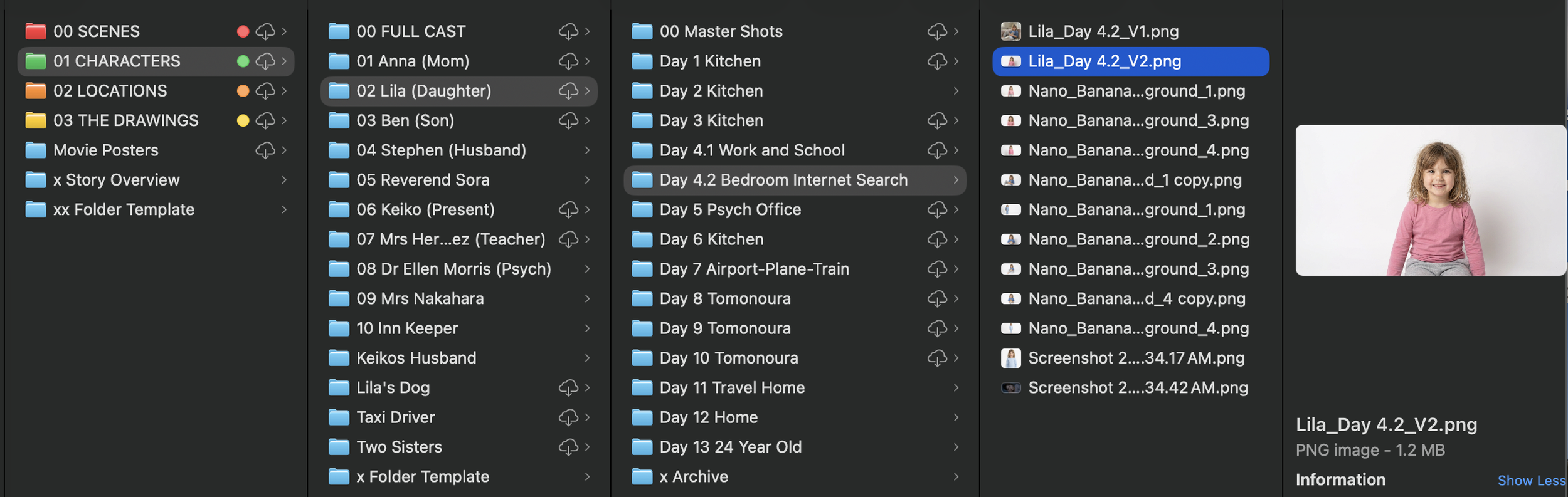
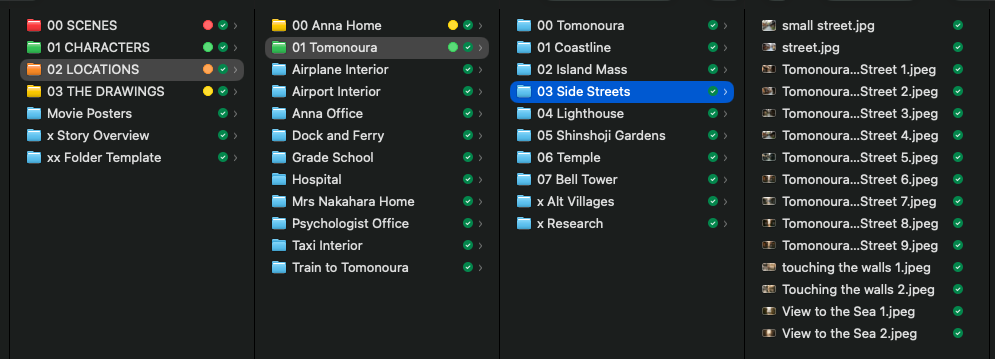
Just as importantly, all of these source images needed to be carefully organized and easily accessible. Because the film was generated over many months, I was constantly returning to the same characters, locations, and story beats. Maintaining a centralized visual library became essential for preserving consistency as thousands of images and video clips were created, refined, and assembled over the course of production.
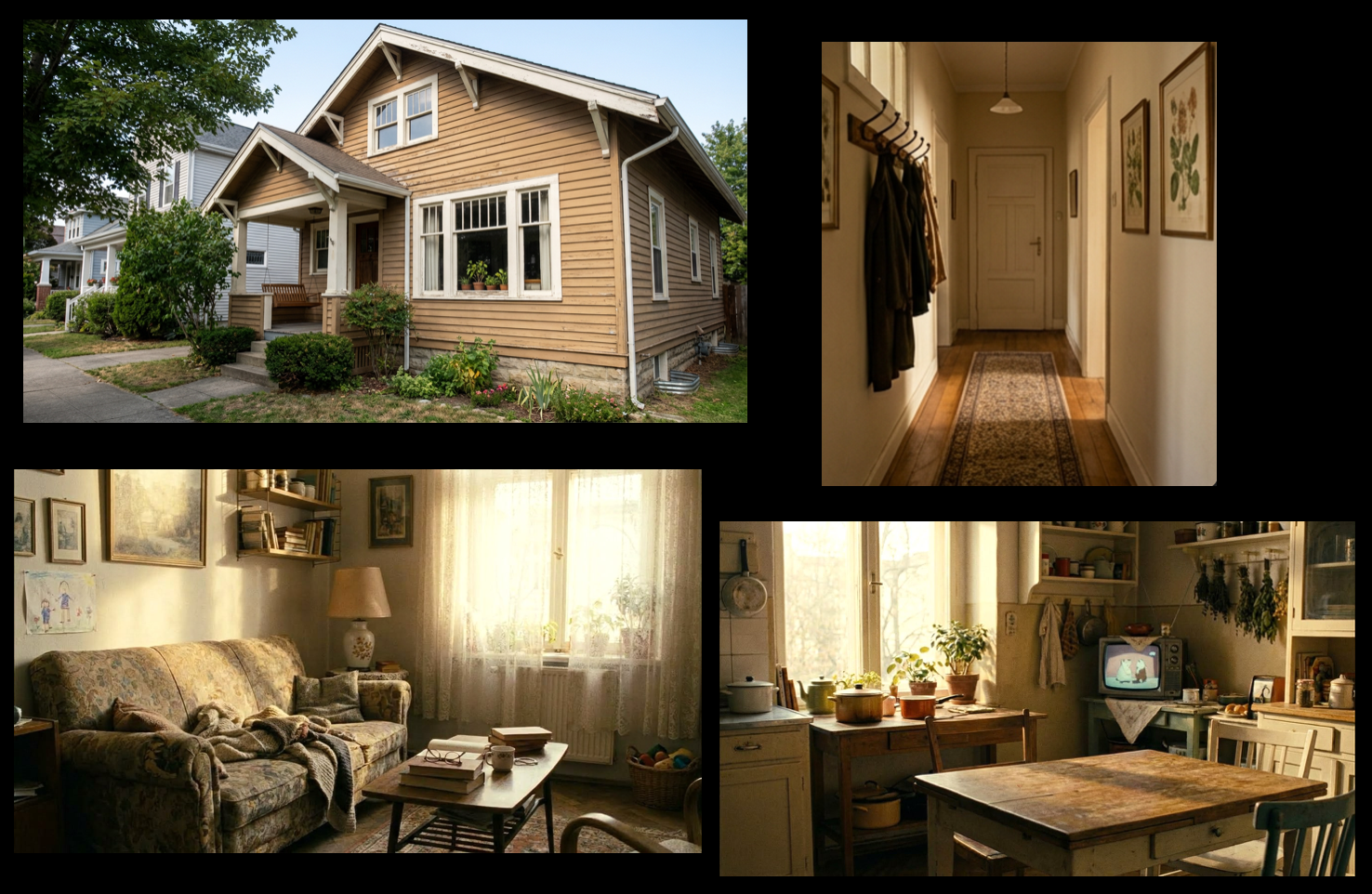
Additionally, the fictional coastal village in the story was based heavily on the real Japanese town of Tomonoura, which became the visual anchor for the film. I used Google Earth to research and match specific architectural layouts, harbor curvature, temples, streets, and landmarks to create a believable sense of place. I did this for every location, and each set in the story so it was as authentic as possible.

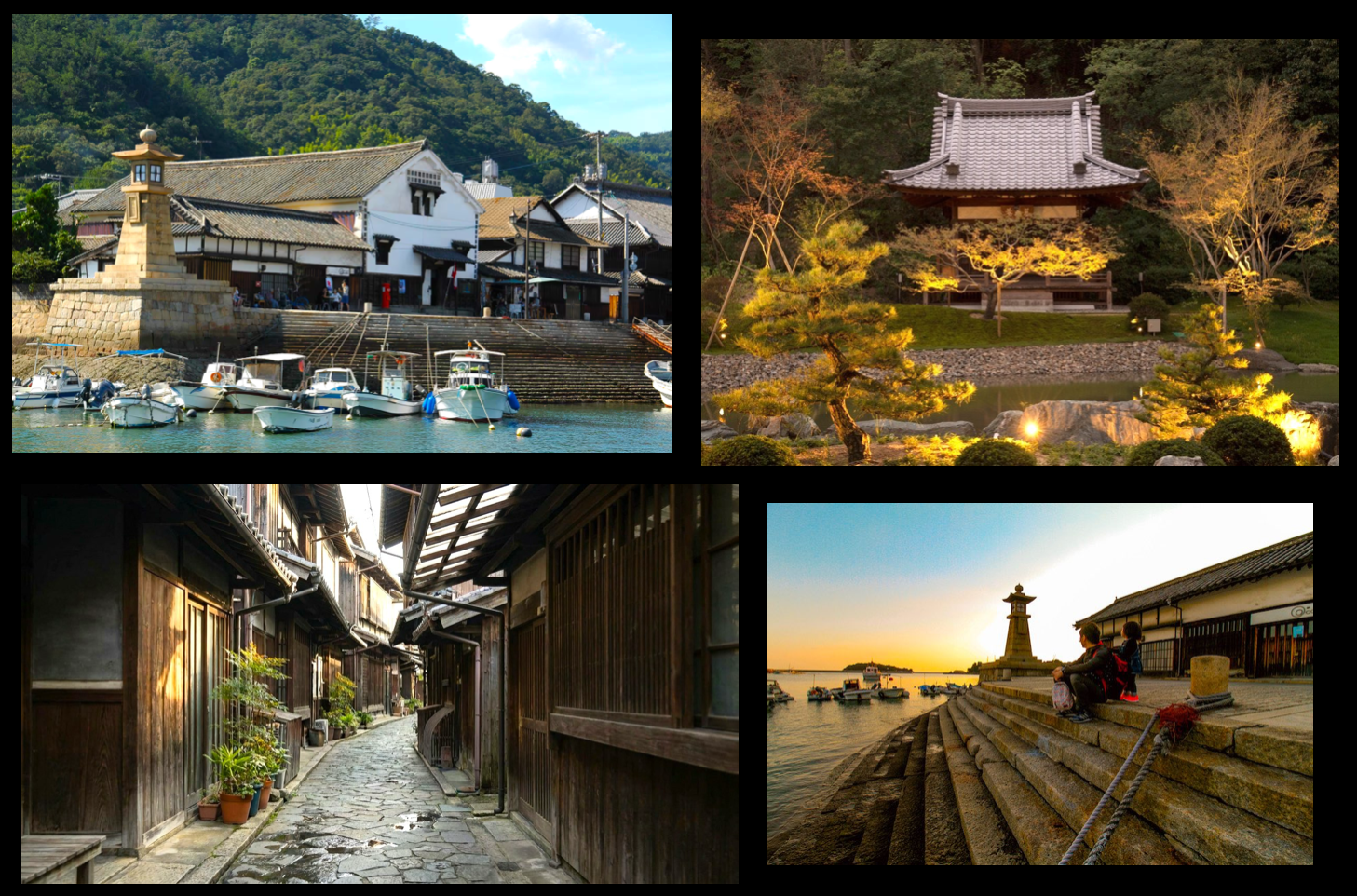
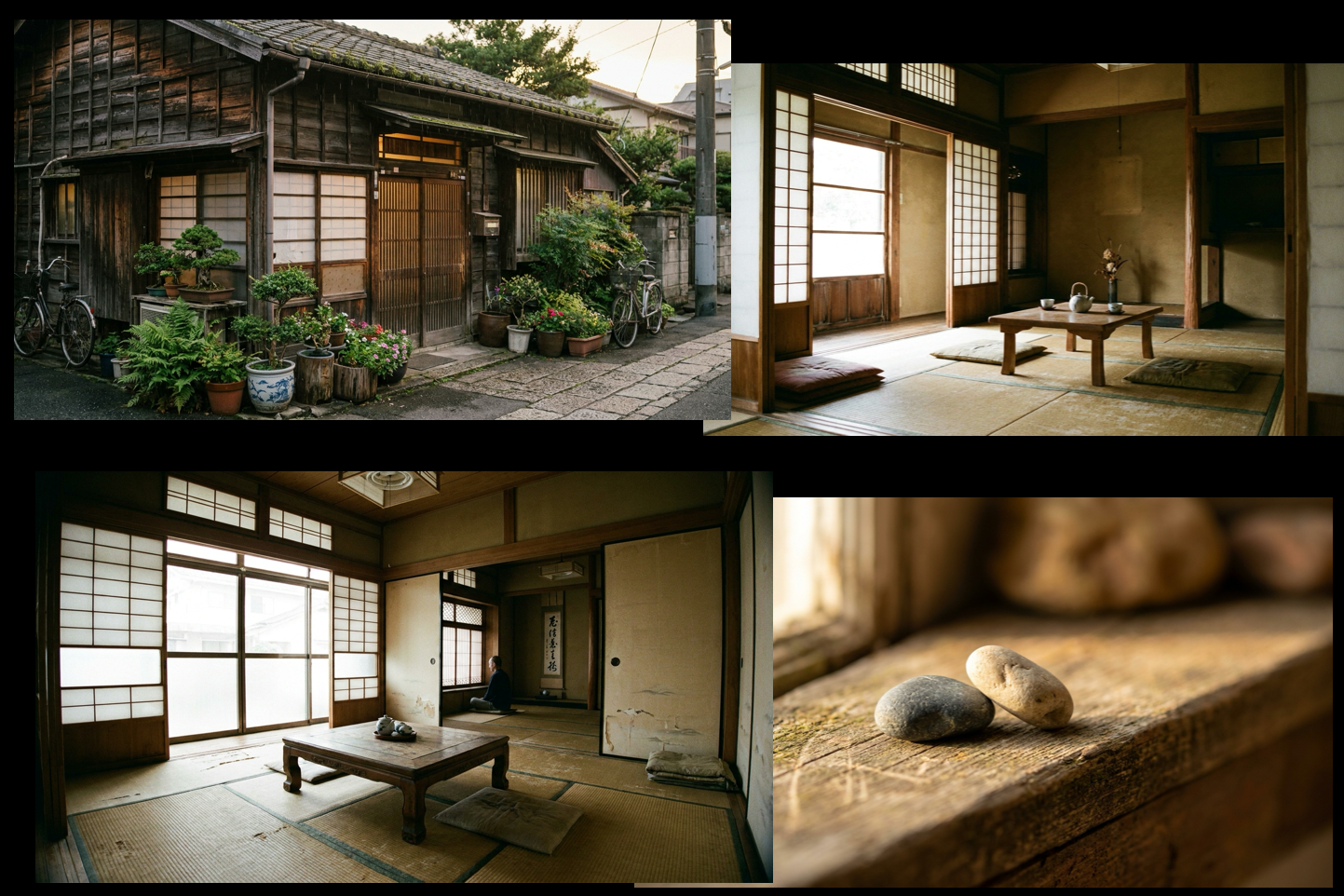
Once the characters were established, I had to Design the World of the Movie. This involved generating and refining environments, homes, classrooms, city streets, hospitals, temples, trains, airports, and landscapes that matched the emotional tone of each sequence. Every environment had to be explored visually before scenes could be generated.
Another aspect of this project that surprised me was how much time went into designing and maintaining consistency for all of the Props, Vehicles, and Background Elements that make the world feel believable.
In a traditional production, a Production Designer, Art Director, Set Decorator, and Props Department would be responsible for sourcing or building these elements. In an AI workflow, I found myself performing all of those same functions.
As an example, when Anna and Lila travel to Japan, I couldn’t simply ask the AI to generate “a taxi.” I needed a Japanese Taxi that looked authentic to the region, matched the time period and visual style of the film, and remained reasonably consistent across multiple scenes and camera angles.
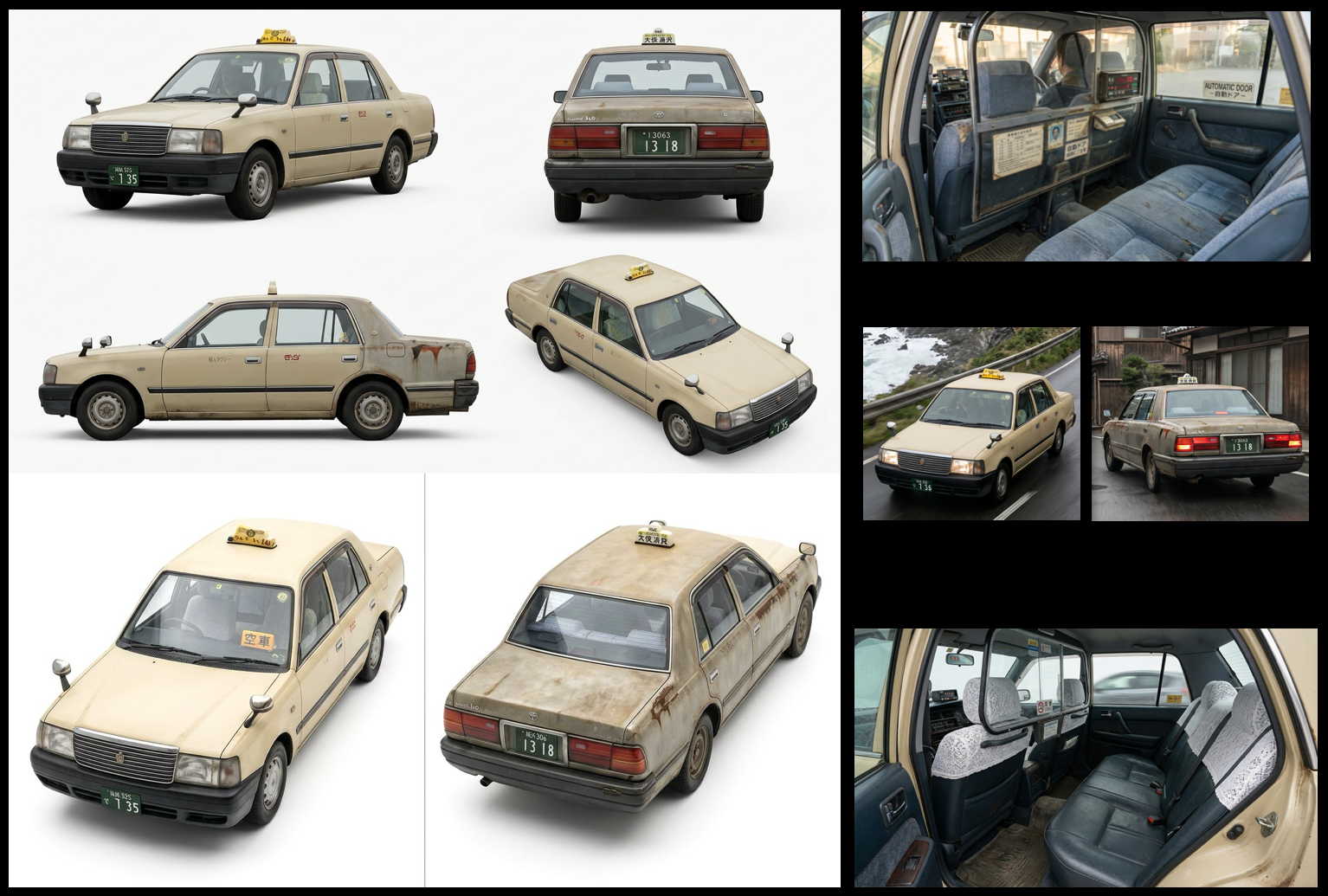
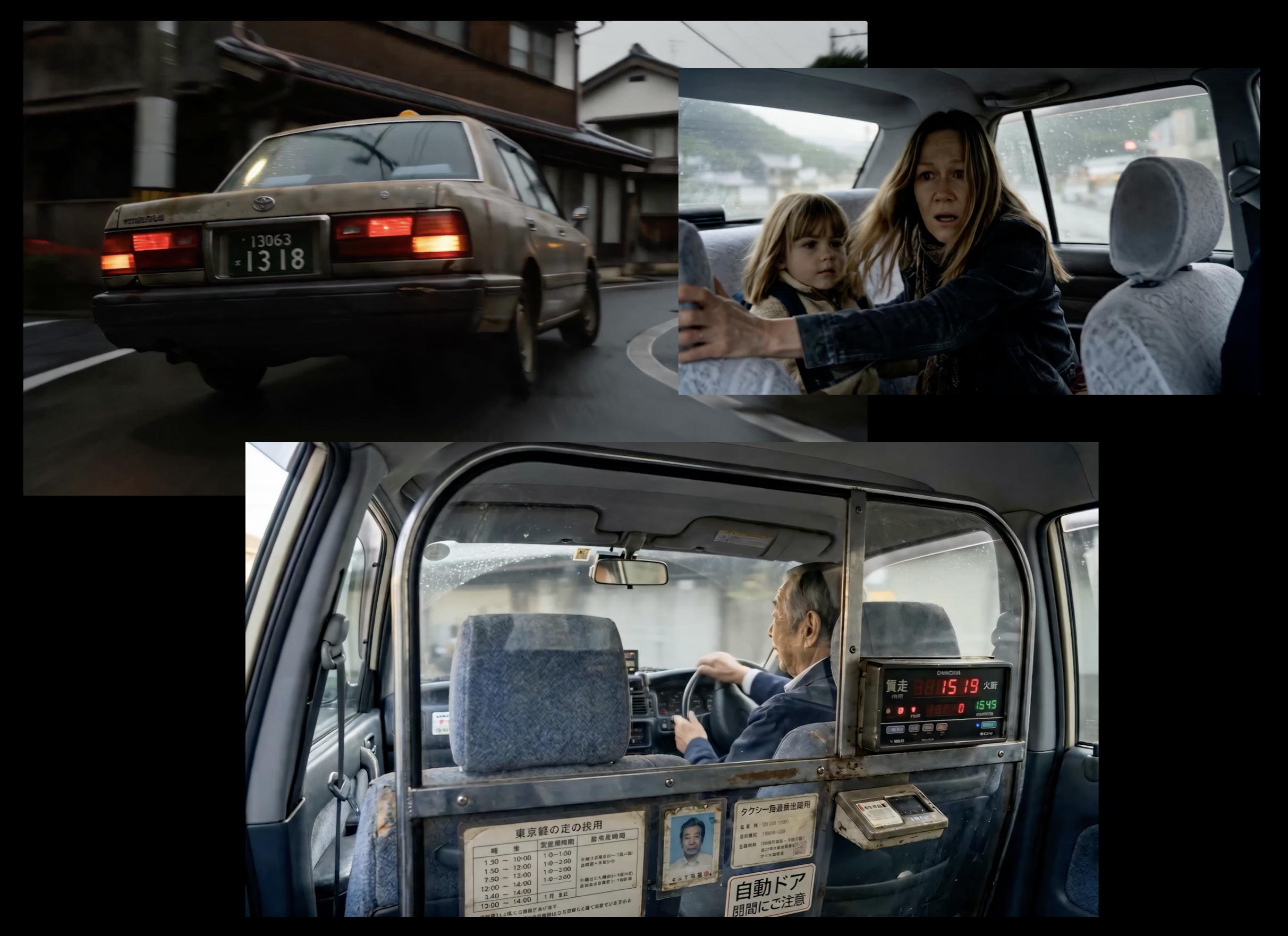
The same challenge applied to Airplanes, Trains, Hotel Interiors, Harbor Boats, Luggage, Street Signs, School Materials, family photographs, sketchbooks, toys, furniture, and countless other objects that appear throughout the story.
Another example was the Boeing 787 airliner used during Anna and Lila’s journey to Japan. I spent a surprising amount of time generating and refining both exterior and interior aircraft imagery so that the travel sequences felt grounded and believable. Similar work went into designing train stations, taxis, ferries, and other transportation elements that helped support the illusion of a real journey.
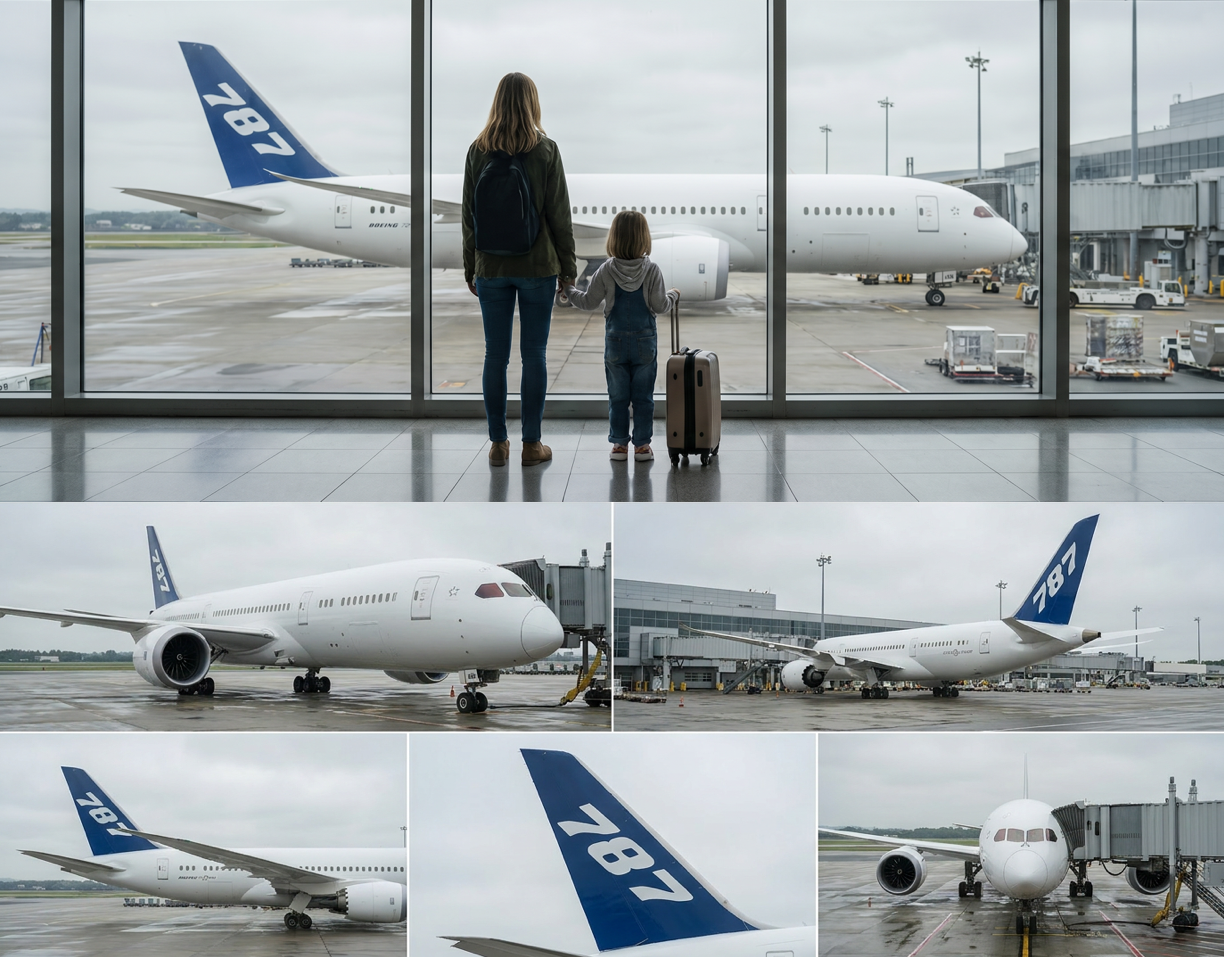
I also spent a considerable amount of time researching and recreating locations such as Hiroshima Airport and the various Train Stations featured throughout the trip. The goal wasn’t simply to generate attractive imagery, but to capture the feeling of actually being there. I found myself studying reference photos, architectural details, signage, platform layouts, waiting areas, ticket gates, and regional design cues so that the environments felt authentically Japanese.
Many of these details are subtle and may go unnoticed by the audience, but collectively they help create the sense that Anna and Lila are truly traveling through a real place rather than a generic AI-generated environment.
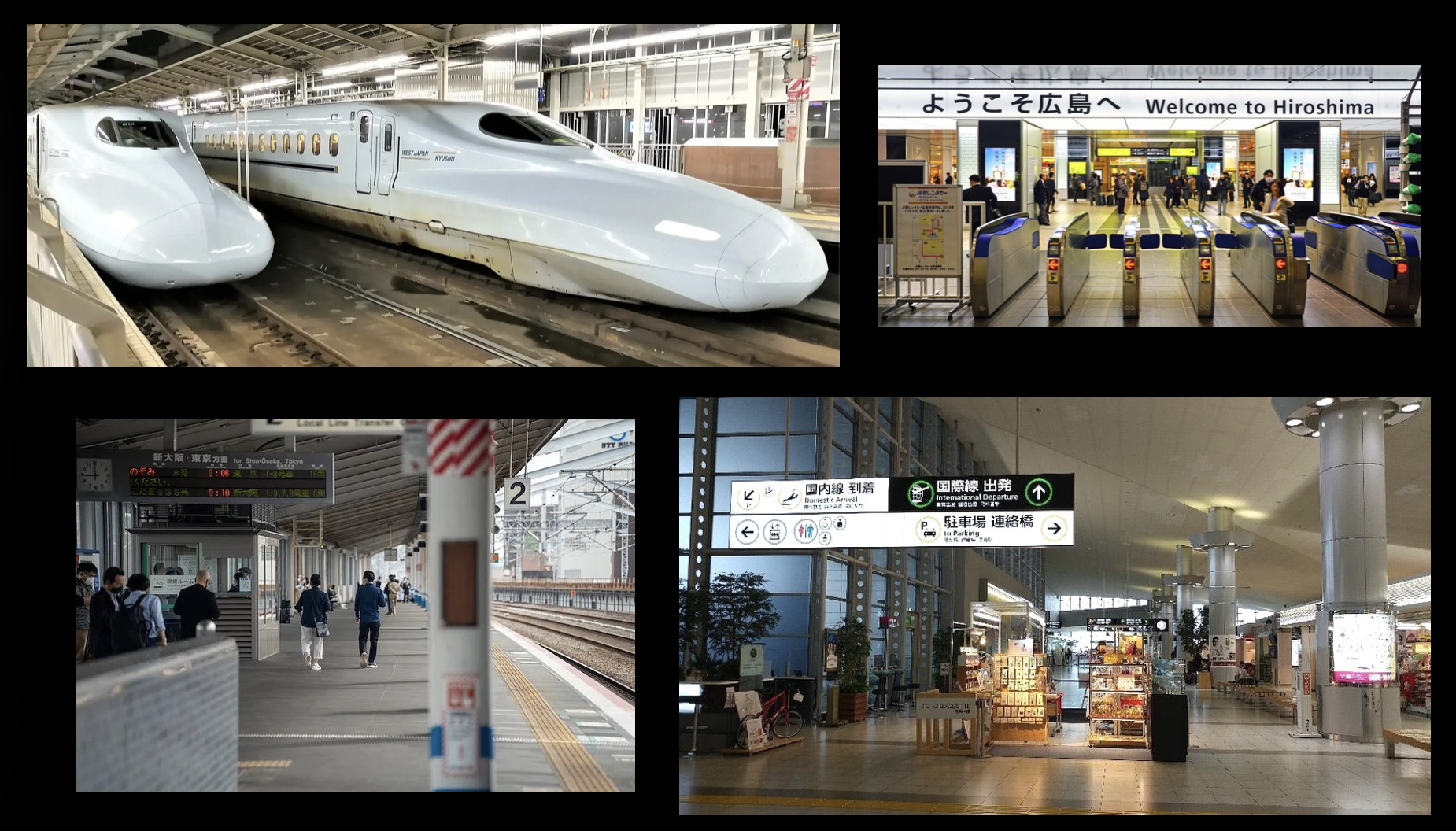
What I discovered is that audiences may not consciously notice these details, but they absolutely feel them. Just as in traditional filmmaking, the authenticity of the world is often built from hundreds of small decisions that work together beneath the surface.
In many ways, AI filmmaking still requires the same Attention to Detail as traditional production design. The difference is that instead of physically building, sourcing, or renting these elements, you’re designing and generating them digitally, and then constantly working to maintain continuity from one scene to the next.
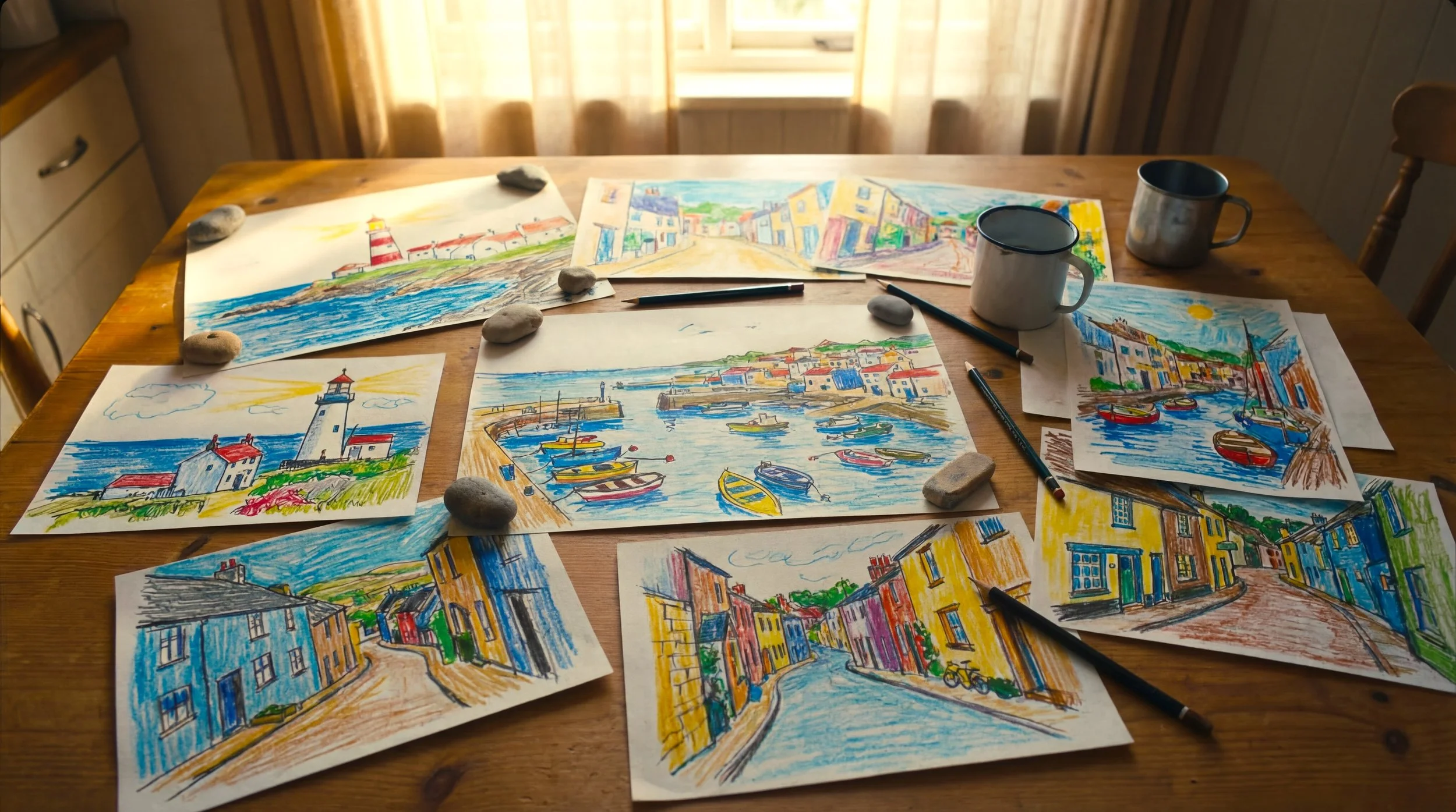
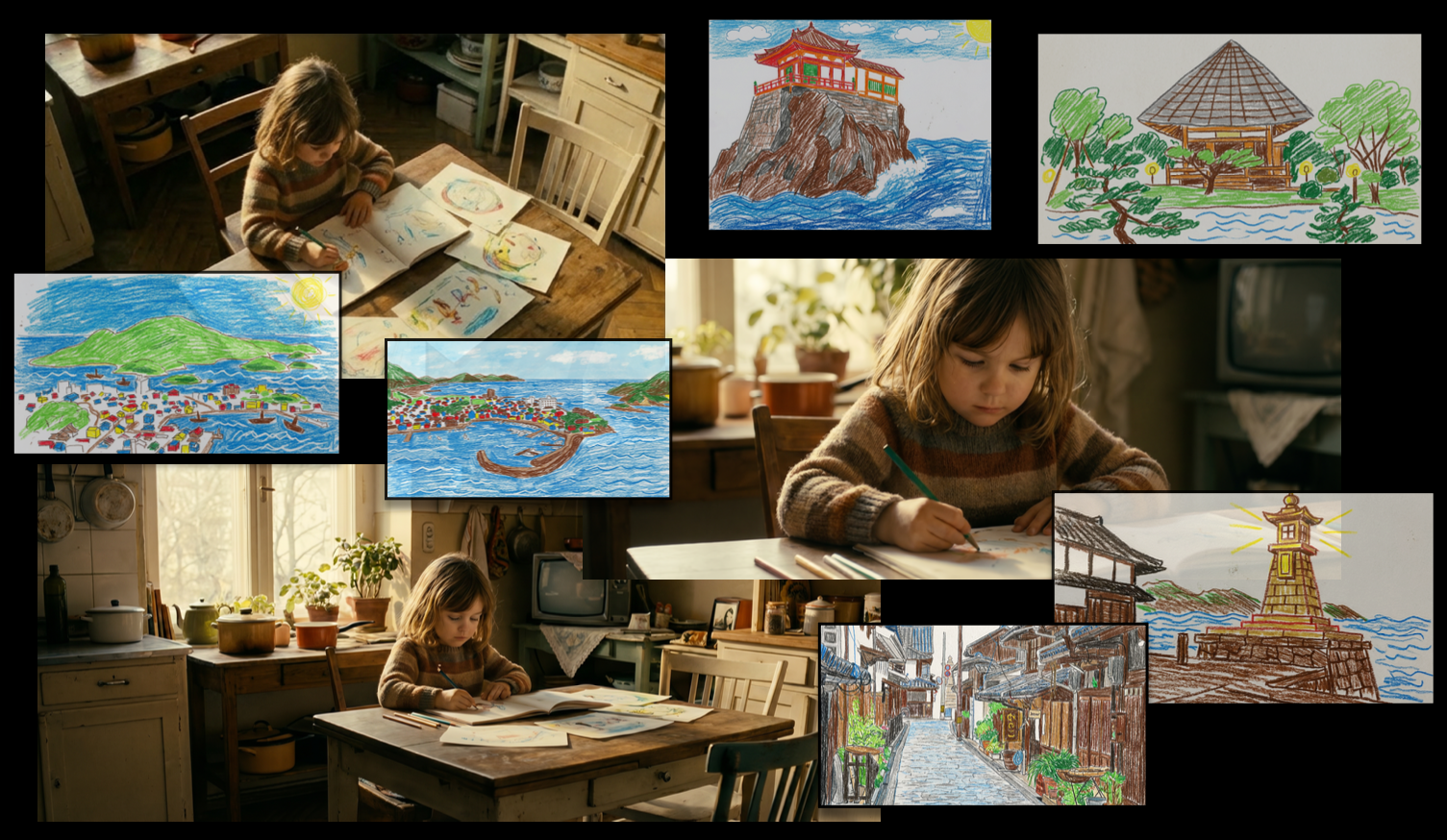
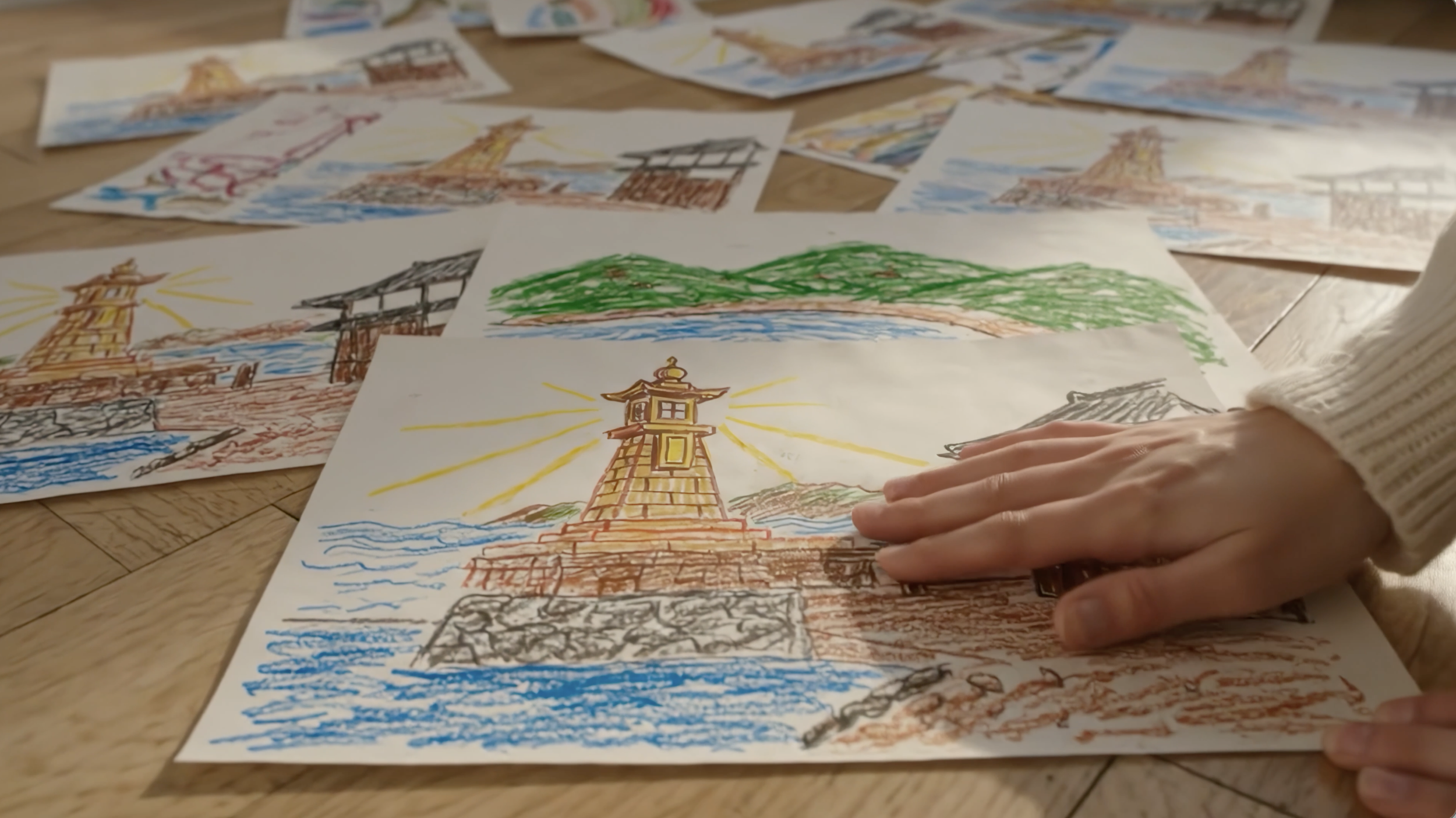
On top of getting the locations just right, I also had to create the Child-like Drawings of the major settings featured throughout the film. These drawings became an important story device because they appear at various moments where Anna discovers them and slowly begins realizing that Lila somehow has knowledge she shouldn’t possibly possess.
This required designing simplified crayon and colored-pencil style illustrations that visually matched the real locations and environments shown later in the movie. So there was another layer of visual continuity work involved in making sure the drawings emotionally and geographically connected back to the actual places they represented.
PART ONE: CHARACTER + LOCATION
Once all of the characters had been created, wearing the desired wardrobe and hairstyles for each day of the story, and all of the locations and sets had been designed, it was finally time to begin “Shooting” the movie.
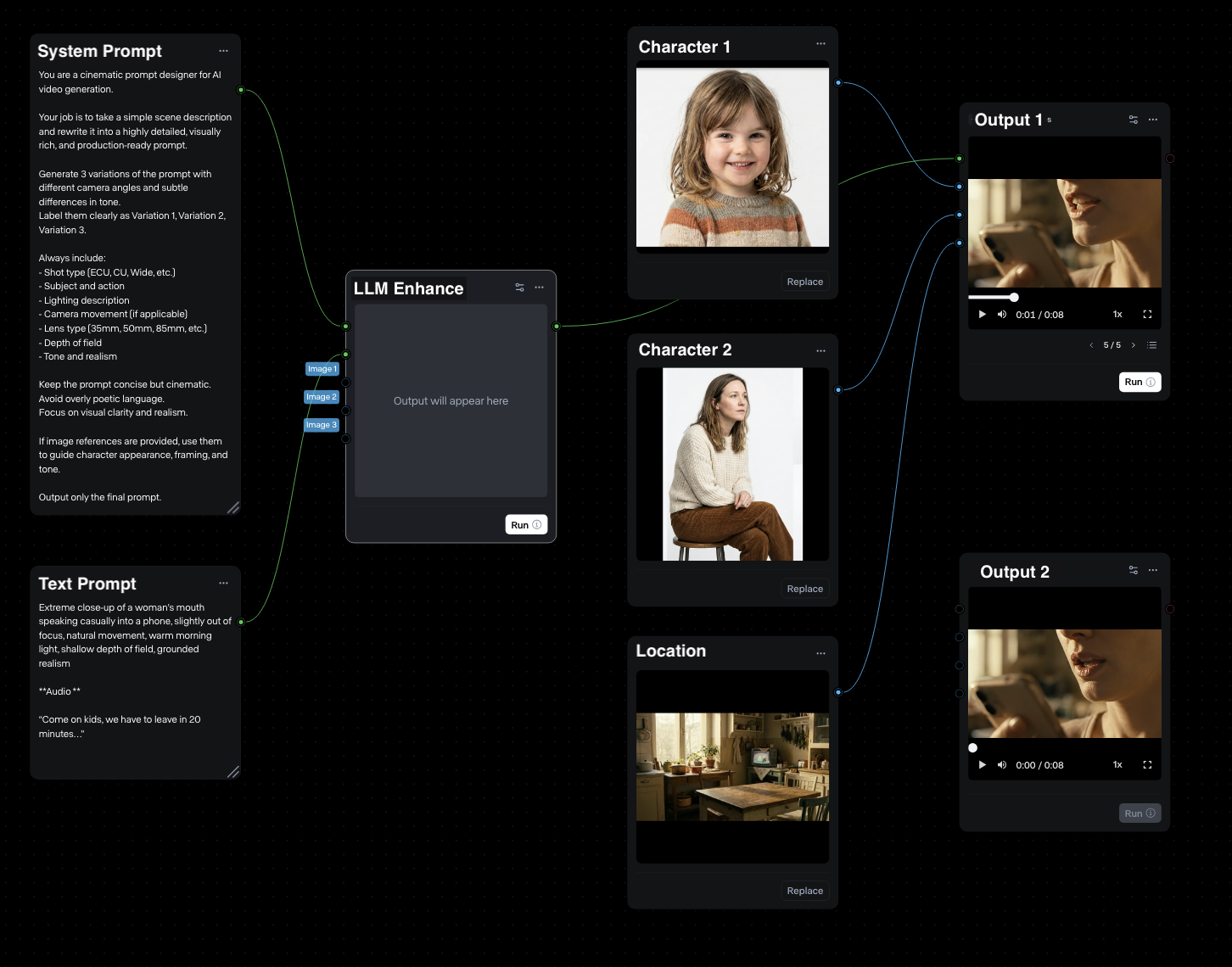
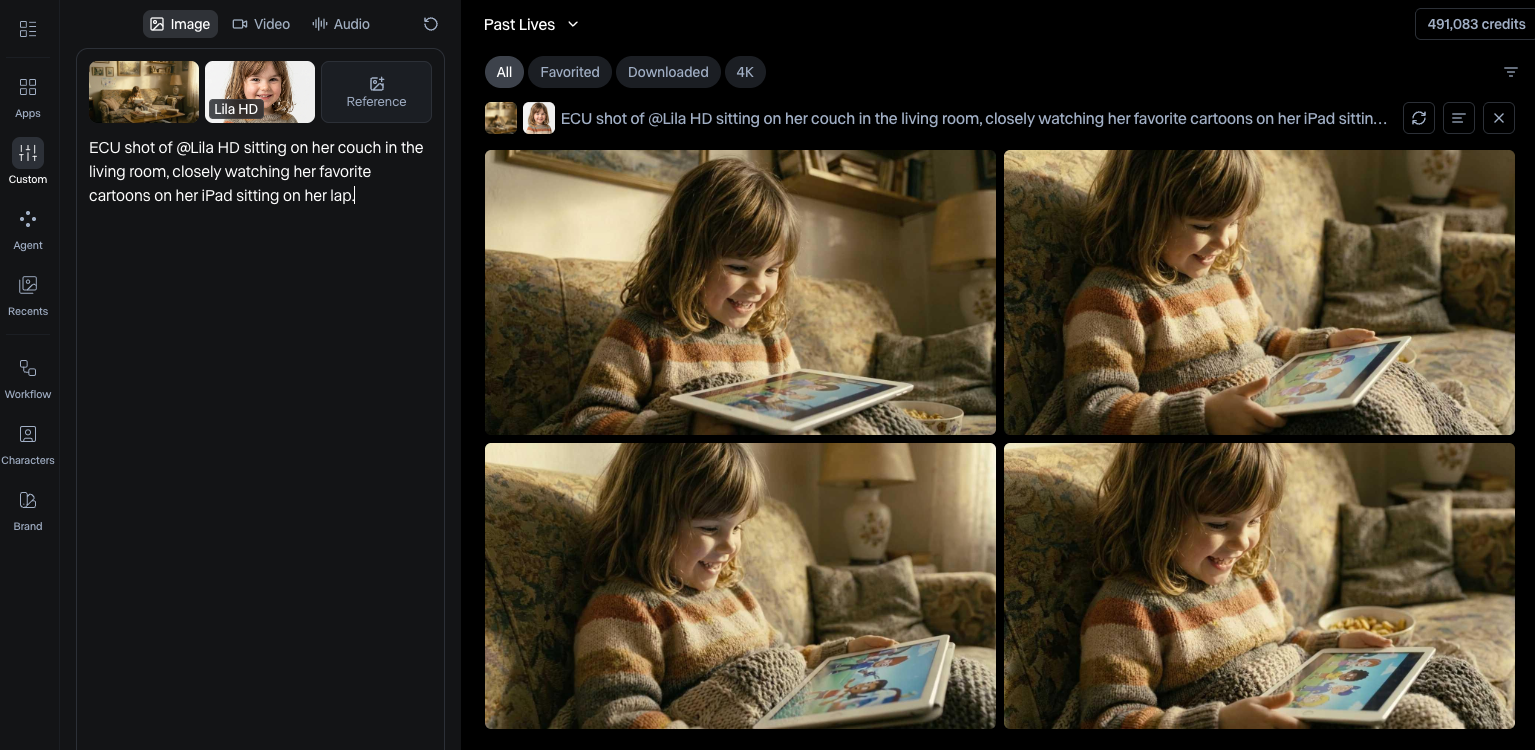
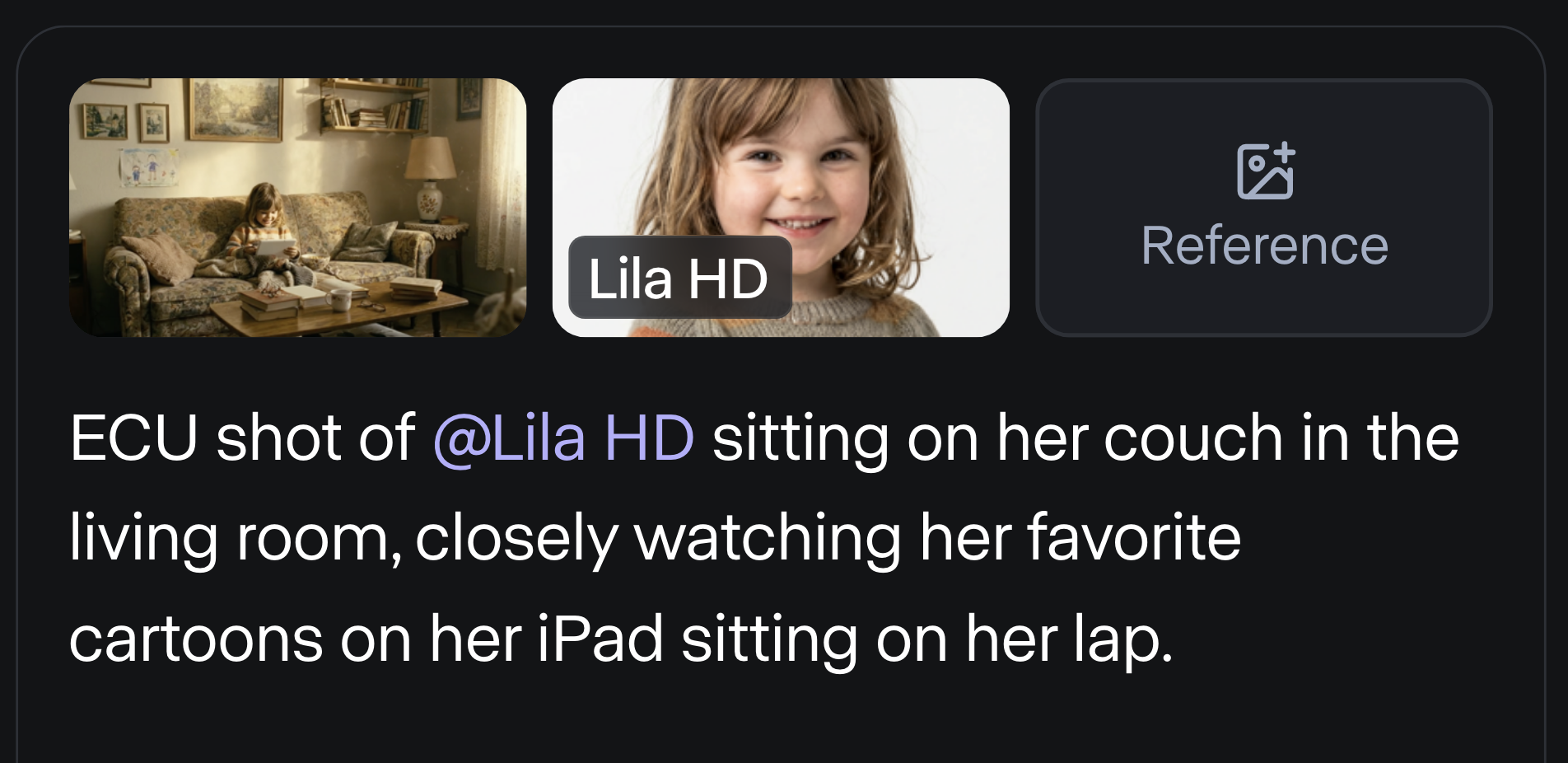
Using Google’s Nano Banana image generation model through the Runway platform, I uploaded both Character Reference Images and Location Reference Images for every scene. These reference materials served much like a traditional film production’s cast photos, wardrobe continuity guides, and production design references, helping the AI maintain consistency from shot to shot.
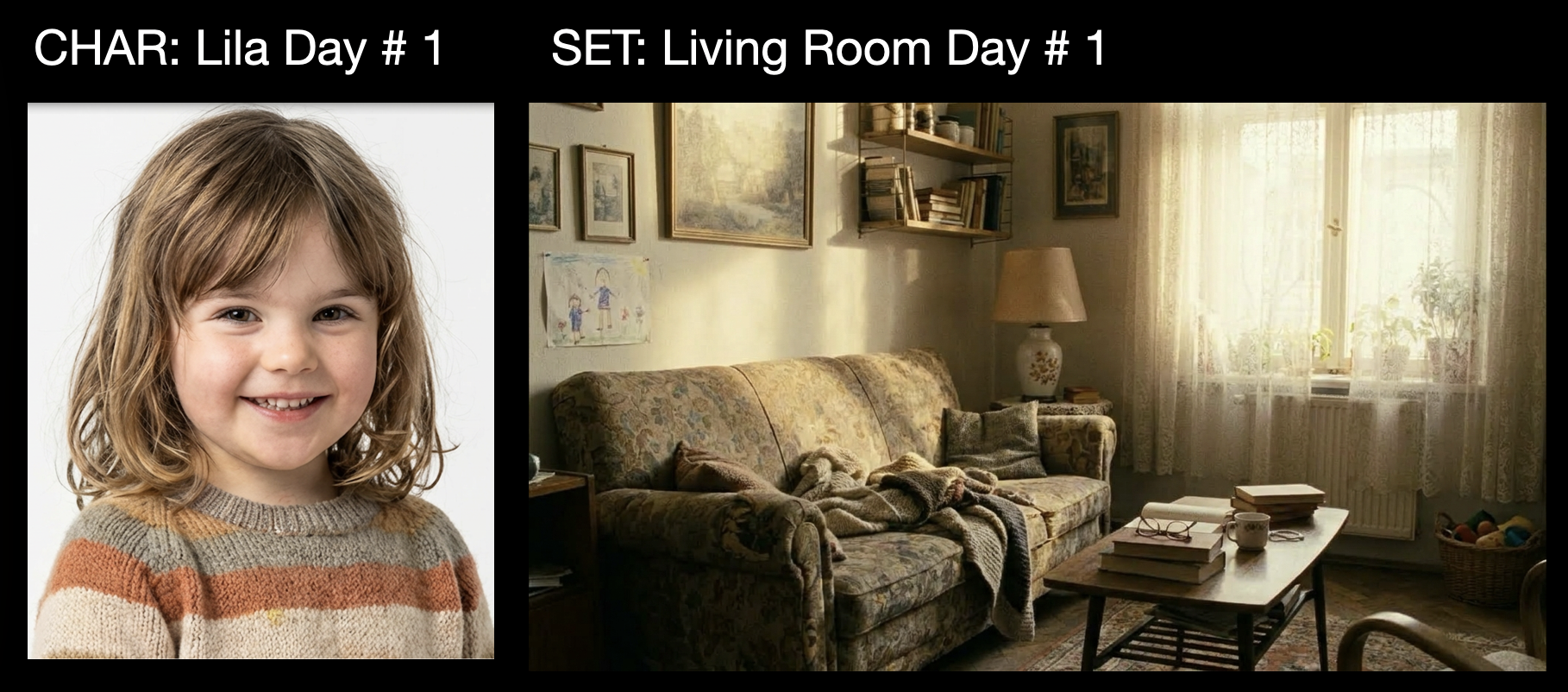
From there, I used detailed text prompts to stage each scene, placing the characters into the environment and directing their actions much like a filmmaker working with actors on a set: “Character - Day 1,” wearing “Wardrobe - Day 1,” sits on the living room couch holding an iPad inside the “Living Room Set.”
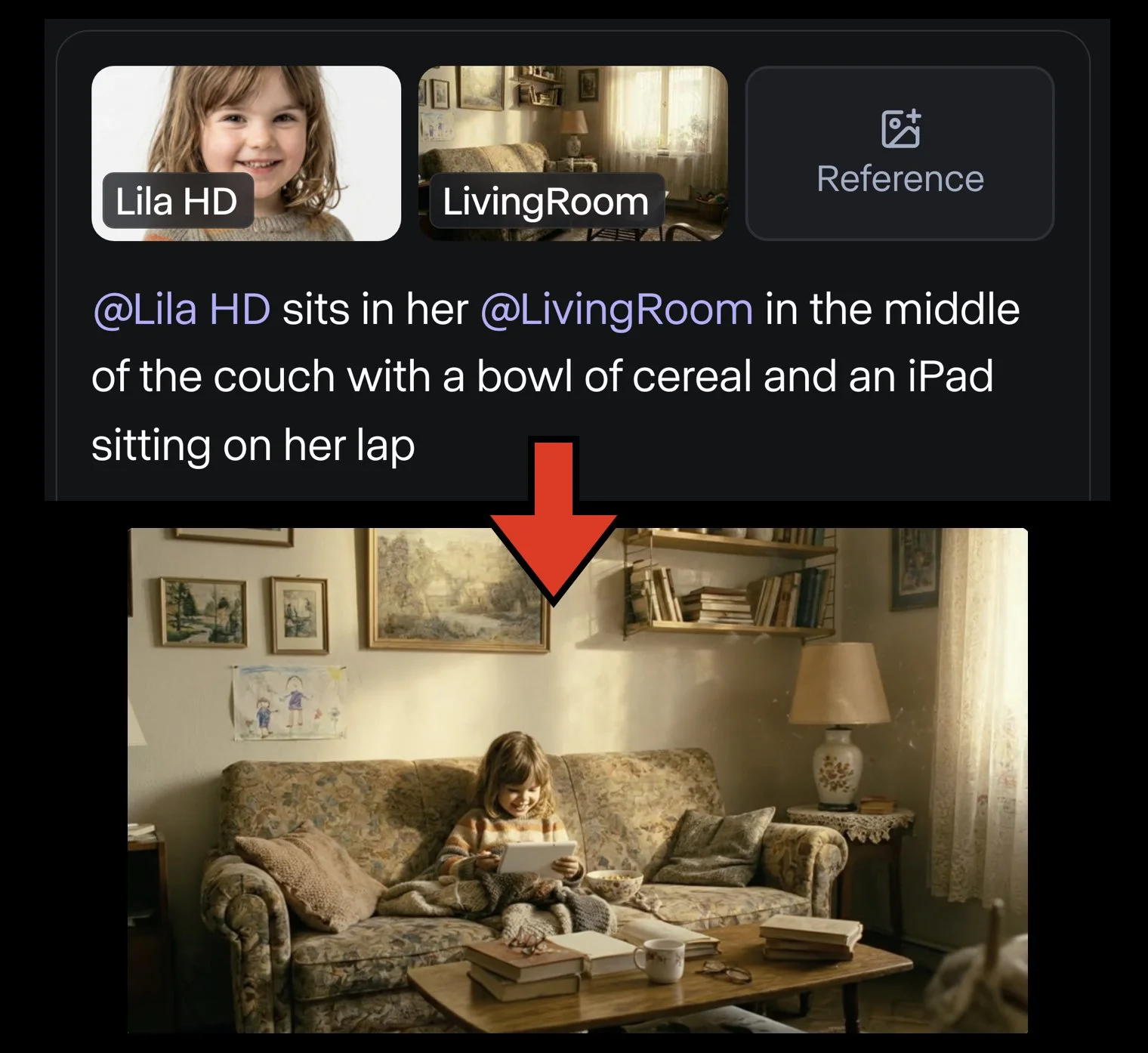
Each prompt defined not only who was in the scene, but where they were positioned, what they were doing, what props they were interacting with, and often the emotional tone of the moment. This process was repeated hundreds of times throughout the film, generating the foundational images that would later become individual shots and sequences.
PART TWO: GETTING COVERAGE
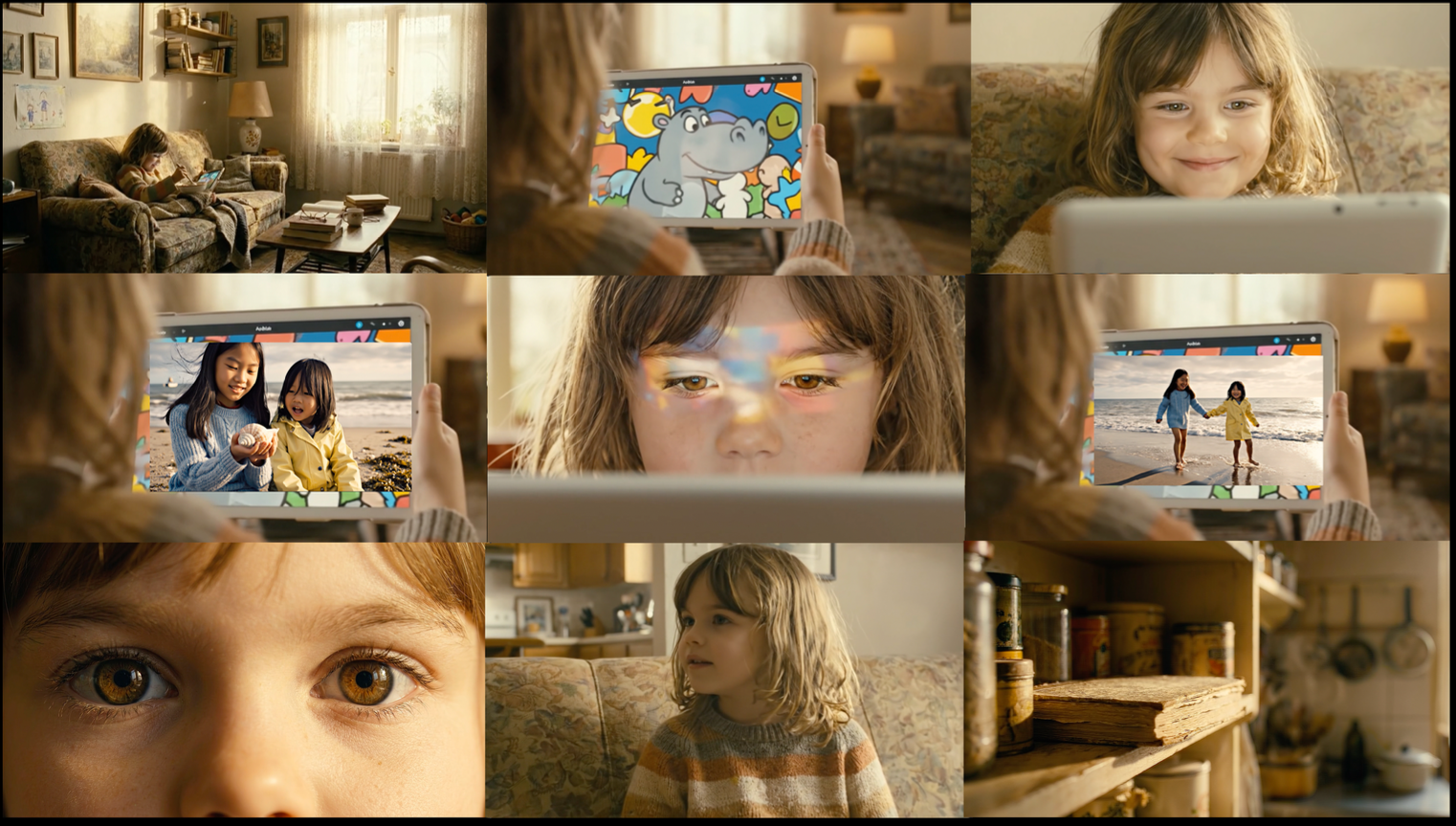
Once the still imagery had been finalized, the next phase was moving into Animation.
Essentially, every traditional coverage angle you would capture on a real film set still had to be created individually. And each image required detailed prompting that described the shot size, character position, lighting, and mood. The Prompting Process became less like coding and more like Directing a Cinematographer and Production Designer simultaneously. This process created the series of ’shots’ that would be used in each scene. And ultimately, these became my storyboards.
In many ways, this stage felt remarkably similar to traditional filmmaking. Instead of directing actors and camera crews on a physical set, I was directing an AI system by combining visual references and detailed creative instructions.
The Goal was always the same:
To Translate the Screenplay into Compelling Visual Storytelling, One Shot at a Time.
From there, every individual sequence had to be “shot” manually. This is where the process became surprisingly similar to live-action filmmaking. For each scene, I had to generate the following series of images: Wide Establishing Shots, Medium Shots, Close-Ups, Over-the-Shoulder Angles, POV Shots, Environmental Inserts, Reaction Shots, Transitional Imagery, etc.
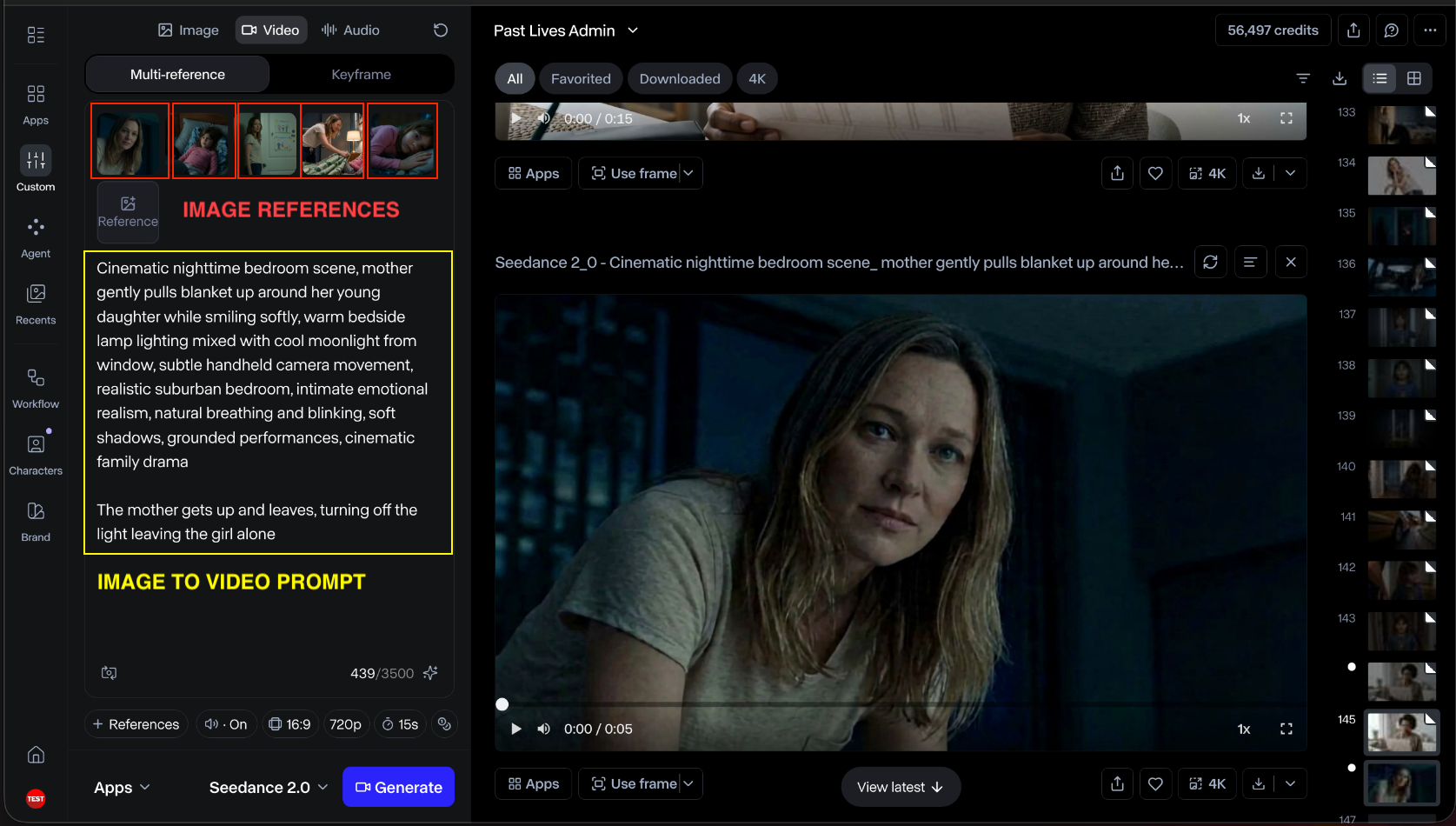
This process was extremely iterative because the first generated result was almost never usable. Sometimes a single usable five-second shot required dozens of generations before the performance felt emotionally authentic.
For every shot, I would typically generate: Multiple performance variations, different facial expressions, different pacing, different camera movements, alternate emotional interpretations, variations in body language and eye movement, etc.
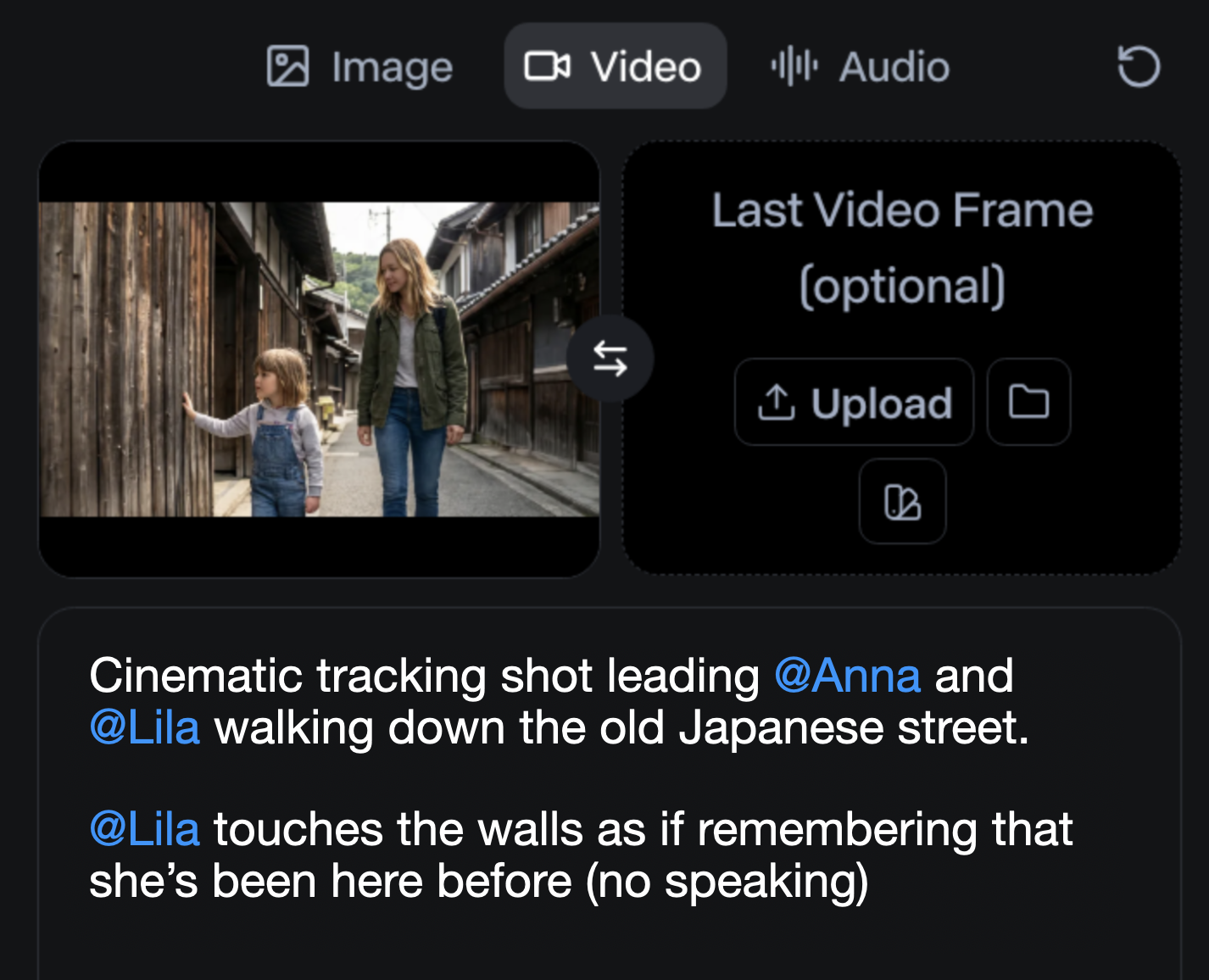
Every shot in the movie began as a still image that then had to be converted into moving video using Runway’s, Google’s, and Luma AI’s Image-to-Video models.
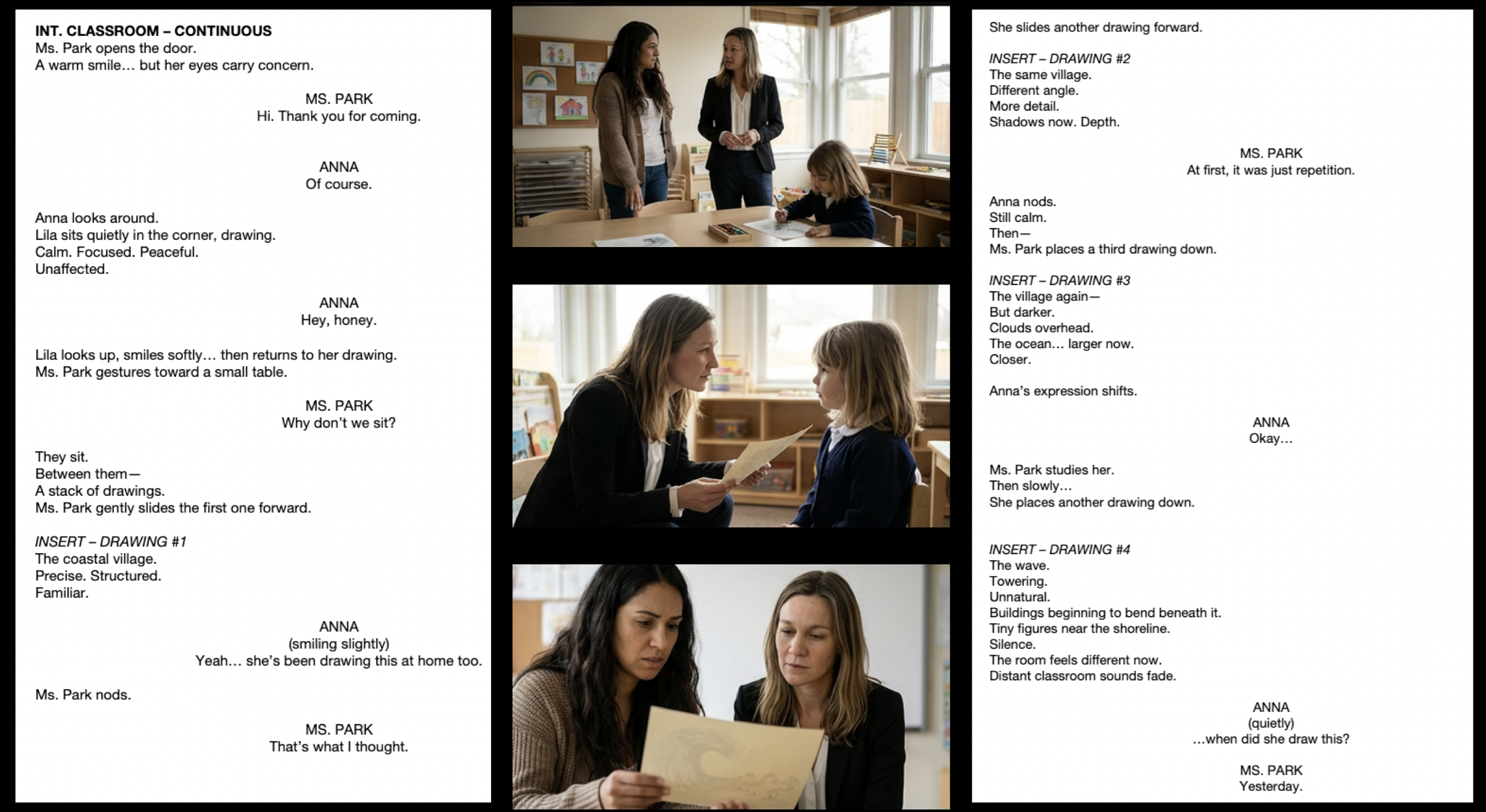
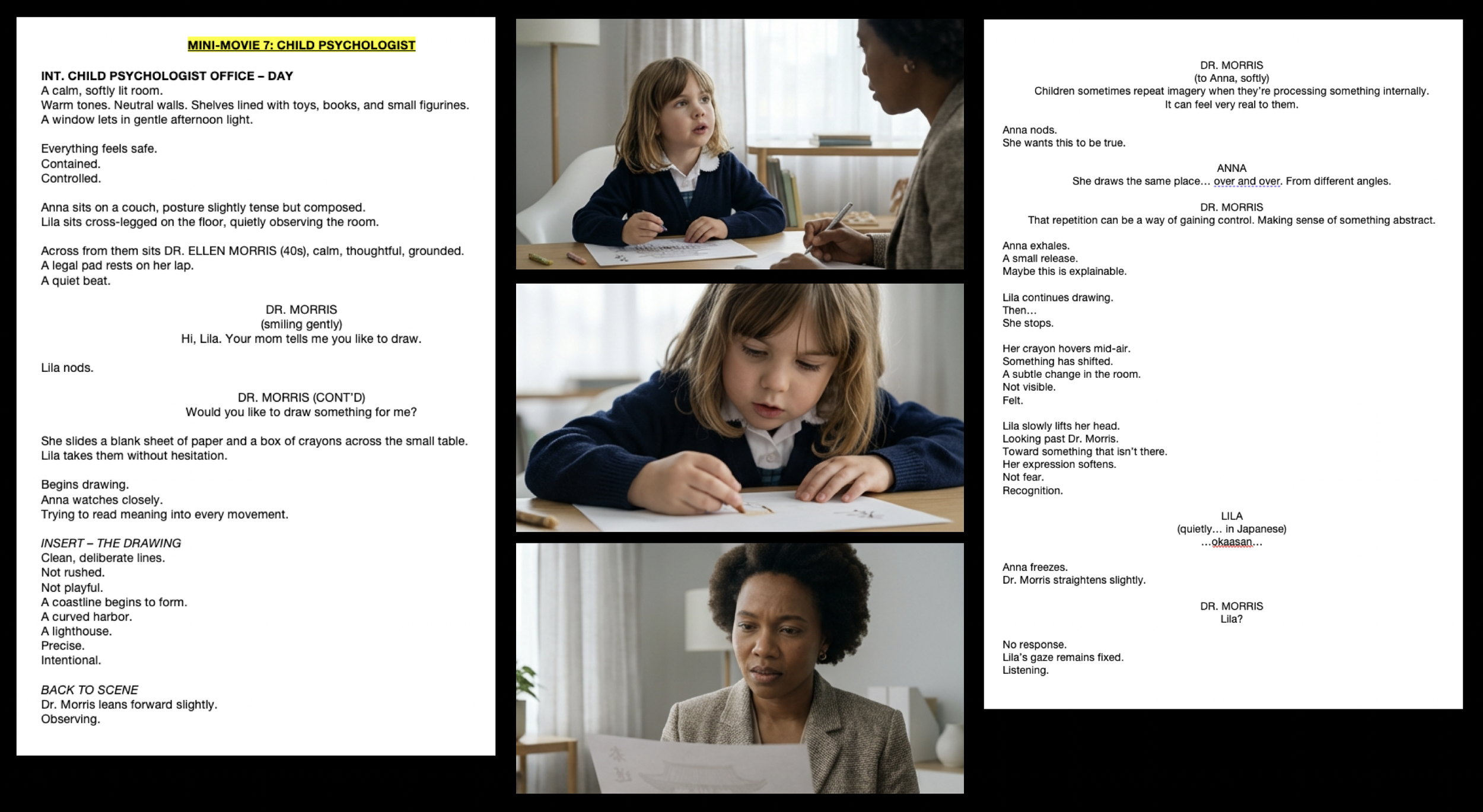
THE MOST IMPORTANT PERFORMANCE SECRET
YOU MUST SLOW EVERYTHING DOWN.
Al tends to: rush, over-perform, over-gesture, speak too quickly, behave theatrically
So in your Text Prompting, you should constantly reinforce the following terms: restrained, grounded, naturalistic, subtle, emotionally suppressed, observational, minimal movement, quiet realism, micro-expressions, etc.
I would often begin this process by creating the ‘Listening Shots’ just to give myself some coverage options in editorial.
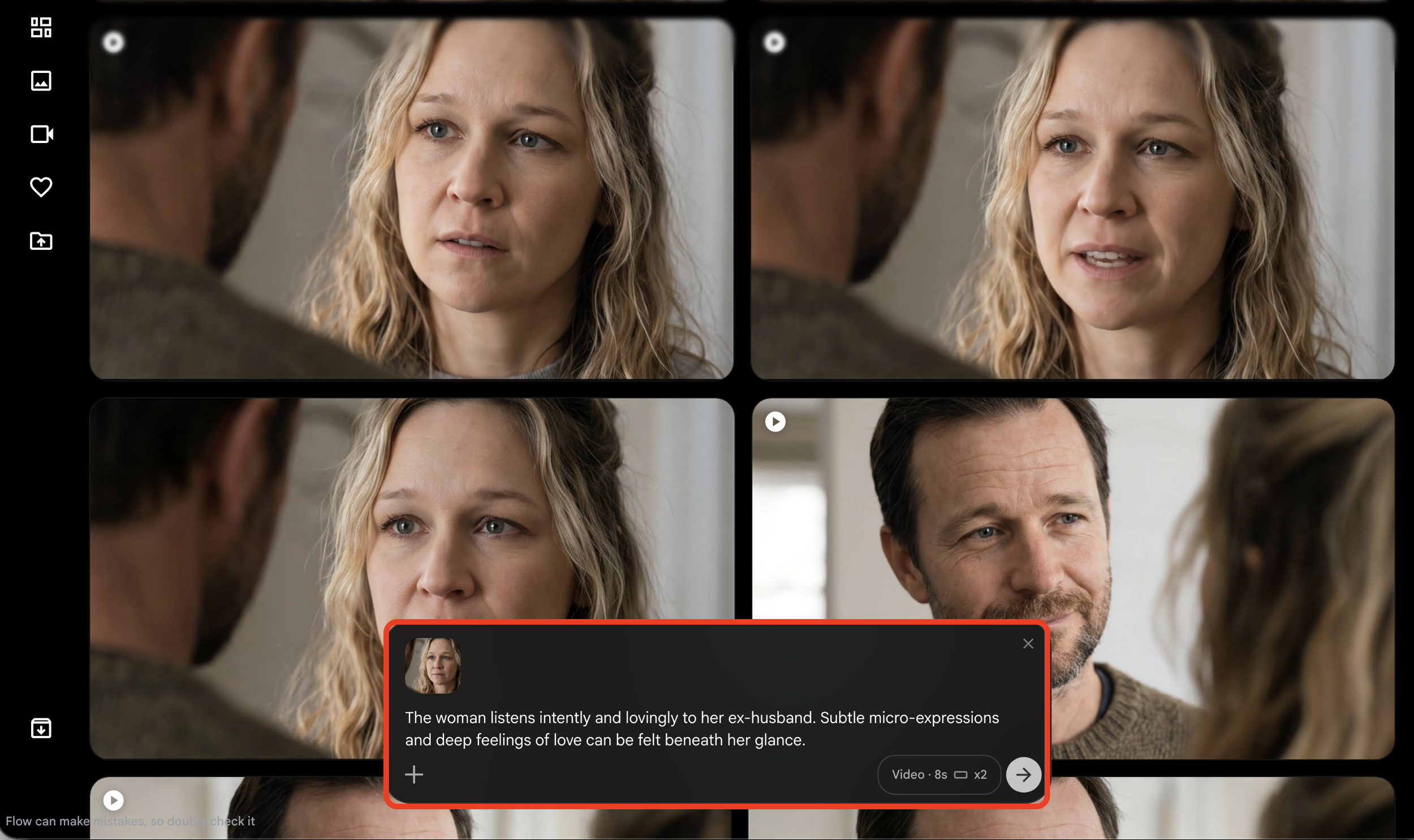
Dialogue Performance itself presented another major challenge. AI-generated voices are often created one line at a time, meaning there is no natural interaction between performers. Achieving believable conversation required extensive iteration to match pacing, pauses, interruptions, emotional emphasis, breathing patterns, and conversational rhythm.
In many ways, this process felt less like directing actors on a set and more like assembling a performance puzzle from hundreds of independent pieces. The goal was not simply to create individual shots, but to create the illusion that real people were listening, reacting, thinking, and feeling together within a shared emotional moment.
Ironically, the more dialogue-heavy and emotionally nuanced a scene became, the more difficult it was to create. Some of the simplest conversations in the film ultimately required the largest amount of work because human beings are remarkably good at detecting even the smallest inconsistencies in performance, timing, and emotional truth.
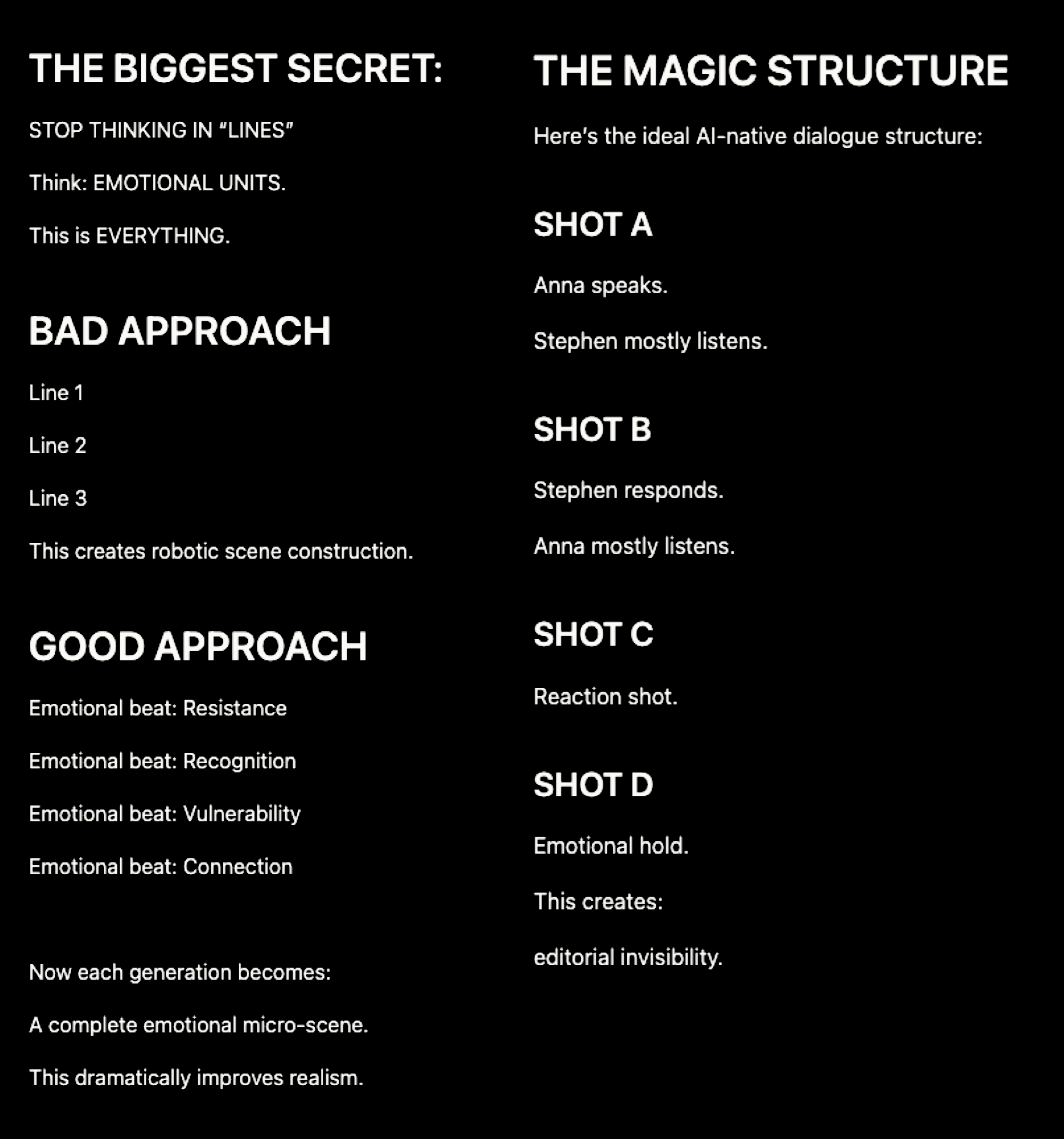
This means a simple conversation between two characters might require:
A wide two-shot
An over-the-shoulder shot of Character A
An over-the-shoulder shot of Character B
Multiple close-ups
Reaction shots
Inserts and cutaways
The challenge becomes ensuring that every generated performance feels like part of the same continuous conversation. As an example:
If Character A smiles during one shot, Character B’s response must feel appropriate in the next.
Eye-lines must appear to connect correctly.
Emotional intensity must build naturally from shot to shot.
Dialogue pacing must feel consistent.
Character energy levels must remain coherent.
Body positioning and screen direction must match.
Lighting, wardrobe, and environmental details must remain consistent.
Often, a shot would look excellent on its own but fail once placed into the edit because the performance no longer matched the surrounding shots.
As a result, many scenes required multiple rounds of regeneration and editorial refinement. I would frequently discover that changing a single reaction shot would require reworking several surrounding shots in order to preserve the emotional continuity of the scene.
One of the most challenging aspects of the entire production involved Creating Longer Dialogue-Driven Scenes Between Characters. Most current AI video systems excel at generating short visual moments, but maintaining believable human conversation across an entire scene remains extraordinarily difficult.
In a traditional film, actors perform together, reacting to one another in real time. Their timing, eye contact, emotional responses, body language, interruptions, and subtle expressions naturally influence the flow of the scene.
With AI filmmaking, every shot is typically generated independently.
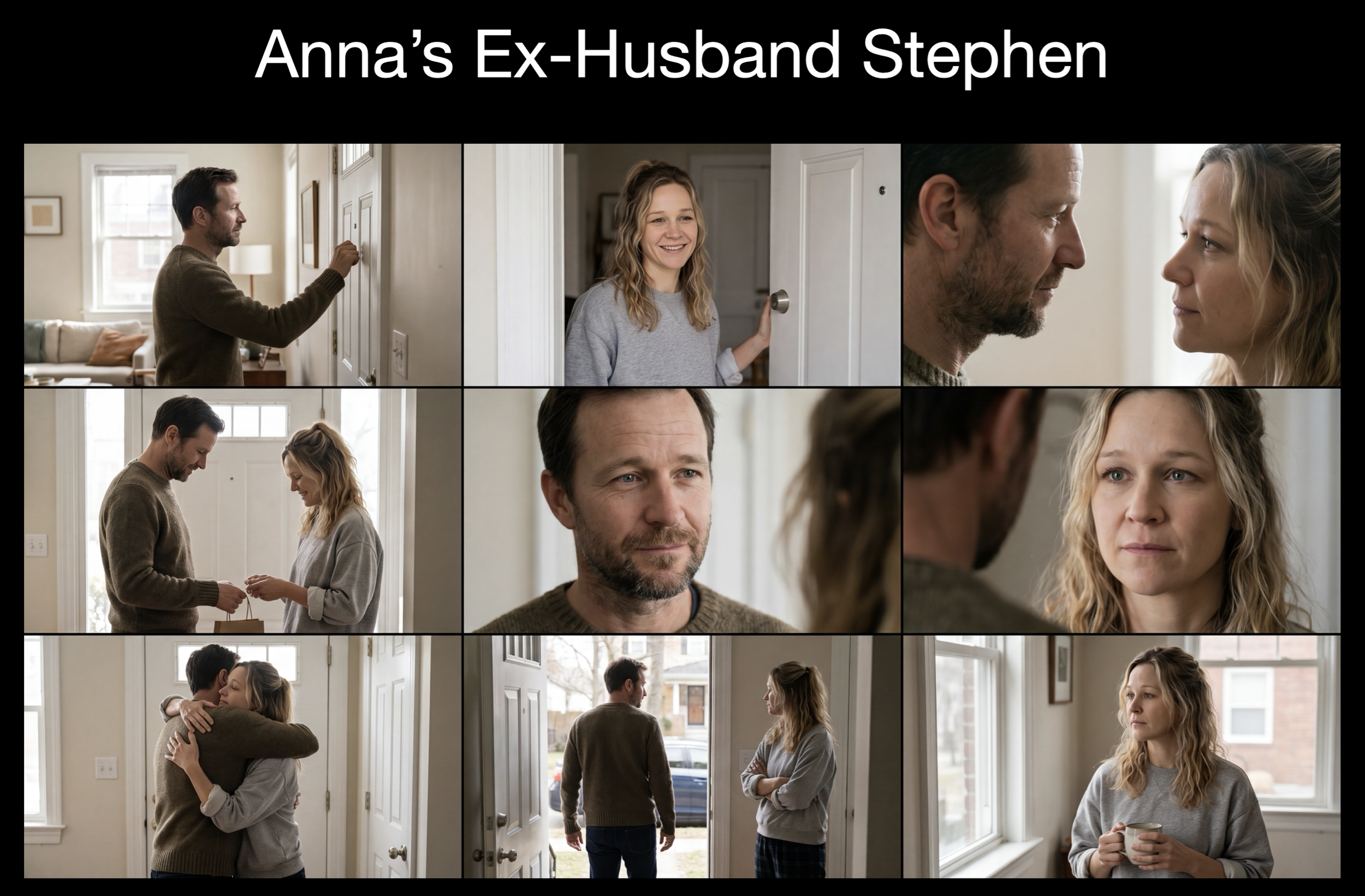
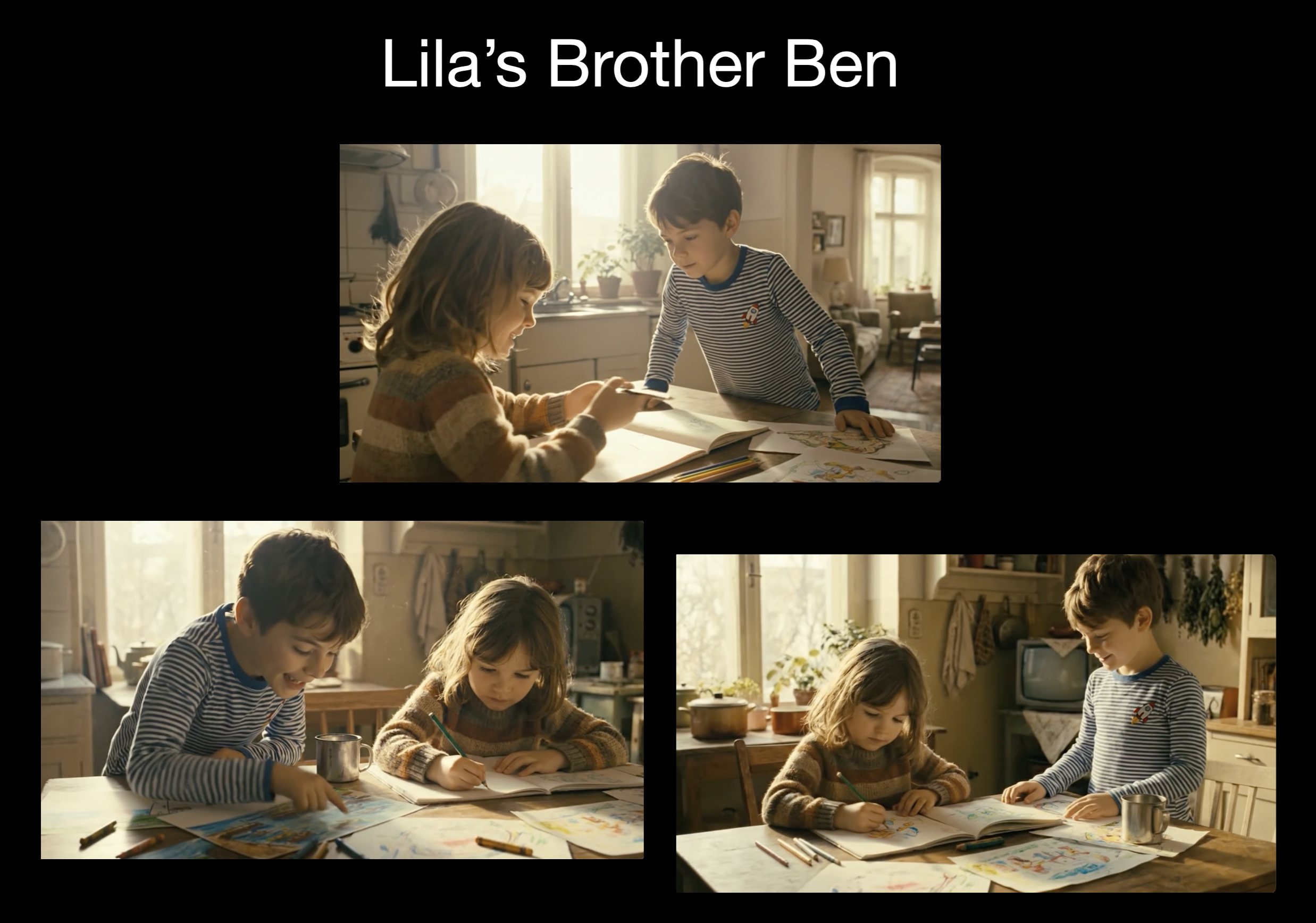
In fact, the complexity of generating believable multi-character scenes had a direct impact on the screenplay itself. Early versions of the story included Anna’s Ex-Husband Stephen, as well as Lila’s Younger Brother, Ben. While these characters worked well on the page, they introduced a significant production challenge once the film moved into AI generation.
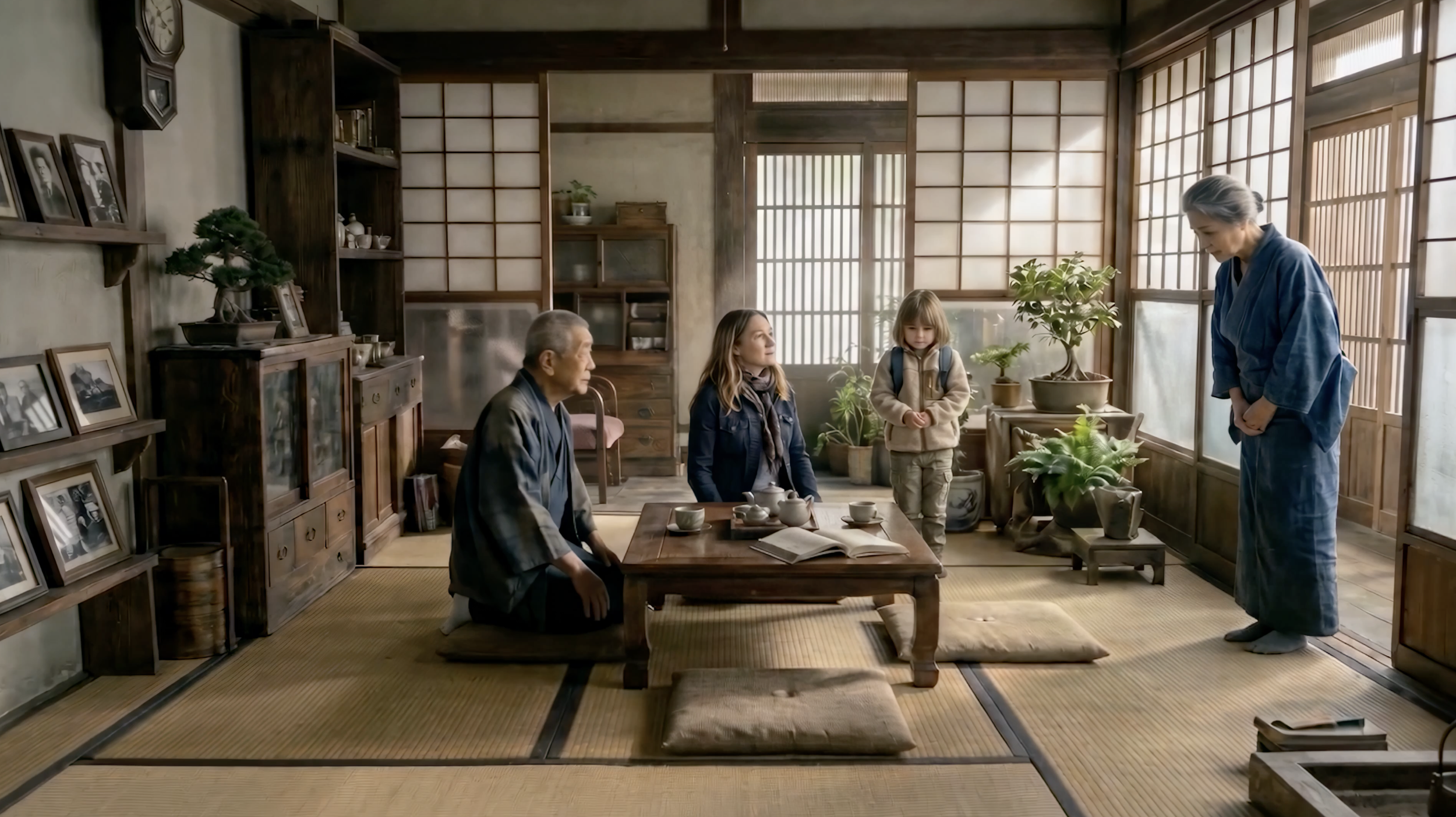
Unlike traditional filmmaking, where multiple actors can naturally perform together within the same scene, current AI systems struggle when several characters must interact simultaneously. Every additional character dramatically increases the complexity of maintaining continuity, eye-lines, emotional reactions, body positioning, and conversational flow across multiple shots.
A simple family conversation involving four people around a table could require dozens of individual generations, all of which needed to feel as though they were occurring within the same moment. Even small inconsistencies in where a character was looking, how they reacted, or their emotional state could break the illusion of a believable scene.
As production progressed, I realized that managing four interacting characters across dozens of dialogue-heavy sequences would significantly increase both the complexity and the amount of generation work required.
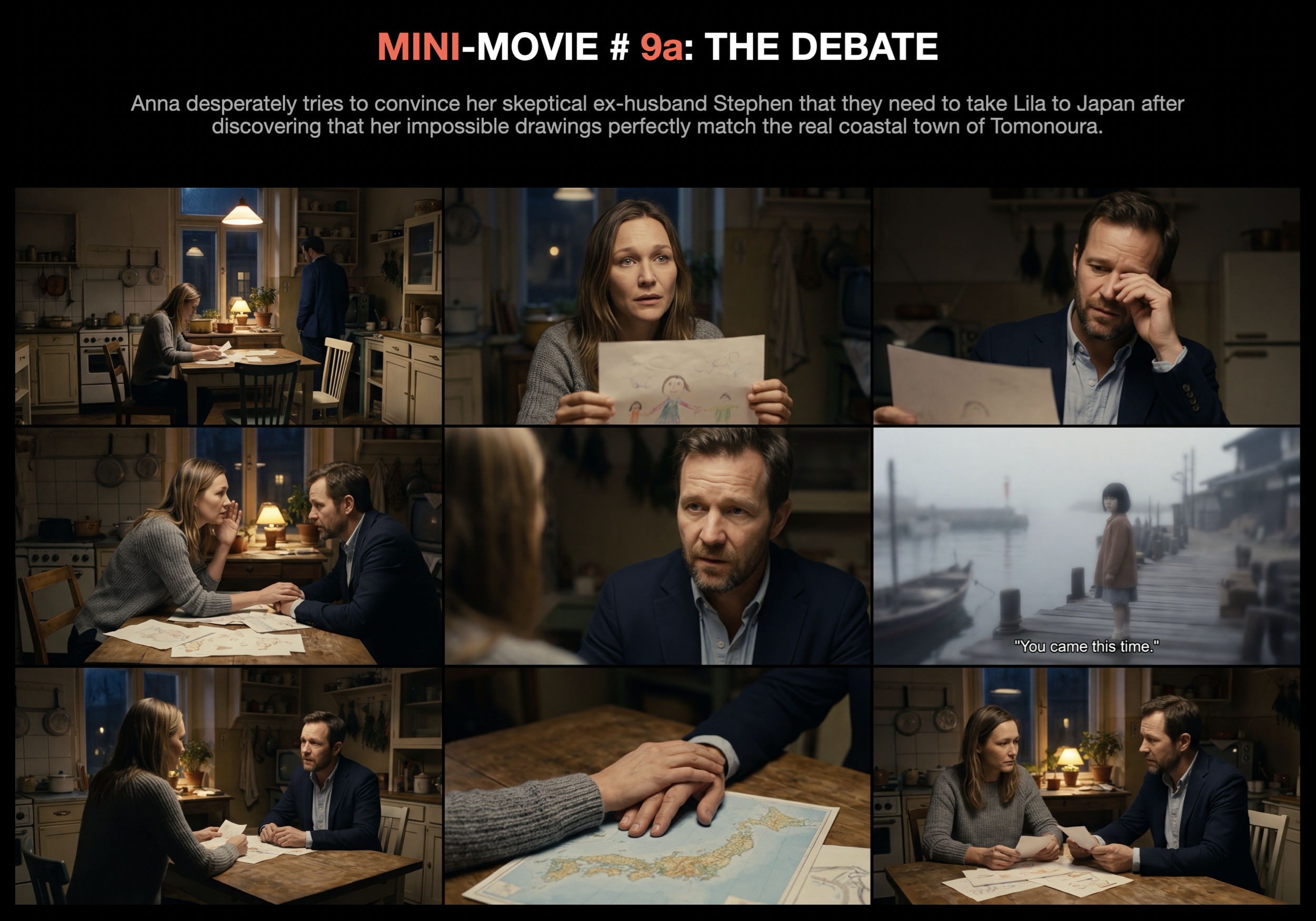
Ultimately, I made the creative decision to simplify the family structure by Removing Stephen and Ben from the story entirely. What began as a Production Necessity ultimately became a Storytelling Advantage.
Anna evolved into a single mother, and Lila became an only child, which allowed the narrative to focus more intimately on their relationship and emotional journey together.
It was a good reminder that, just as Budget Limitations influence traditional filmmaking, the strengths and Limitations of AI Tools can shape creative decisions as well. In this case, a technical constraint ultimately led to a stronger and more focused story.
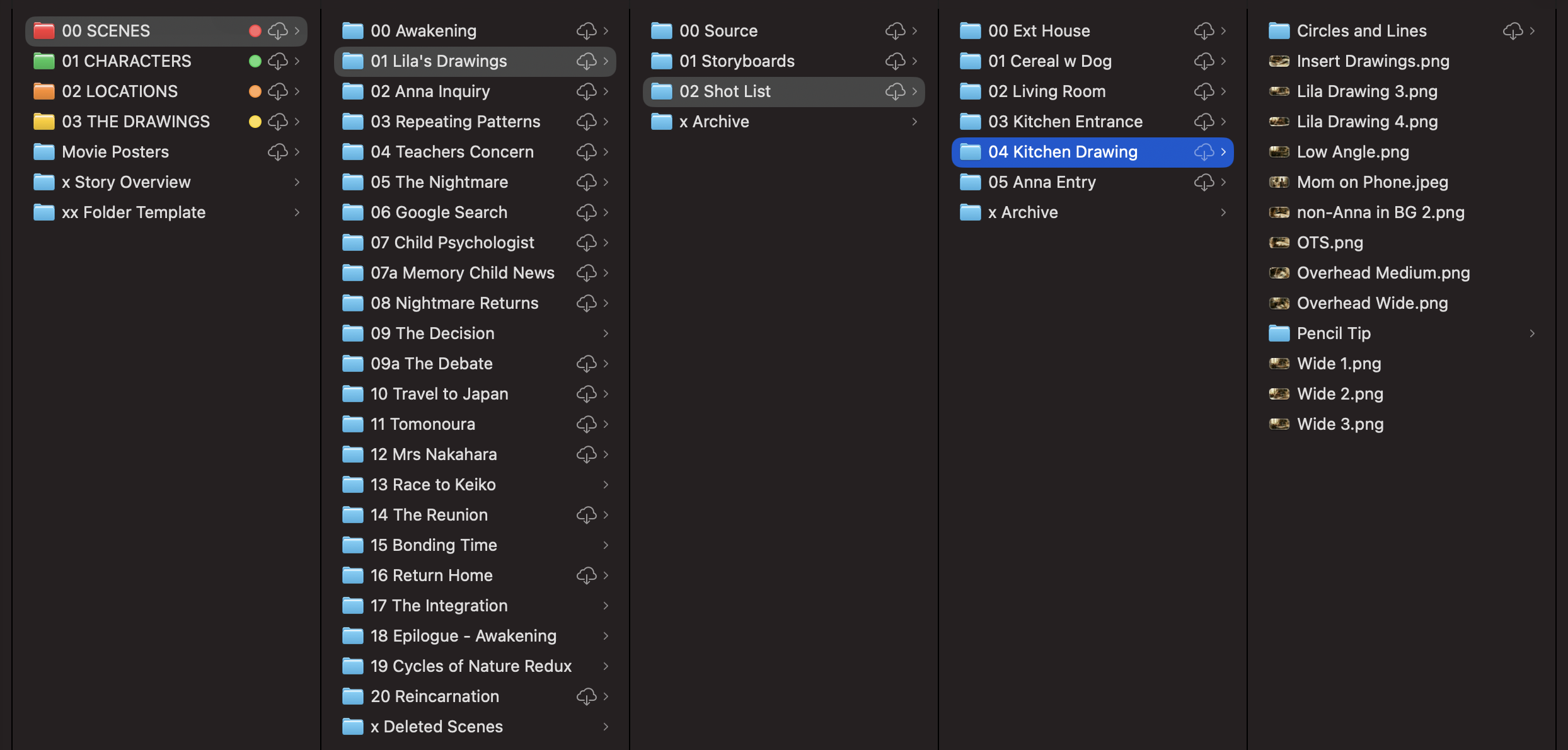
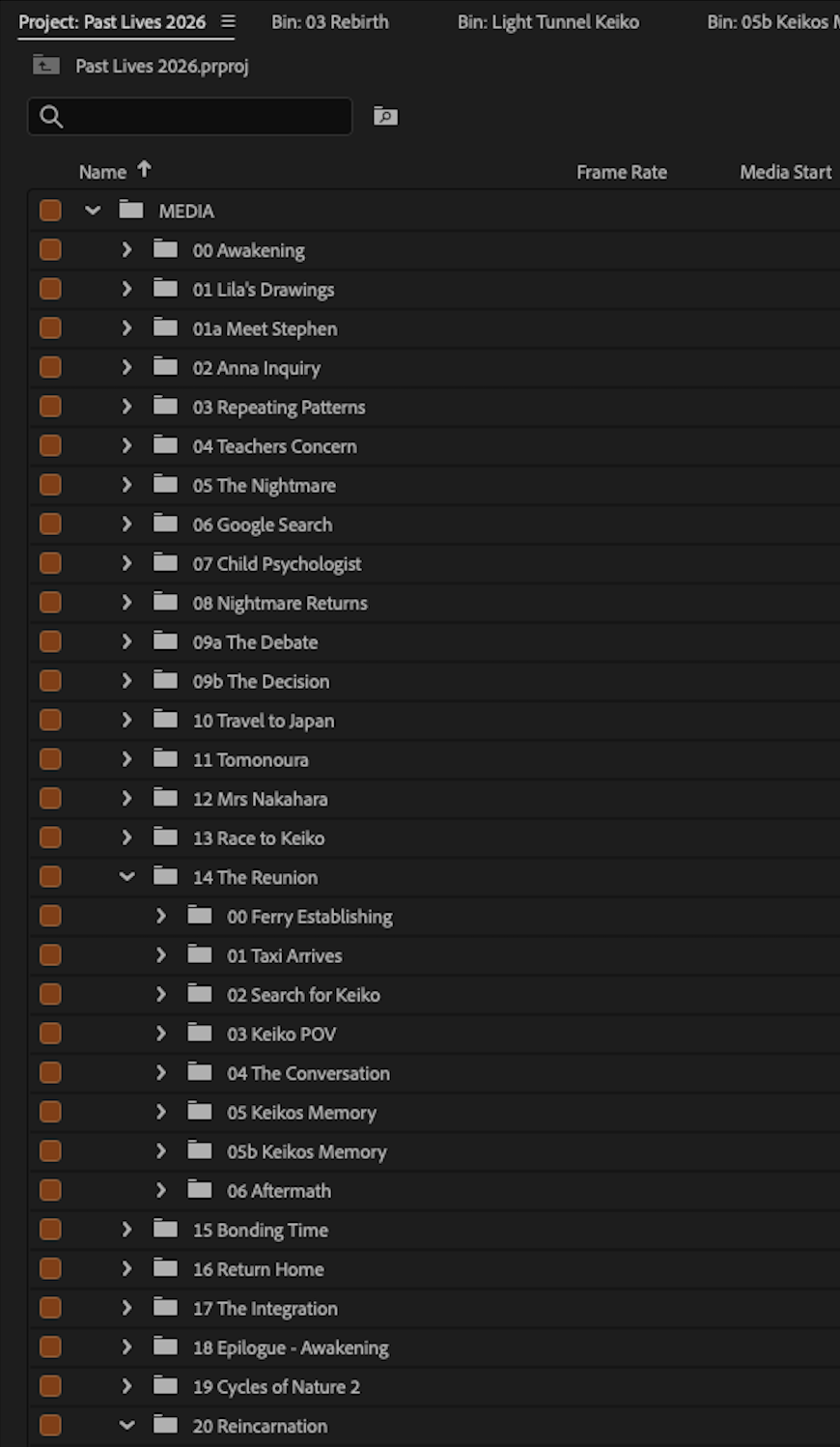
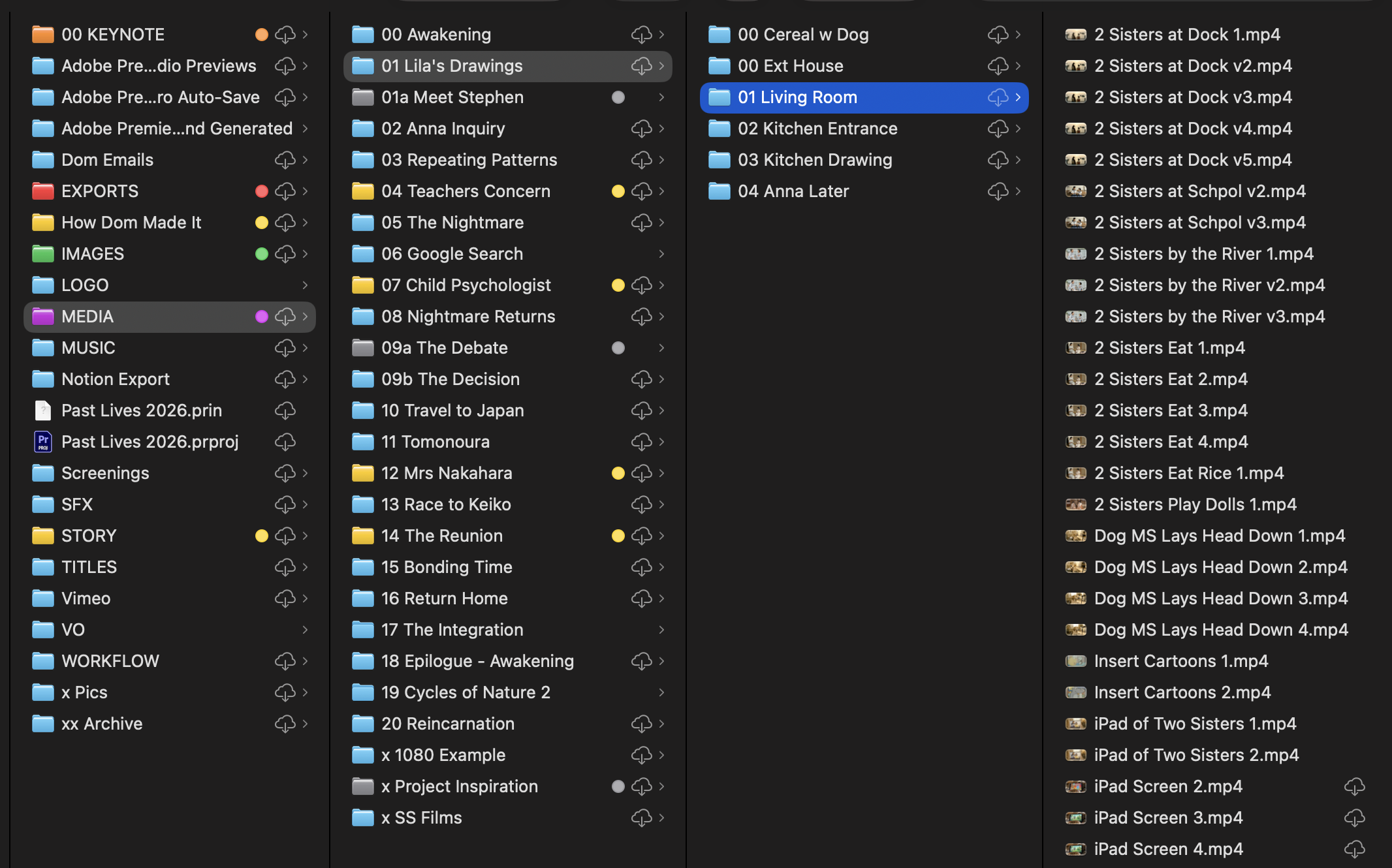
Another surprisingly important aspect of the process was maintaining a rigorous folder structure and Asset Management System.
Over the course of production, the project generated thousands of files, including scripts, story outlines, character references, wardrobe variations, location designs, set images, shot generations, animation passes, voice recordings, sound effects, music tracks, visual effects elements, and editorial exports. Without a carefully organized folder hierarchy and naming convention, the project would have quickly become unmanageable.
In many ways, the role resembled that of a Digital Production Manager. Every asset needed to be clearly labeled, categorized, and versioned so it could be located, revised, and reused throughout the six-month production process. As the volume of generated material grew, maintaining a disciplined organizational structure became just as important as generating the content itself.
Without it, finding the right character, location, shot, or performance among thousands of files would have been nearly impossible.
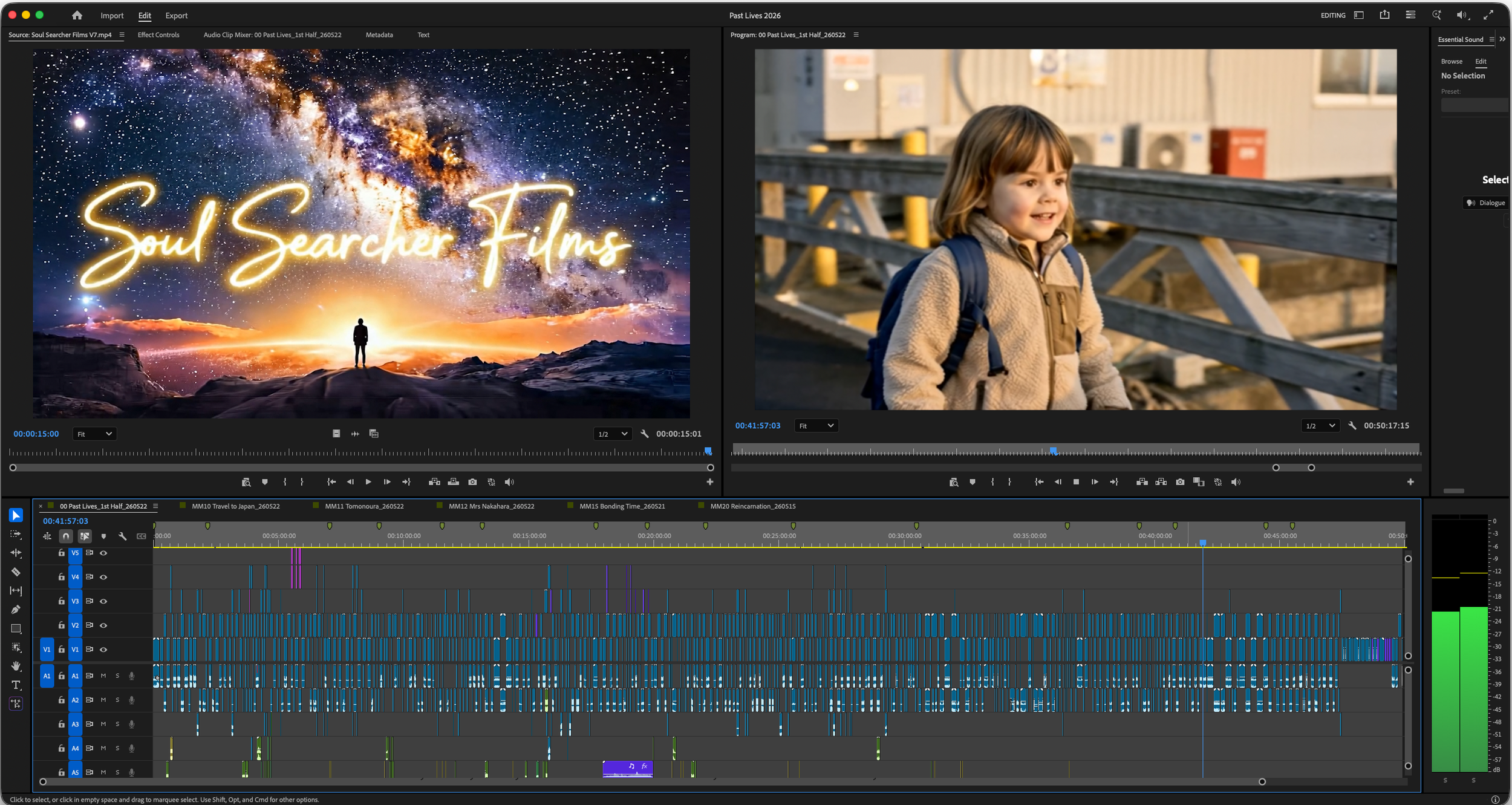
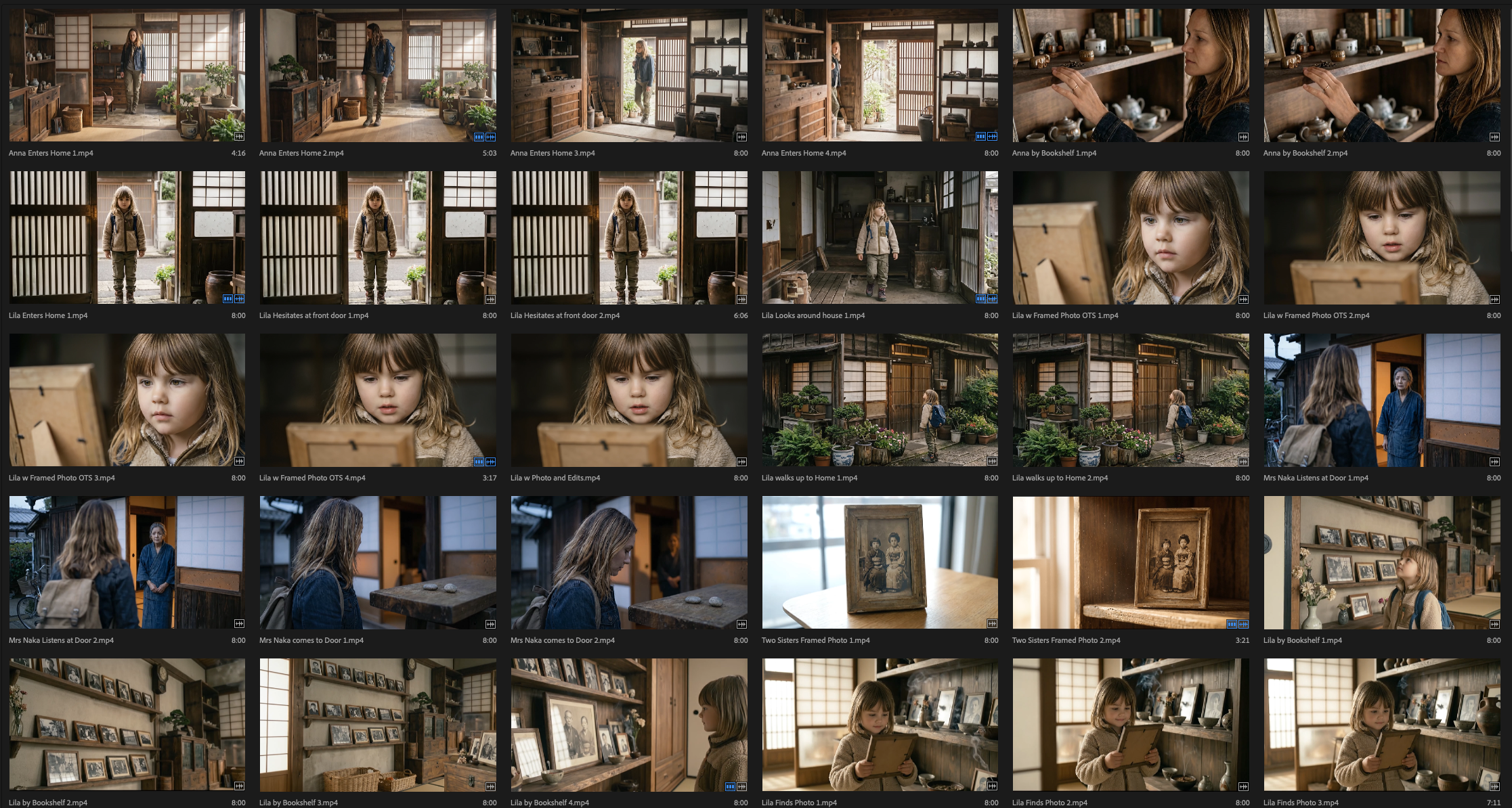
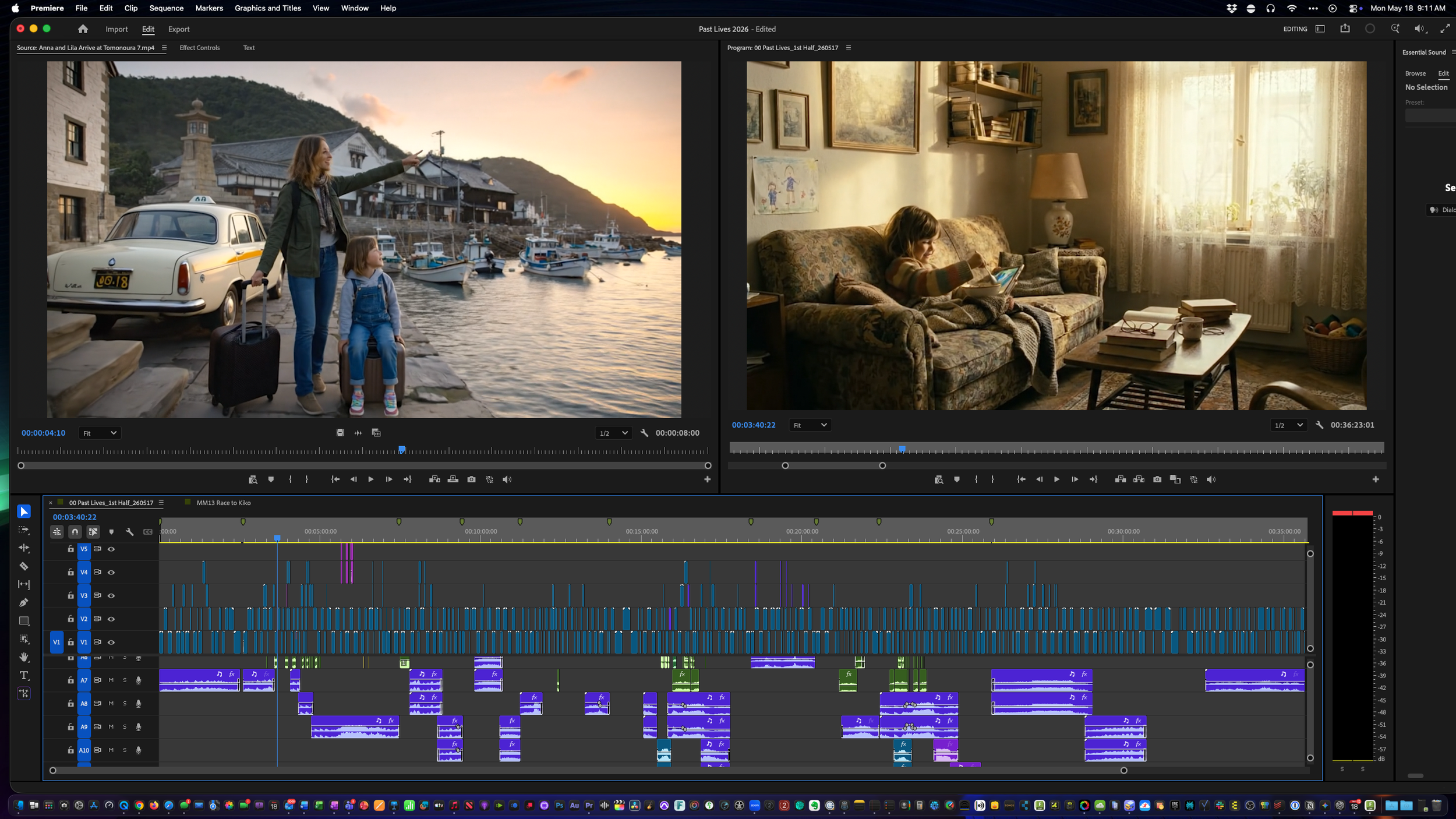
The editing work included scene construction, pacing refinement, performance selection, music editing, sound design, ambient layering, foley, visual effects, color correction, transitions, emotional timing adjustments, etc
Once all of the visual and audio elements were complete, the project moved into a more traditional post-production workflow. Everything was imported into Adobe Premiere where the movie was assembled shot by shot just like a conventional film edit.
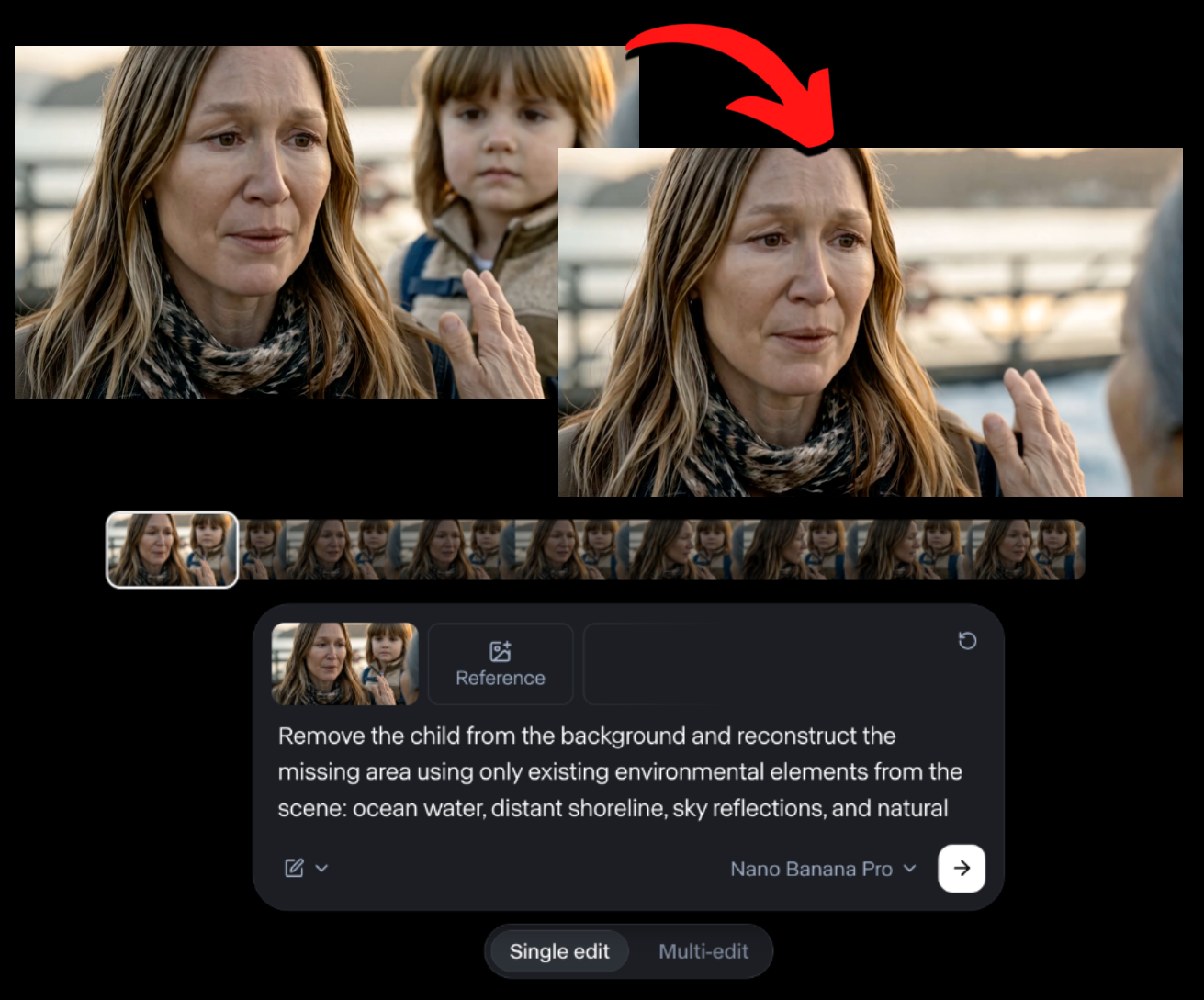
Experiences like these highlighted a broader realization throughout the project: AI is becoming increasingly useful not only for generating content, but also for refining, repairing, extending, and improving content after it has been created.
In many ways, these tools began functioning less like generators and more like a New Generation of Visual Effects and Post-Production Software, allowing creative problems to be solved with a combination of reference materials, text instructions, and iterative refinement.
Another particularly useful example occurred during the sequence in which Anna begins researching Lila’s drawings and searching for answers online.
An overhead shot of Anna sitting at her iMac surrounded by drawings generated beautifully, with exactly the composition and emotional tone I was looking for. The only problem was that the computer monitor was blank. When placed into the edit, the shot felt disconnected from the surrounding sequence because the audience could not see the Google search results that were driving the investigation forward.
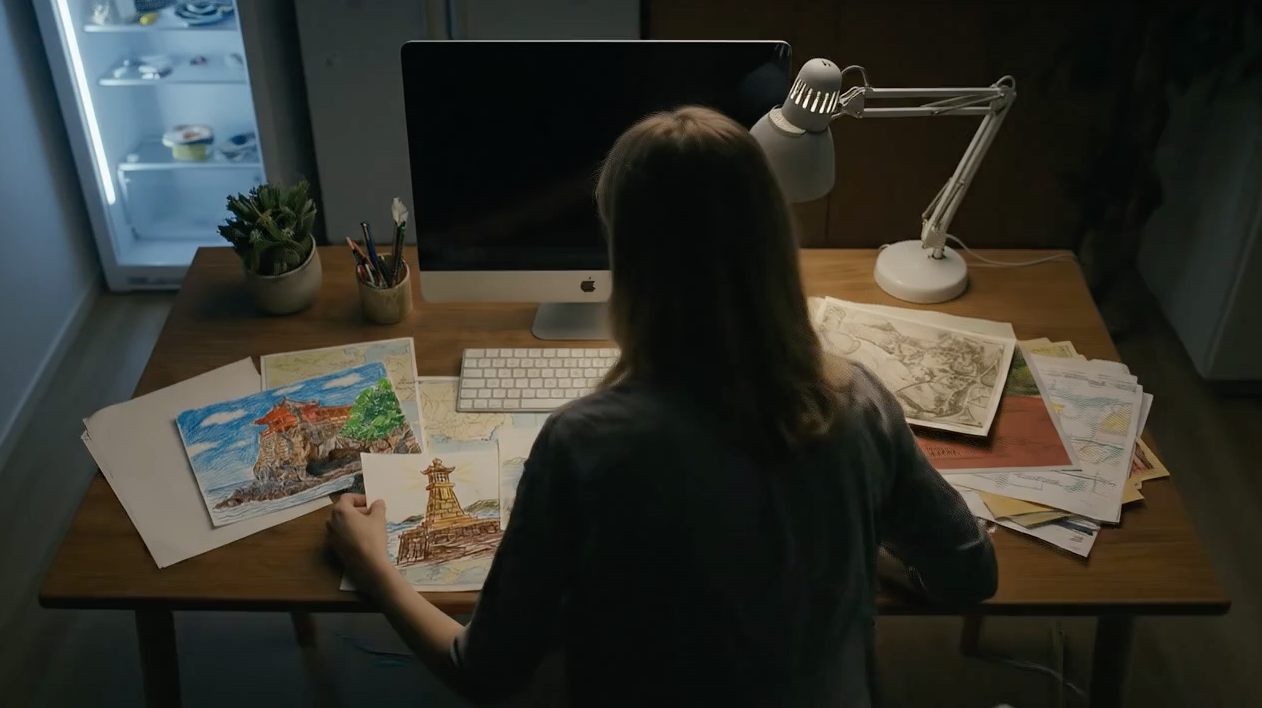
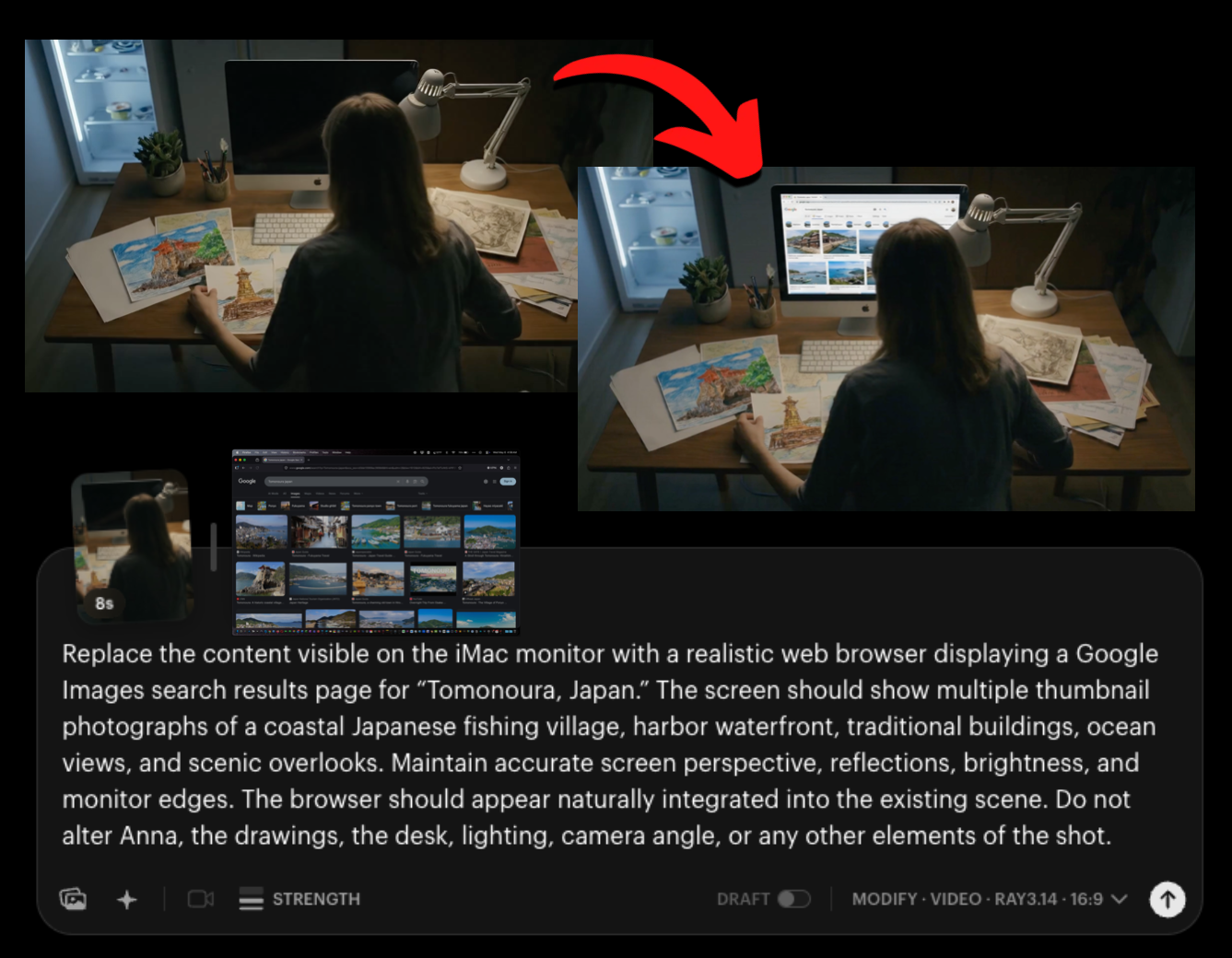
Rather than abandoning the shot, I used Luma AI’s Modify Video feature to selectively enhance the existing footage. By uploading the original video, providing a simple text instruction, and supplying a reference image of the search results I wanted displayed on the monitor, I was able to regenerate only the screen content while preserving the rest of the shot. Within minutes, the computer display showed believable search results that matched the surrounding story context, transforming an unusable shot into one that integrated seamlessly into the final edit.
While the majority of the film was created through image and video generation workflows, visual effects became an important part of the refinement process as well.
As the edit evolved, there were numerous situations where a shot was nearly perfect but contained small issues that prevented it from fitting seamlessly into the surrounding sequence. Rather than regenerating entire scenes from scratch, I was often able to use emerging AI-based visual effects tools to make targeted corrections and preserve otherwise successful shots.
One of the most valuable tools in this process was Runway’s Aleph 2.0. In several sequences, background characters appeared in locations where they created continuity problems between adjacent shots. Traditionally, resolving these issues might require extensive rotoscoping, compositing, or visual effects work. Using Aleph, I was able to identify the unwanted characters and remove them directly from the shot while preserving the surrounding environment. This allowed me to maintain continuity and improve visual clarity without having to regenerate the entire scene.
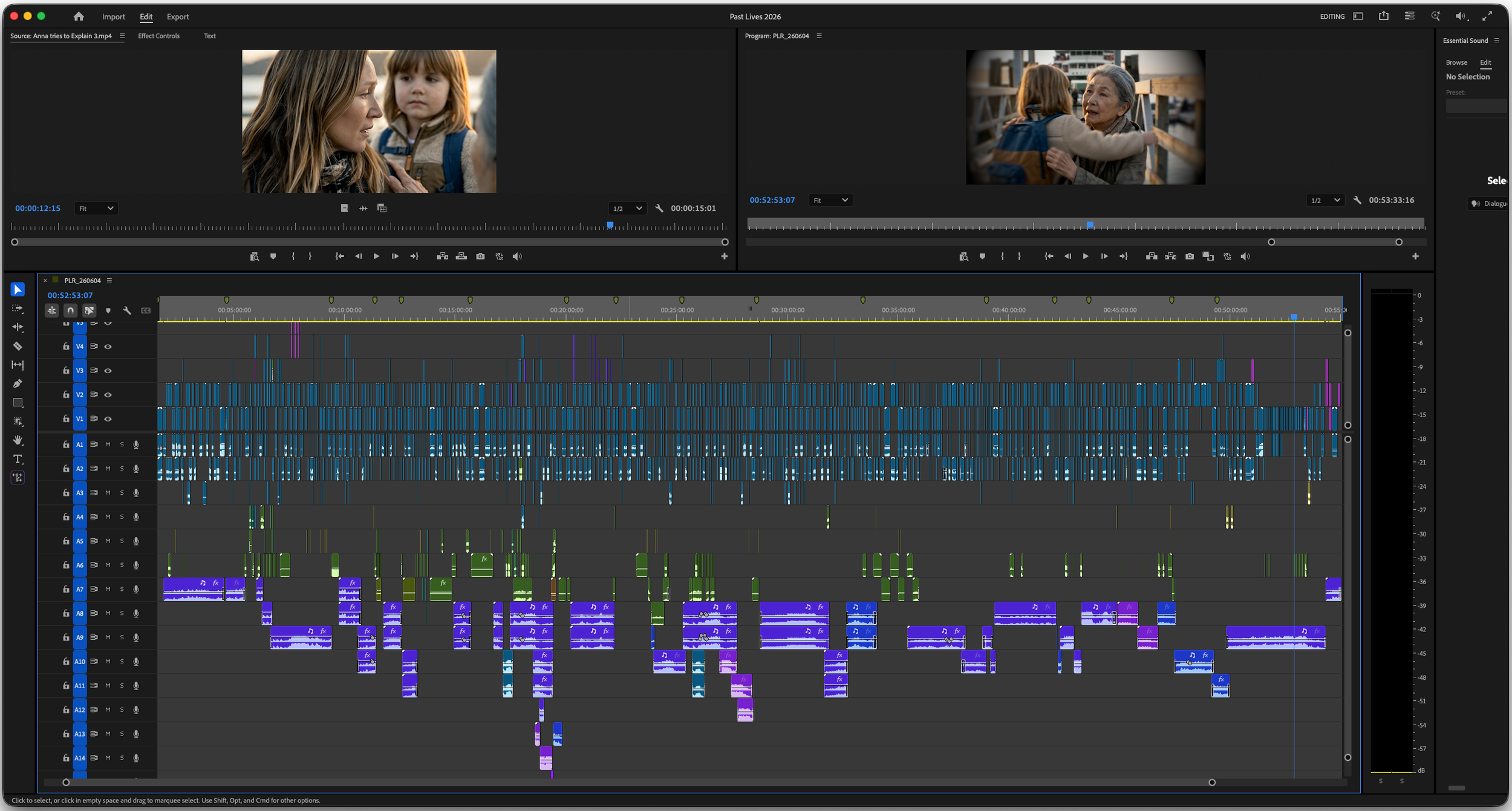
The sound design process began long before the final edit. As scenes were being developed, I was already thinking about the emotional and environmental sounds that would help define each location and moment. Every sequence required its own unique sonic identity, whether it was the quiet ambience of a suburban home, the distant sounds of a classroom, the activity of a Japanese fishing village, the interior of a train station, the crash of ocean waves, or the haunting stillness of a recurring nightmare.
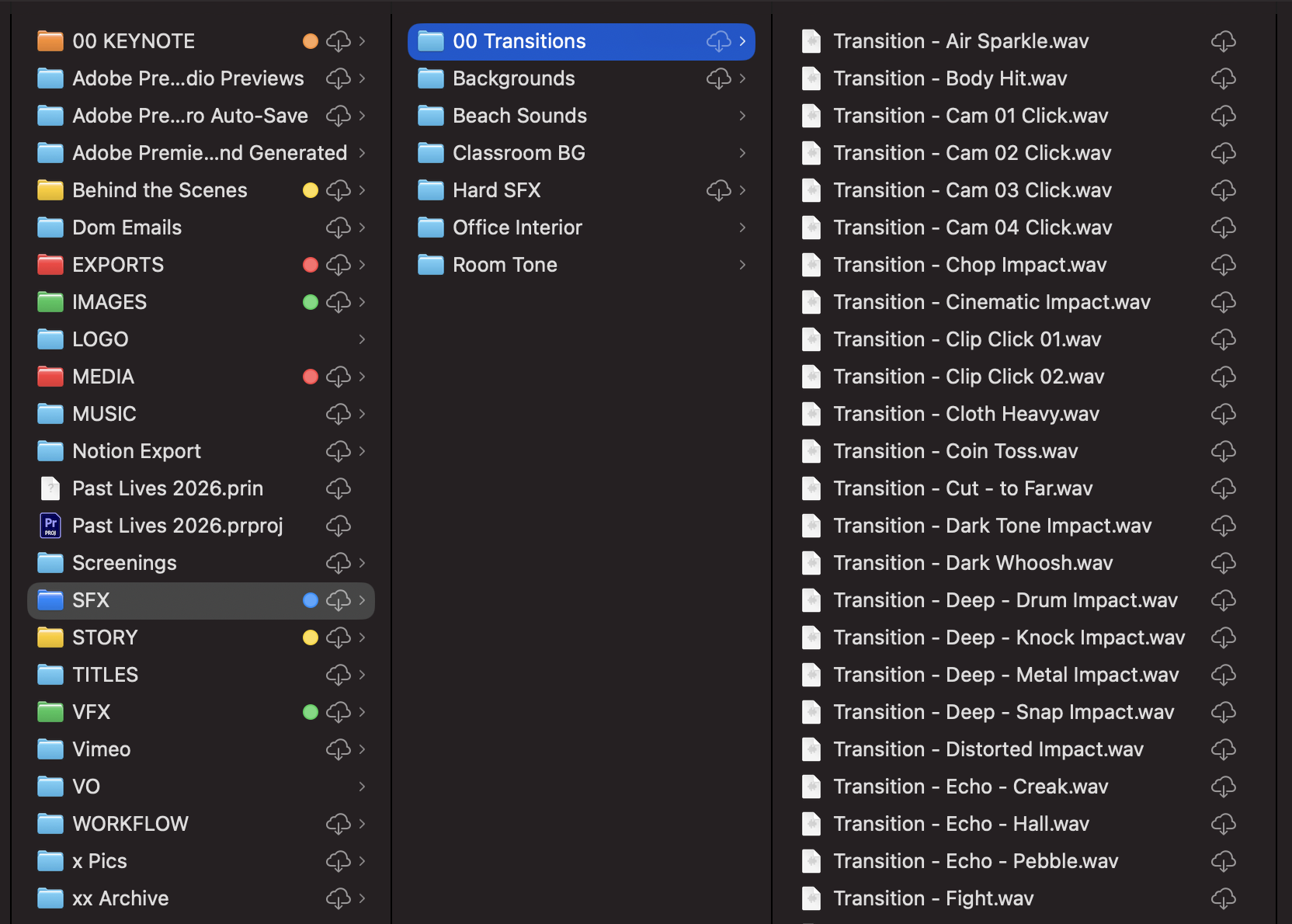
Because AI-generated video typically contains little or no usable production audio (but that’s getting better every day), virtually every sound heard in the film had to be added manually during post-production. This included environmental ambience, footsteps, clothing movement, room tone, weather effects, ocean sounds, transportation elements, crowd activity, and countless subtle details that audiences often perceive subconsciously.
Particular attention was given to building Emotional Continuity through sound. Recurring audio motifs were used throughout the film, including the sound of distant waves, harbor bells, wind, and other environmental elements that gradually connect the audience to Lila’s memories and the world she is trying to remember. These sounds helped create an emotional bridge between past and present, often communicating information that was never explicitly stated through dialogue.
By the end of production, the sound design had evolved into far more than background support. It became an active storytelling tool that guided emotion, established atmosphere, reinforced memory, and helped transform a collection of generated images into a living cinematic experience.
If the VISUALS provided the audience with something to SEE,
The SOUND DESIGN provided them with something to FEEL.
One of the most surprising discoveries throughout the production process was just how critical sound design became to the success of the film.
While the visuals often receive the most attention when discussing AI filmmaking, I quickly realized that images alone were not enough to create a believable and emotionally immersive experience.
Sound Became the Connective Tissue that unified hundreds of independently generated shots into a single cohesive world.
One of the current limitations of many generative video platforms is output resolution. While the visual quality can be impressive, much of the footage is still generated at resolutions that are lower than what would typically be used for professional delivery, projection, or archival purposes.
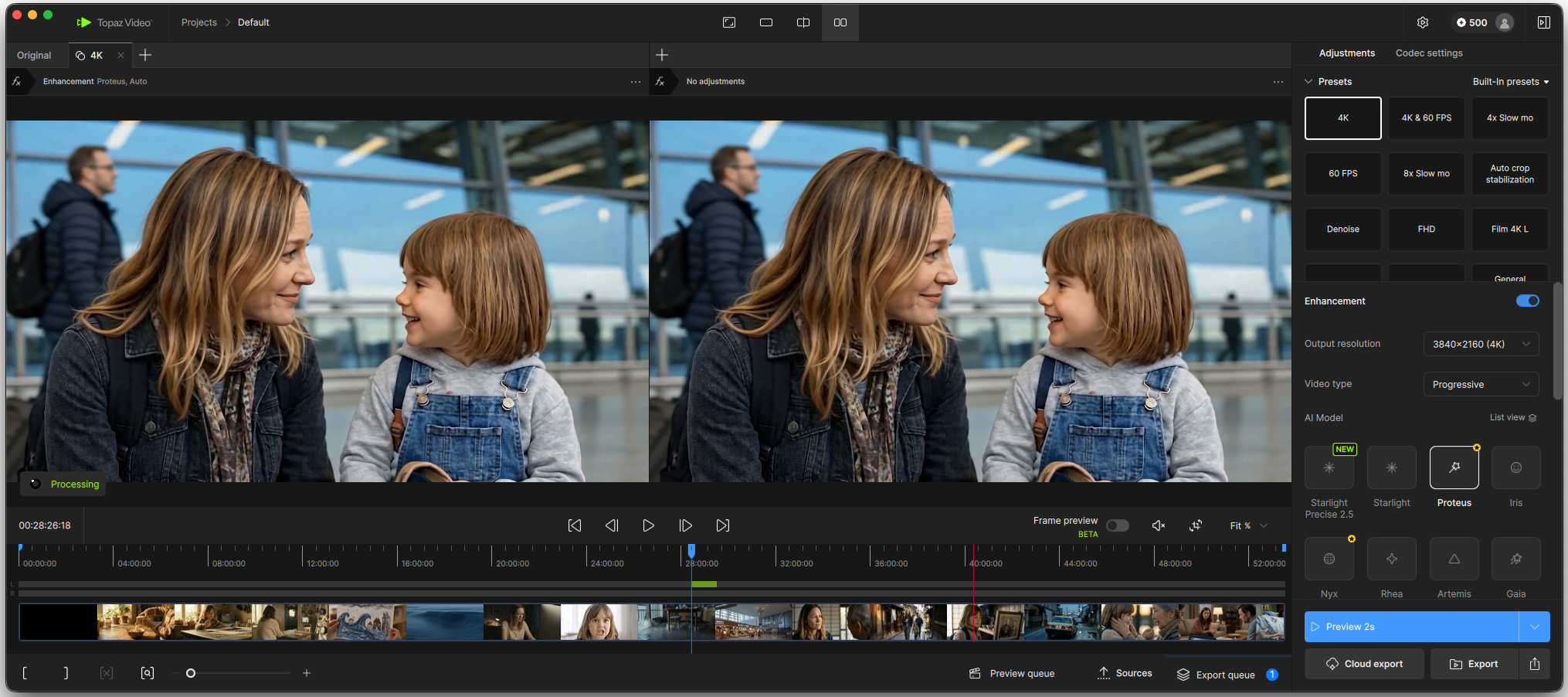
To address this, every finalized shot was processed through Topaz Video AI, an advanced machine learning system designed to increase image resolution while simultaneously improving perceived detail, reducing compression artifacts, stabilizing flicker, and enhancing overall image quality.
Rather than simply enlarging the image, Topaz analyzes each frame and attempts to reconstruct additional visual detail based on patterns it has learned from millions of examples. This allows the software to recover texture, sharpen facial features, improve edge definition, and create a cleaner, more cinematic image than would be possible through traditional scaling methods.
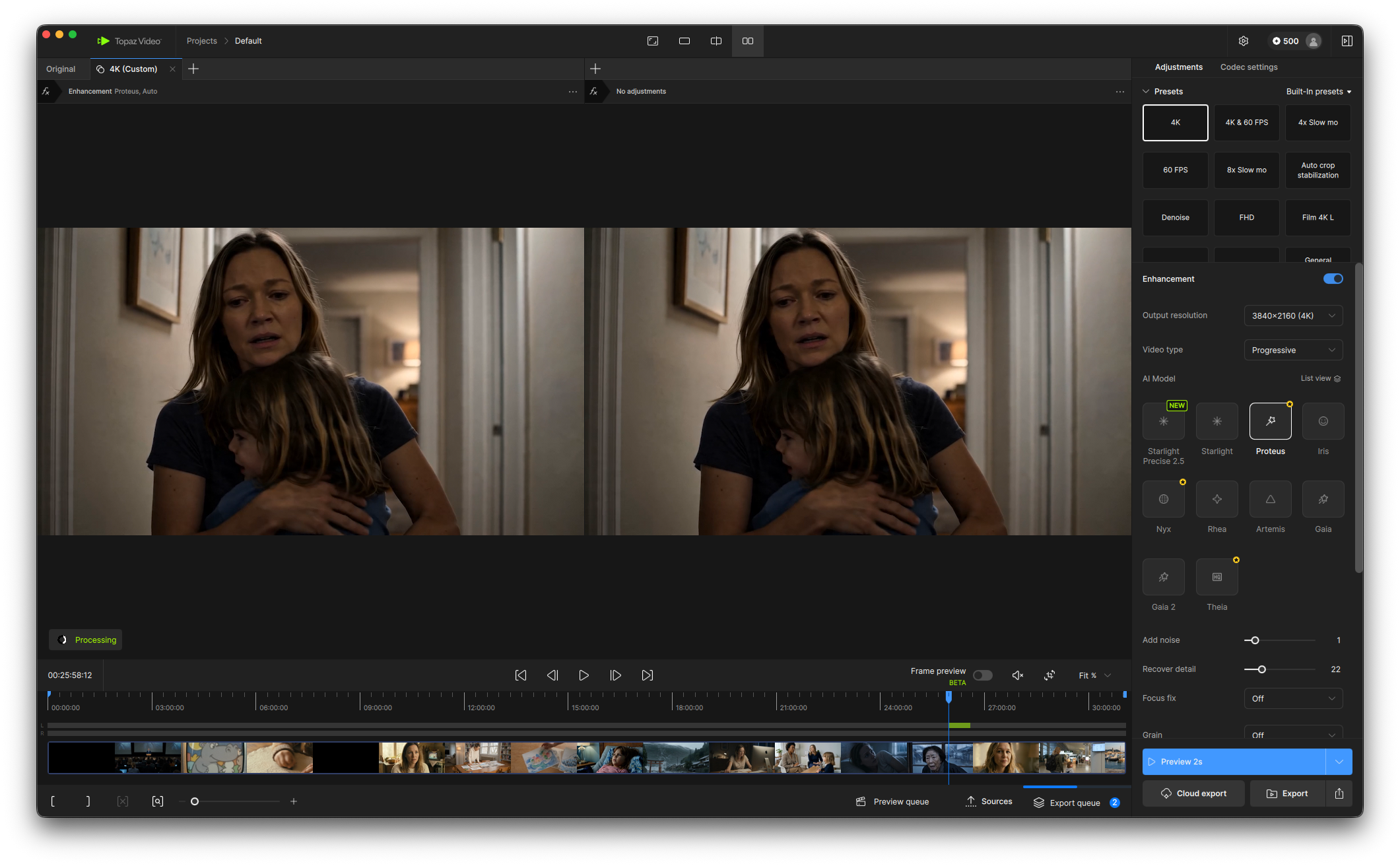
The vast majority of the movie was initially generated at either 720p or 1080p resolution, then upscaled and refined using Topaz Video AI before being incorporated into the final master. This allowed the project to take advantage of the strengths of current AI generation tools while still delivering a higher-quality viewing experience suitable for larger displays and future-proof archival masters.
In many respects, AI upscaling became the equivalent of a Digital Finishing Process, serving as one of the final steps that transformed rough generated footage into imagery that felt substantially more polished, cohesive, and production-ready.
There was also a substantial amount of additional AI cleanup work throughout the process using Topaz Video AI. Upscaling footage to Higher Resolution, Enhancing Facial Consistency, Removing Visual Artifacts, Stabilizing Flickering, Refining Motion Quality, etc.
Every step of this project required choices. Writing. Casting. Production design. Cinematography. Performance. Editing. Sound design. Music. Visual effects. The process wasn’t automated. It was guided. Shaped. Refined. Sometimes rebuilt entirely.
What emerges is less ‘automated filmmaking’ and more of a New Creative Medium that blends filmmaking, animation, editorial design, visual effects, and interactive iteration into a single workflow. It remains a deeply human process, but one that expands what an individual creator or small team can accomplish.
If there’s one lesson I took away from this experience, it’s that storytelling has never really been about the tools. It’s about the desire to connect, to explore, and to share something meaningful with another human being.
The tools will continue to evolve.
The technology will continue to advance.
But the heart of storytelling remains exactly where it has always been:
Within us.
And if this project has shown anything, I hope it’s this:
Extraordinary stories are no longer limited by access, budget, resources, or gatekeepers. The barriers are falling away. What matters now is imagination, persistence, curiosity, and the courage to begin.
So go out and create something beautiful.
Follow your curiosity.
Trust your voice.
Create something that only you can create.
The world doesn’t need more ‘content’.
It needs your perspective.
It needs your experiences.
It needs to hear your story.
Thank you so much for taking this journey with me.
With deepest gratitude,
Dominic Koletes
Founder, Soul Searcher Films
In the end, what surprised me most about this journey was that AI did not eliminate Filmmaking Craftsmanship. Instead, it revealed just how much of filmmaking has always been about Creative Decision-Making.
The tools may be different, but the fundamental questions remain the same.
What story are you trying to tell?
What emotion are you trying to create?
What experience do you want another human being to have?